Japan's everyday tableware is a set of small pieces with one job each: a bowl for rice, a cup and a pot for tea, a flask and a cup for sake, and small dishes and bowls for everything else. The rice bowl, the tea cup and the chopsticks often belong to one person in the household, told apart from the others by shape or pattern.
The pieces at a glance
| Piece | Japanese name | What it is for | Usually made of |
|---|---|---|---|
| Rice bowl | meshi-jawan, or simply chawan | Rice | Pottery or porcelain |
| Soup bowl | shiru-wan | Miso soup and other soups | Lacquered wood |
| Tea cup | yunomi | Hot tea | Pottery or porcelain |
| Teapot | kyūsu | Brewing sencha and other leaf teas | Pottery or porcelain |
| Teapot with a hoop handle | dobin | Brewing tea or boiling water | Pottery |
| Sake flask | tokkuri | Pouring sake; the usual vessel for warming sake | Pottery or porcelain |
| Sake cup | choko | Drinking sake | Pottery or porcelain |
| Soba cup | soba-choko | The dipping sauce for soba noodles | Usually porcelain painted in blue |
| Small dish, about 10 cm across | kozara | A portion taken from a shared dish, a side dish | Pottery or porcelain |
| Bowl, deeper than a plate | hachi | Serving food | Pottery or porcelain, also wood, lacquer or glass |
| Large bowl that holds about three times as much as an ordinary rice bowl | donburi | Rice with a topping | Thick pottery or porcelain |
| Chopstick rest | hashioki | Resting the tips of the chopsticks | Pottery, porcelain and other materials |
A bowl of one's own
At a Japanese table the dobin of tea and the large bowl of simmered food are shared, and the rice bowl, the soup bowl, a small dish, the tea cup and the chopsticks are set out for each person. The rice bowl, the tea cup and the chopsticks are often fixed to one person as well.
Two changes made personal pieces more common in Japan. Meals moved from individual trays to a shared table, and rice moved from wooden bowls to ceramic bowls, which could be chosen by pattern.
Meoto-jawan, "husband-and-wife bowls," are a pair of the same shape and pattern in two sizes, the larger for the husband and the smaller for the wife. They are made as rice bowls and as tea cups.
Why the rice bowl is called a tea bowl
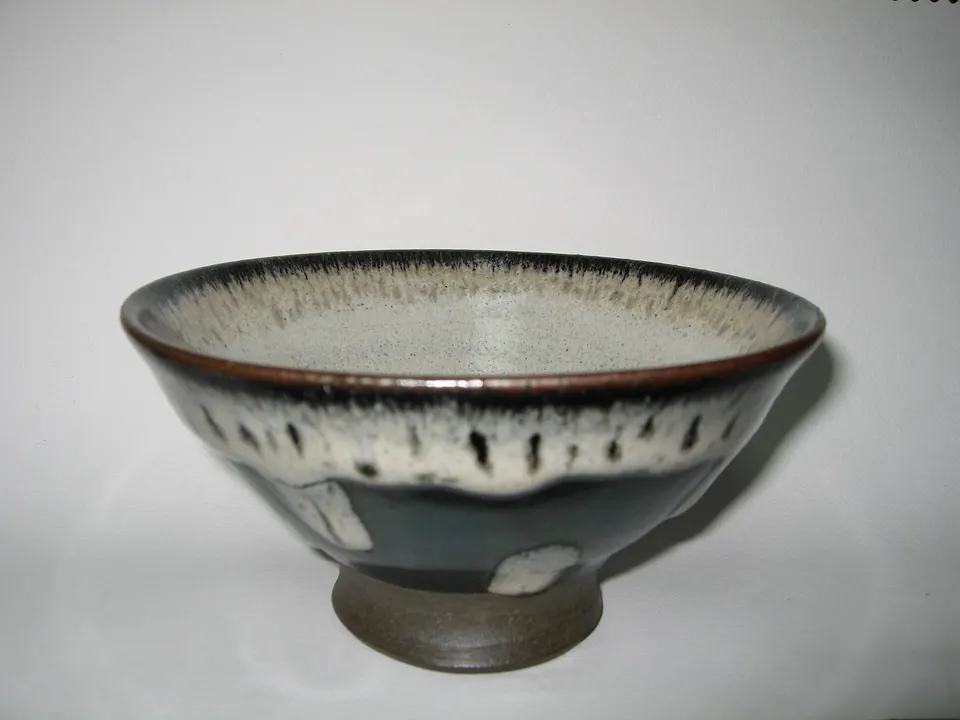
Chawan means "tea bowl," and the word first meant a ceramic bowl for drinking tea. Food was eaten from wooden bowls, and few ceramic bowls for food were made in Japan before the Edo period (1603–1868). From about the middle of the Edo period rice was served in ceramic bowls. These bowls for rice were adapted from tea ware and came to be called chawan as well, which is why a rice bowl is a meshi-jawan, "rice tea-bowl." Rice bowls are made in both pottery, whose body absorbs water, and porcelain, whose body absorbs none.
Soup stayed in wood. Soup is drunk straight from the bowl, which is lifted in both hands, and a lacquered wooden bowl, a wan, passes little heat: hot soup can be brought to the mouth without burning the lips, and it stays hot longer.
A rice bowl is held in the hand too. A good rice bowl has a little weight and sits steadily in the palm, and a good tea cup is smooth where it meets the lips.
A cup and a pot for tea
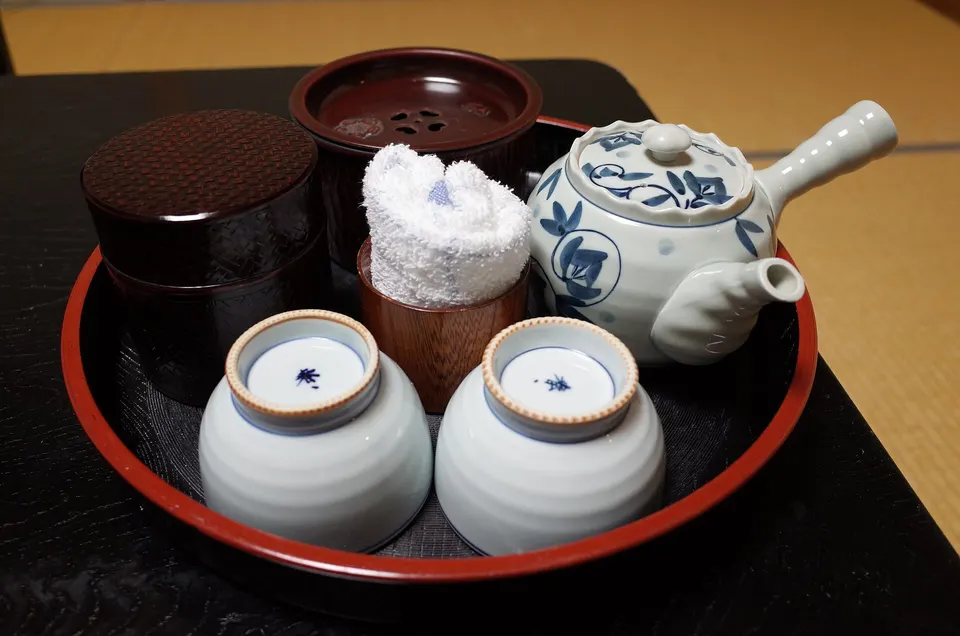
A yunomi is a small ceramic cup for hot tea, shaped either as a deep cylinder or as a shallower bowl. The kyūsu is a lidded pot with a spout and a handle, and it usually holds 200 to 600 milliliters.
The kyūsu spread in Japan from the Bunka and Bunsei eras (1804–30), as sencha came into fashion. Tokoname ware from Aichi Prefecture, Banko ware from Mie and Kiyomizu ware from Kyoto are among the wares known for kyūsu. The tea once sold at railway stations came in a small dobin, the train teapot.
A flask and a cup for sake
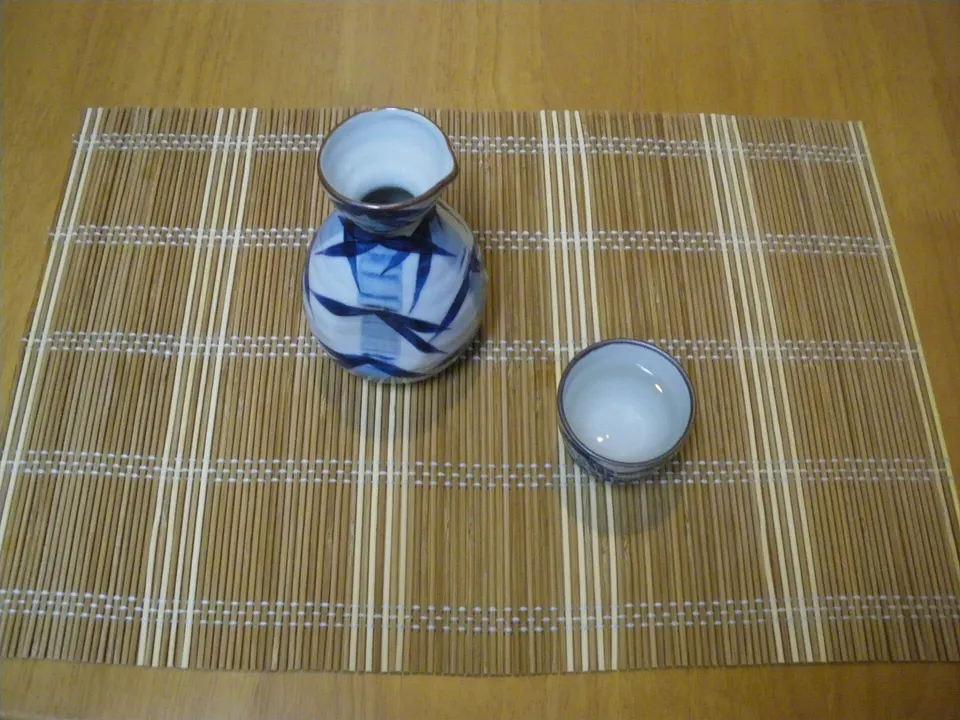
A tokkuri is a flask with a narrow neck, a small mouth and a swelling body. The small tokkuri that holds one or two gō is the kan-dokkuri, the flask for warmed sake; one gō is about 0.18 liters. The kan-dokkuri is paired with a choko, a small cup that opens wide at the rim, and the choko spread widely in the Edo period as the partner of the kan-dokkuri. A guinomi is a larger, deeper cup, between a choko and a yunomi in size.
Small dishes
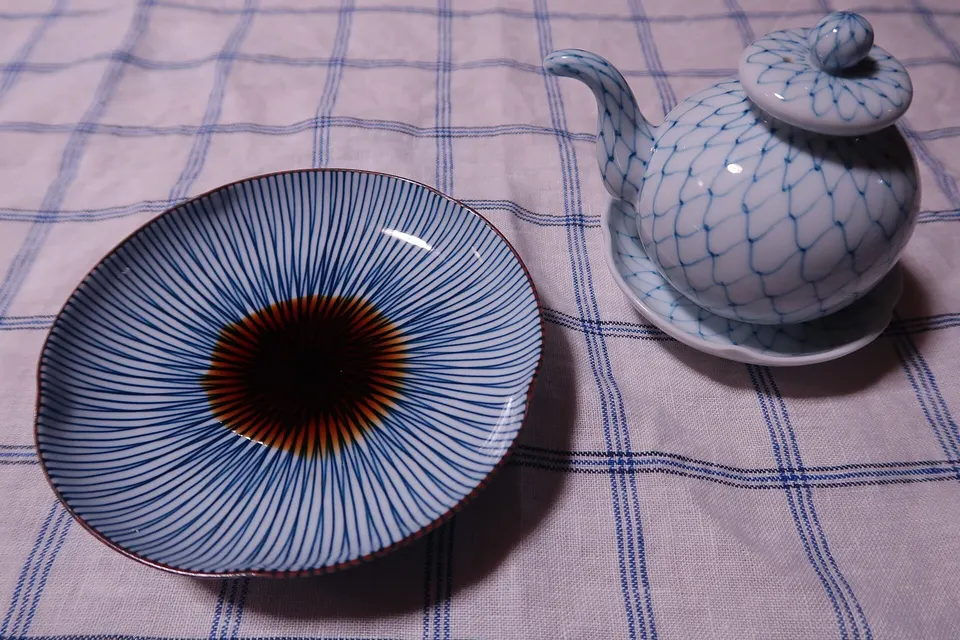
A mamezara is an especially small dish, about two sun or 6 centimeters across, for soy sauce, condiments or pickles. A small, shallow dish for pickles and the like is also called a teshio-zara, "hand-salt dish": a little salt used to be set on a small dish on each person's tray, to purify the meal and to season it to taste.
Pottery towns and the Traditional Mark
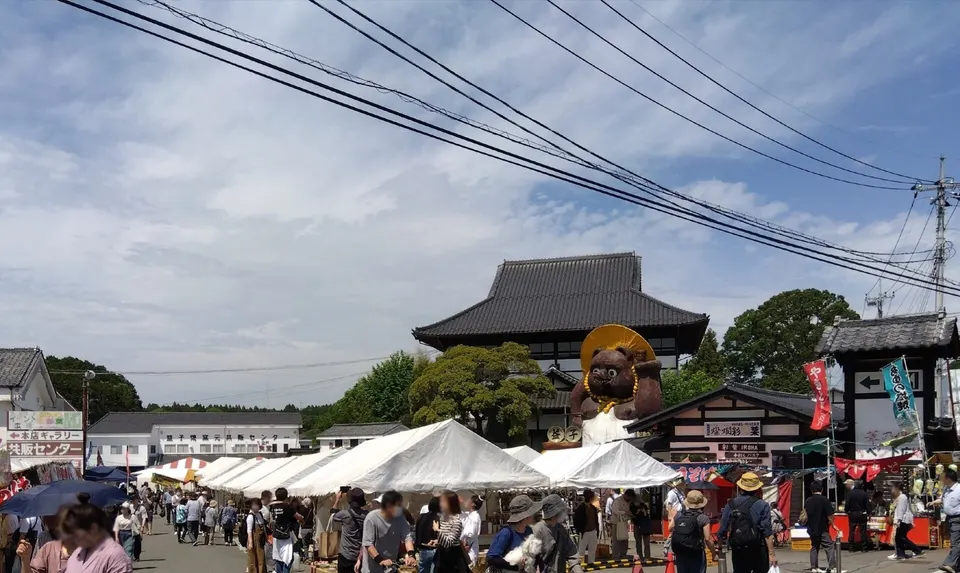
Japan's pottery towns sell their wares at fairs. The fair at Mashiko, in Tochigi Prefecture, began in 1966 and is held in the spring Golden Week holidays and again around November 3, with more than 800 tents alongside some 50 shops. Hasami, in Nagasaki Prefecture, makes porcelain for everyday use. Its festival began in April 1959 and runs from April 29 to May 5 with the wares of more than 100 kilns.
Under a law of 1974 the Minister of Economy, Trade and Industry designates traditional crafts, things for daily use made mainly by hand. Hasami ware was designated in 1978 and Mashiko ware in 1979. A designated craft carries the Traditional Mark, dentō māku. A piece bearing the dentō shōshi, the certificate label printed with the Traditional Mark, has passed an inspection held by the makers' association of its region or a similar body.
The pot that comes with a bento
One piece of Mashiko pottery comes with a meal in it. Tōge no Kamameshi, the station bento that Oginoya put on sale at Yokokawa Station on February 1, 1958, is packed in an earthenware pot of Mashiko ware, and more than 170 million have been sold. The pot holds one gō of rice. A band of brown glaze runs around the upper part of the pot, with the name おぎのや, Oginoya, cut into the glaze.
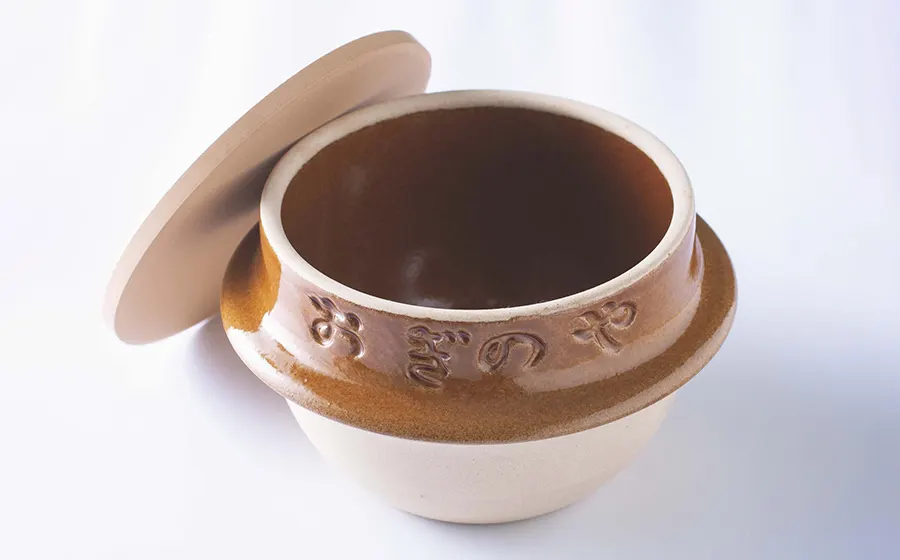
A Tōge no Kamameshi that has gone cold can be warmed in its pot in a 600-watt microwave for about three minutes. Oginoya publishes a collection of 29 recipes that use the empty pot, and the pots used inside its own shops are collected, checked for damage, washed twice with steam and used again.
References
- Kotobank, "Chawan" (bowl)
- Kotobank, "Wan" (lacquered bowl)
- Kotobank, "Shokki" (tableware)
- Kotobank, "Kyūsu" (teapot)
- Kotobank, "Tokkuri" (sake flask)
- Kotobank, "Choko" (sake cup)
- Kotobank, "Meoto-jawan" (paired bowls)
- Kotobank, "Teshio-zara" (small dish)
- Ministry of Economy, Trade and Industry, "Traditional crafts"
- Shiga Prefecture, "Traditional crafts of Shiga" (the Traditional Mark and certificate label)
- Hasami Ceramics Industry Cooperative, "Ceramics Q&A"
- Mashiko Town Tourism Association, "Mashiko Pottery Fair"
- Oginoya, "Tōge no Kamameshi"
- Oginoya, "Frequently asked questions"
Image credits (resized for display):