Most tea made in Japan is green tea, and every kind comes from the leaves of the same plant. Whether the field is shaded before picking, whether the steamed leaves are rolled, and whether the finished tea is roasted decide if those leaves become sencha, gyokuro, matcha or hōjicha.
Stopped while still green
The tea plant, Camellia sinensis, is an evergreen shrub native to the misty mountains of southern China, and green tea, black tea and oolong are all made from it. Left alone after picking, the leaves oxidize through their own enzymes and turn brown, a change the tea trade calls fermentation. Black tea is fermented fully and oolong part of the way. For green tea the leaves are heated at once to stop the enzymes, and they stay green.
Japan does this heating with steam, while China's green teas are fired in a pan. Pan-fired tea is also made in parts of Kyushu, among them the curled tamaryokucha of Ureshino in Saga Prefecture.
Seven teas compared
| Tea | Leaves | Processing | Character |
|---|---|---|---|
| Sencha | Young shoots grown in open sun | Steamed, rolled in stages, dried | Pale yellowish green; bitterness and astringency balanced by sweetness and umami |
| Fukamushi sencha | Same as sencha | Steamed two to three times as long | Fine leaf particles, deep green color, full flavor |
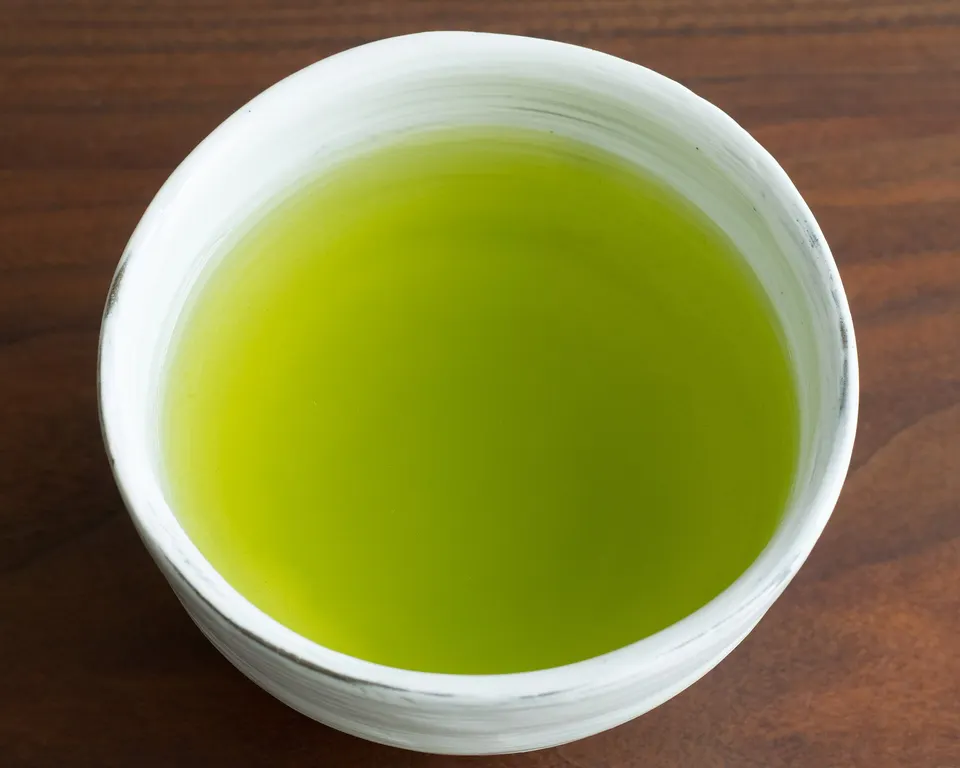
| Gyokuro | Young shoots shaded for about 20 days | Same as sencha | Vivid deep green; more umami, less astringency |
| Matcha | Leaves shaded for two to three weeks | Steamed, dried without rolling, ground in a stone mill | A powder whisked into hot water |
| Bancha | Hardened leaves, old leaves, stems | Much the same as sencha | Light flavor; less caffeine than sencha |
| Hōjicha | Sencha or bancha | Roasted over high heat until brown | Roasted aroma, clean taste |
| Genmaicha | Sencha or bancha | Mixed with roasted rice | The toasty aroma of the rice |
Grown in sun, grown in shade
Sencha is the most common Japanese tea and made up 48.1 percent of the country's output of crude tea, the dried leaf before final sorting, in 2025. After steaming, its leaves are rolled under heat in four stages into thin, tight needles and then dried. Fukamushi means deep-steamed: the longer steaming breaks down the leaf, and fine particles cloud the cup.
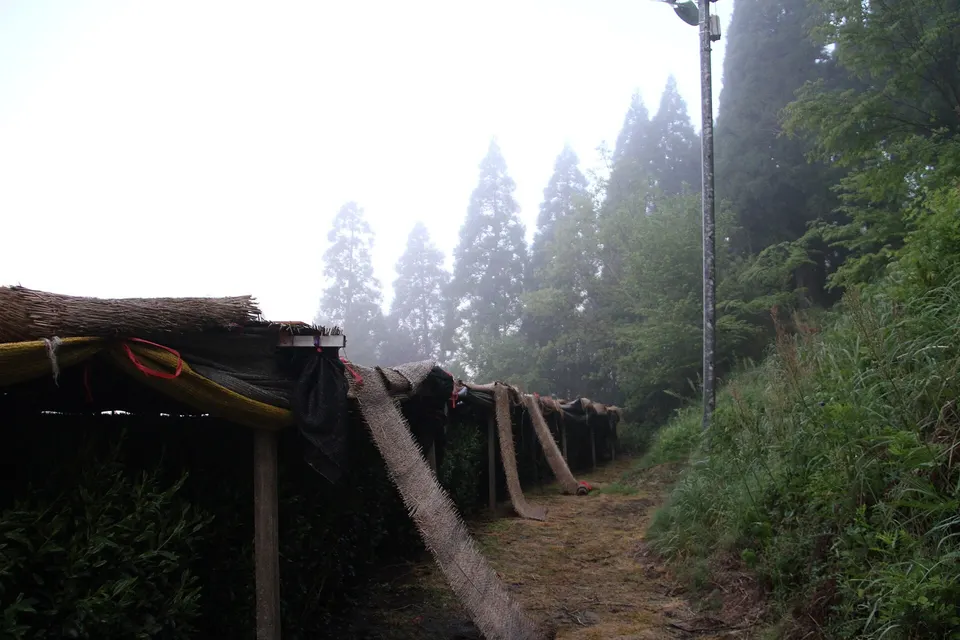
Gyokuro is decided in the field. When the first shoots of the year begin to grow, the tea garden is covered with reed screens, straw or coarse black cloth, which cuts the sunlight to about a tenth. Leaves grown this way hold more theanine, the amino acid that gives tea its umami, less catechin, the source of its astringency, and more chlorophyll. Gyokuro can be picked only once a year, and in 2025 it was 1.0 percent of output. Kabusecha is covered for about seven days and was 2.0 percent.
Leaves that are never rolled
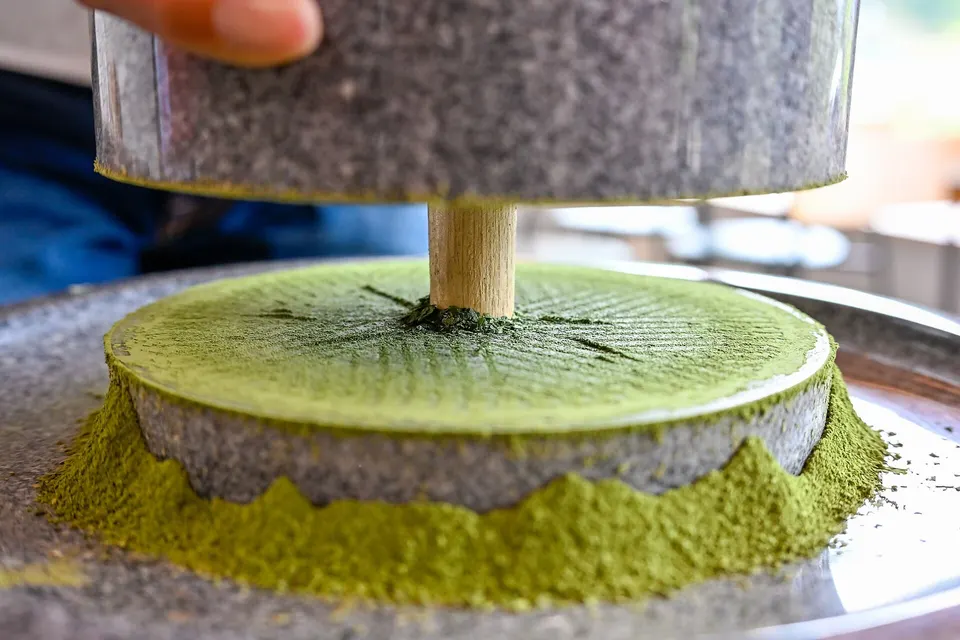
Matcha also begins under cover, but its steamed leaves are dried without being rolled. The dried leaf is called tencha. With the stems and veins removed, tencha is ground to a fine powder in a stone mill, and that powder is matcha. It is stirred into hot water with a bamboo whisk, so the drinker takes in the leaf itself. Tencha was 8.6 percent of crude tea output in 2025, and the amount of tencha produced had grown to about 3.2 times what it was in 2014.
Roasted, mixed and sorted
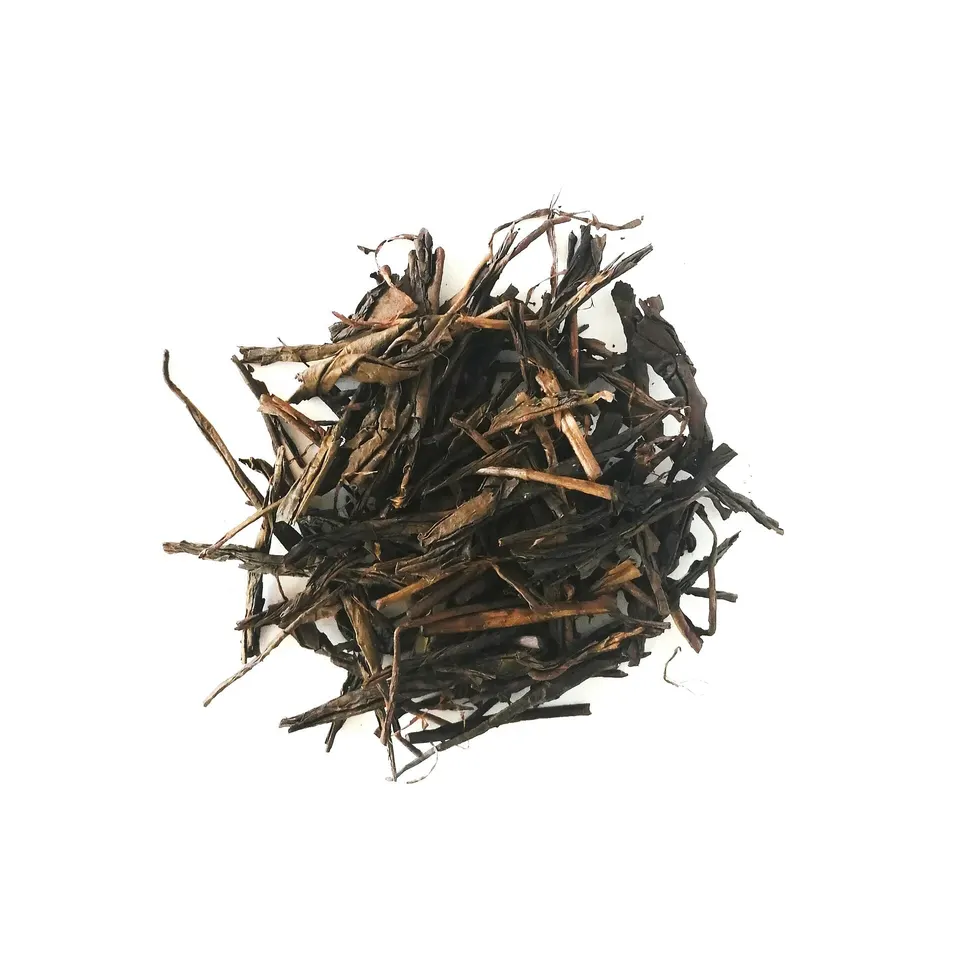
Bancha is made from what remains once the shoots for sencha have been picked, and roasting bancha or sencha gives hōjicha. The rice in genmaicha is brown rice that has been steamed and then roasted, and the rice often makes up about half the weight of the blend. Genmaicha became a commercial product after the Shōwa era began in 1926 and is said to have started in the Kansai region.
Sorting at the finishing stage yields three more teas: kukicha from stems and leaf stalks, mecha from the tips of buds, and konacha from powdery fragments.
From Eisai to Nagatani Sōen
The monk Eisai, who brought Rinzai Zen to Japan, is credited with carrying home tea seeds and the Song-dynasty way of drinking powdered tea when he returned from China in 1191, and in 1211 he wrote a book on making and drinking it, Kissa yōjōki. The monk Myōe is said to have planted Eisai's seeds at Toganoo in Kyoto, and from there tea reached Uji, whose tea was prized from the Muromachi period (1336–1573). Shaded leaves became the raw material of matcha at the end of the 16th century.
Sencha as it is made today dates from 1738, when Nagatani Sōen (1681–1778) of Yuyadani in Ujitawara, in what is now Kyoto Prefecture, is said to have devised the method of steaming the leaves and then rolling them by hand over a heated drying table. Sōen took his tea to Edo, now Tokyo, and sold it through Yamamoto Kahei, a tea merchant in Nihonbashi, and the method spread quickly. Gyokuro followed. It is said to have begun in 1830–44, when the sixth head of the Yamamoto house rolled half-processed tencha at Uji; another account gives 1868.
Where it grows
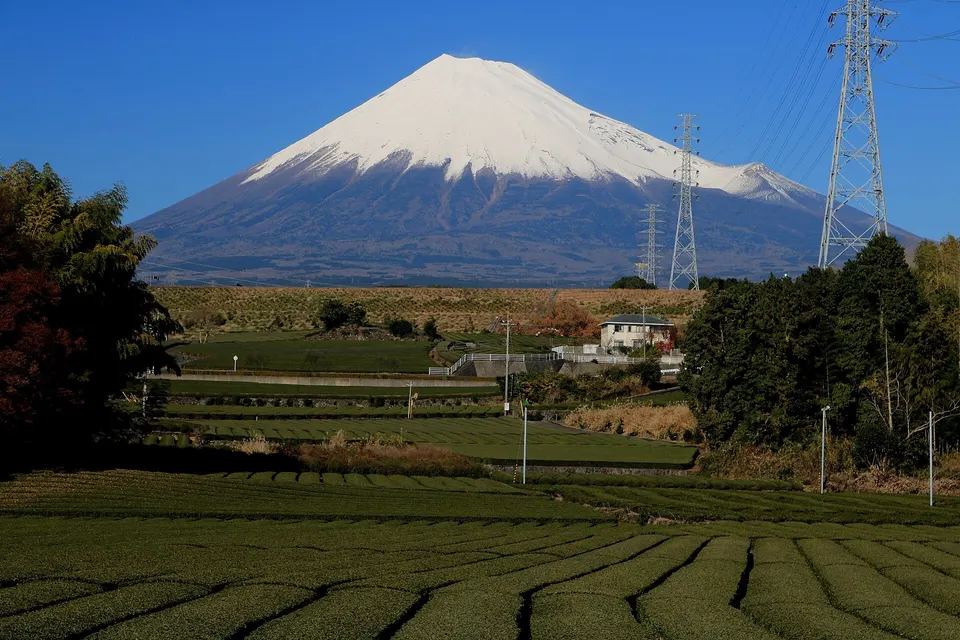
Japan produced 75,100 tons of crude tea in 2025. Kagoshima Prefecture made 30,000 tons, Shizuoka 24,100, Mie 4,860, Miyazaki 2,880 and Kyoto 2,280. Kagoshima took first place in 2024, for the first time since the statistics began, and kept it in 2025. Shizuoka has the largest area of tea fields, 11,600 hectares against Kagoshima's 8,040, and grows mainly sencha, deep-steamed sencha above all. Kagoshima ranked first in tencha in 2025 and Kyoto second, and Mie ranked first in kabusecha.
Hot water, cooler water
Each type is brewed at its own temperature. High-grade sencha is brewed with water at 70°C and mid-grade sencha at 90°C. A standard sencha steeps for a minute and a half, deep-steamed sencha for only 30 seconds. Gyokuro takes water of 50 to 60°C for two and a half minutes, because cooler water draws out the theanine while leaving most of the caffeine and astringency in the leaf. Bancha, hōjicha and genmaicha are made with boiling water for 30 seconds, which brings out their toasty aroma.
Tea at the station
Selling tea at railway stations is said to have begun in 1889 at Shizuoka Station, where a bento seller filled Shigaraki-ware teapots with Shizuoka tea to go with ekiben. The small pottery train teapot gave way to polyethylene, and Ito En then put sencha in a can in February 1985 and green tea in a PET bottle in March 1990.
References
- Japan Tea Central Council, "Labeling standards for green tea" (PDF)
- Ministry of Agriculture, Forestry and Fisheries, "Manual for brewing tea" (PDF)
- Ministry of Agriculture, Forestry and Fisheries, "The situation surrounding tea," October 2026 (PDF)
- Kyoto Prefecture, "Registered landscape asset: Yuyadani in Ujitawara, birthplace of Nagatani Sōen"
- Kotobank, "Ryokucha" (green tea)
- Kotobank, "Sencha"
- Kotobank, "Matcha"
- Kotobank, "Gyokuro"
- Kotobank, "Cha" (tea)
- Kotobank, "Nagatani Sōen"
Image credits (resized for display):