Wagashi are Japan's traditional sweets, made mainly from rice and other grain flours, azuki and other beans, and sugar, with no dairy products and almost no fat. Some are made only in one season and others change their shape, color and name as the year turns, so the sweets in a confectioner's shop keep changing.
What wagashi are made of
The ingredient used most is beans, above all the small red azuki, which become an, a paste of boiled beans and sugar. About 90 percent of the Japanese-grown azuki on the market comes from Hokkaido, and most of it becomes an or beans simmered whole in syrup.
Rice goes in as flour: jōshinko is ordinary uruchi rice milled raw; shiratamako is glutinous mochi rice milled raw; and dōmyōji-ko is mochi rice that has been steamed, dried and coarsely ground. Kanten, which sets yōkan into a block, is made by freezing and drying the liquid from boiled seaweed.
Fresh, half-dry and dry
Wagashi are commonly sorted by how much water they hold. Namagashi, fresh sweets, are moist and do not keep. They include mochi sweets, yōkan, manjū (buns filled with an, steamed or baked) and dorayaki, two round pancakes with an between them.
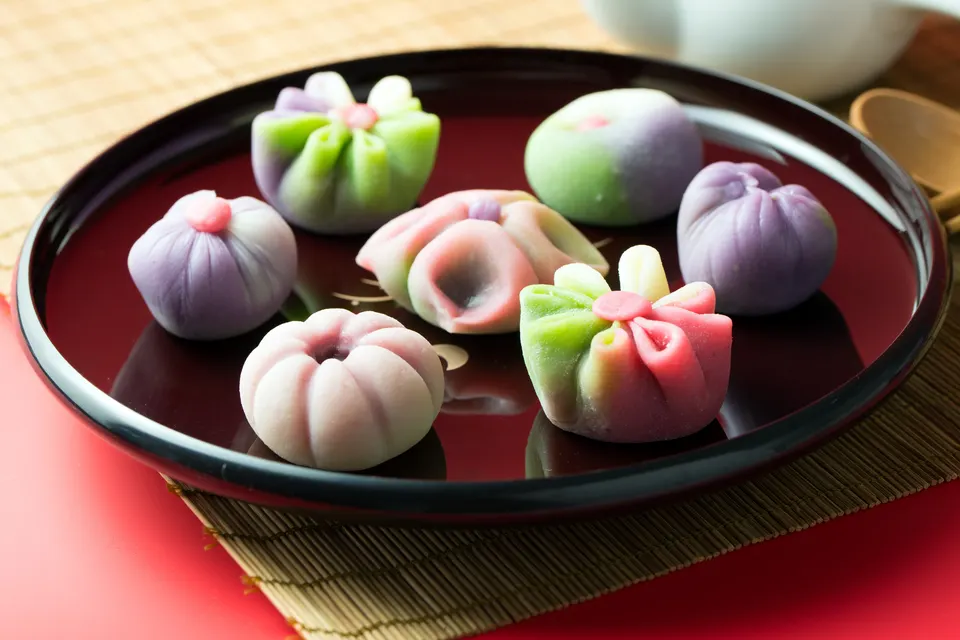
Asa-namagashi, "morning fresh sweets" such as daifuku and dango, are made each morning and eaten that day. Most jō-namagashi, fine fresh sweets, stay good for two or three days. The leading example is nerikiri: white an kneaded with sugar and either steamed yam or gyūhi, a soft rice dough, then colored and shaped by hand into the flowers and scenery of the season.
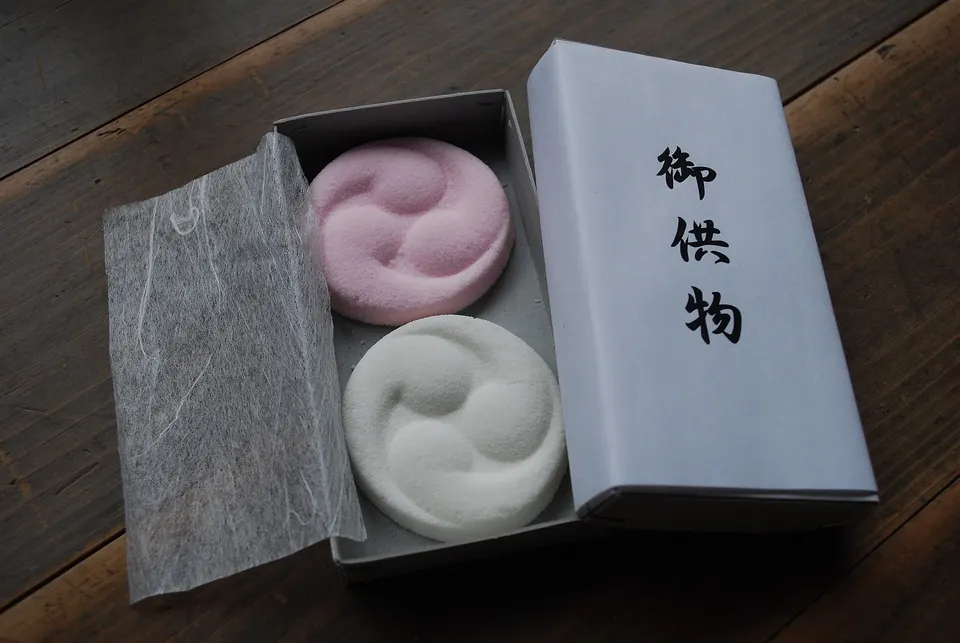
Han-namagashi, such as monaka (an held between thin wafer shells), sit between fresh and dry. Higashi, dry sweets, include senbei crackers and rakugan, which is grain flour mixed with sugar and syrup, pressed in a carved wooden mold and dried.
Sweets that mark the season
Wagashi carry the season in two ways. Some are made only at one time of year, and many of these belong to a date in the calendar.
| When | Sweet | What it is |
|---|---|---|
| New Year | Hanabira mochi | A flat round of white mochi folded in half around three things: a thin diamond of mochi dyed with azuki, white miso an, and burdock simmered in syrup. Used at the first tea gathering of the year. |
| Higan, the weeks of the spring and autumn equinoxes | Botamochi, ohagi | Cooked mochi rice, half-crushed, rolled into balls and coated with azuki an. The sweet was called botamochi, after the peony, in spring and ohagi, after the bush clover, in autumn. |
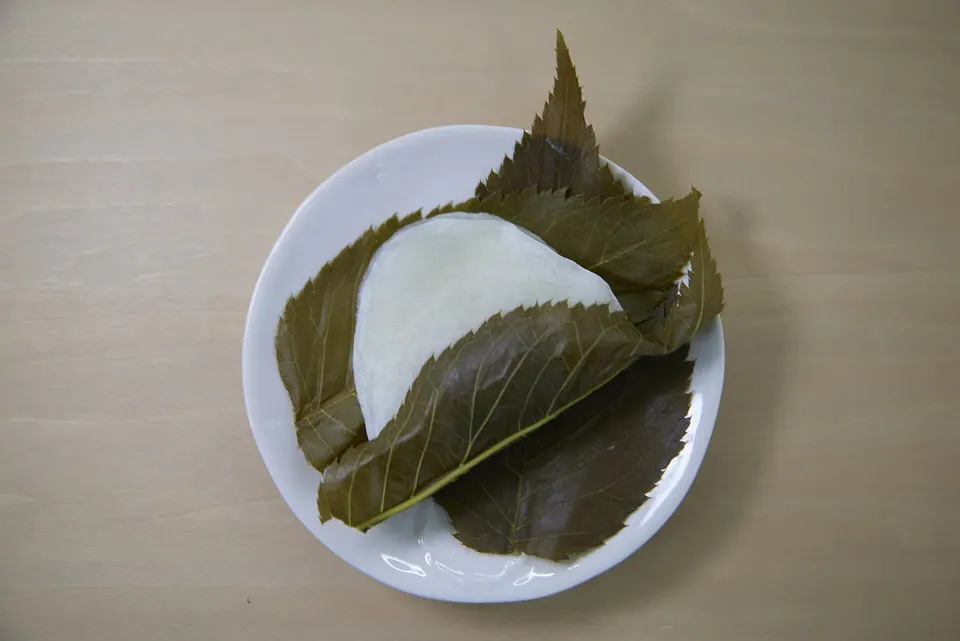
| Spring, as the cherry blossoms approach | Sakuramochi | An wrapped in dough and then in a salted cherry leaf, whose scent passes into the sweet. |
| May 5, the Tango festival | Kashiwa mochi | Mochi made of jōshinko, folded over azuki an or miso an and wrapped in an oak leaf. The oak keeps its old leaves until new buds open, so the sweet carries a wish for descendants. |
| June 30 | Minazuki | White uirō, a steamed cake, topped with sweet-simmered azuki and cut into triangles. Eaten in Kyoto on the day of the summer purification rite. |
| The 15th night of the 8th lunar month and the 13th night of the 9th | Tsukimi dango | Round dumplings of steamed jōshinko, piled in a pyramid and offered to the moon. |
| The day of the boar in the 10th lunar month | Inoko mochi | Mochi made with the new grain. From the Heian period (794–1185), mochi shaped like young boars were exchanged at court. |
The dishes of the same calendar, such as osechi at New Year, belong to washoku.
Sakuramochi differs between east and west. In Tokyo and the rest of Kantō it is usually a thin skin of wheat-flour batter, baked on a pan and rolled around the an. In Kansai it is usually made of steamed dōmyōji-ko. The Kantō kind is also called Chōmeiji, after a temple in Mukōjima in Edo, now Tokyo, where the temple's gatekeeper is said to have first sold sakuramochi in 1717. In 1824 the Chōmeiji sakuramochi shop bought about 775,000 salted leaves, which at two leaves each makes 387,500 sakuramochi.
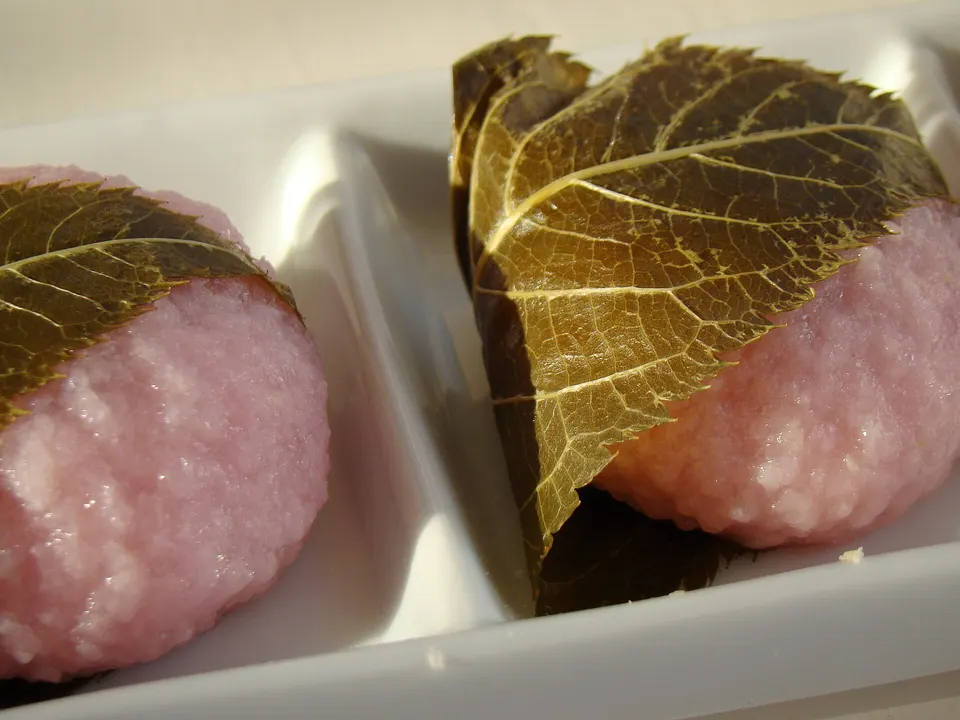
The other way belongs to wagashi made all year, which show the season through shape, color and name. Kinton, a ball covered with fine crumbs of an, is white and young-leaf green around New Year under the name Mebuki, "budding," and brown with a dusting of white sugar in November under the name Hatsushimo, "first frost."
Where wagashi came from
The word kashi, sweets, first meant fruit and nuts. The envoys that Japan sent to Tang China, a practice that lasted from 630 to 894, brought back karakudamono, doughs of rice, wheat, soybean or azuki flour that were kneaded into shapes or fried in oil.
In the Kamakura period (1185–1333) Zen arrived, and with Zen came tea drinking and tenjin, light food taken between meals. Yōkan and manjū entered Japan as tenjin. Both contained meat in China, and Zen temples remade them with plant ingredients. An made from azuki and other beans came out of that change and became the base of wagashi. The first yōkan was steamed, and the firm kind set with kanten dates from the end of the 18th century.
From the end of the Muromachi period (1336–1573), Portuguese and other Europeans brought nanban-gashi such as castella sponge cake and konpeitō sugar candy, made with plenty of eggs and sugar.
Sugar came into wide use in the Edo period (1603–1868), and confectionery developed greatly. A catalogue dated 1683 from Kikyōya, a confectioner in Nihonbashi in Edo, lists 172 sweets. Almost without exception, the large shops of Edo called themselves makers of kyōgashi, Kyoto-style fine sweets, and competed in taste, in form and color, and in literary names. Most wagashi eaten today date from the Edo period. The word wagashi came into use from the Meiji era (1868–1912) on, to set these sweets apart from yōgashi, Western sweets made with butter and milk.
Sweets for tea
Wagashi as they are today were shaped in large part by chanoyu, the tea ceremony. The sweet that the tea master Sen no Rikyū used most often at his gatherings was fu-no-yaki, wheat-flour batter baked, spread with miso and rolled. Next most often came chestnuts, shiitake mushrooms, roasted kaya nuts and kombu.
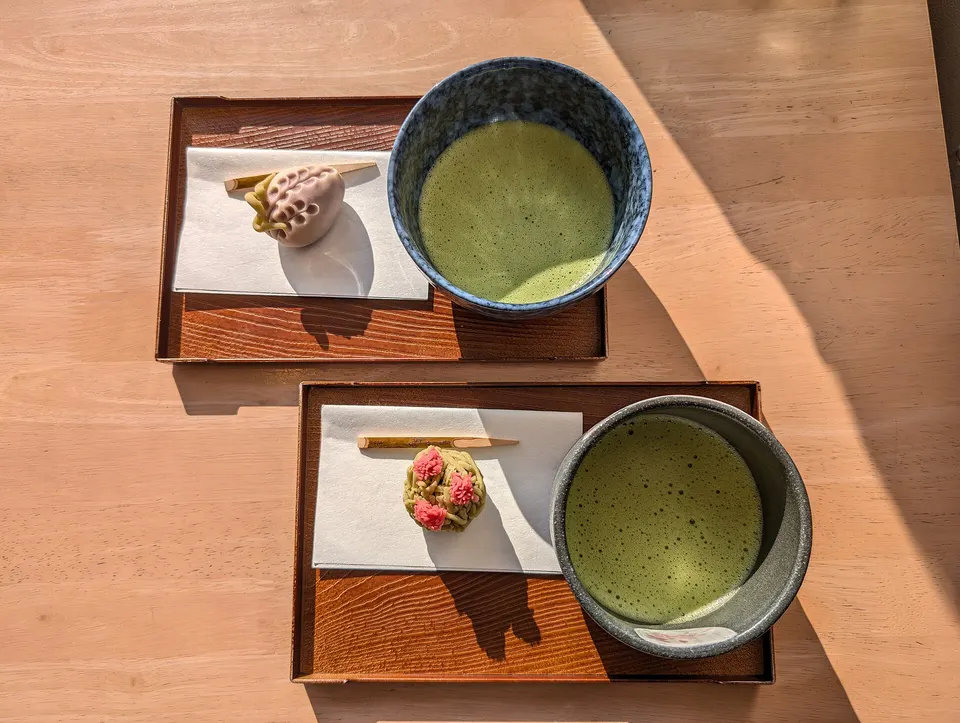
The omogashi, the main sweet served with koicha, thick matcha, is something sweet and substantial such as nerikiri or manjū, with a shape and a name that fit the season. Dry sweets are also often used for tea.
References
- Kotobank, "Wagashi"
- Kotobank, "Namagashi"
- Kotobank, "Higashi"
- Kotobank, "Sakuramochi"
- Kotobank, "Kashiwa mochi"
- Japan Wagashi Association, "The history of wagashi"
- Japan Wagashi Association, "Types of wagashi"
- Japan Wagashi Association, "Ingredients of wagashi"
- Japan Wagashi Association, "The seasons and wagashi"
- Japan Wagashi Association, "The origins of wagashi"
Image credits (resized for display):