Washoku is Japanese-style eating: a meal put together mainly from rice, soup, pickles and side dishes, using the fish and vegetables of Japan. In everyday speech the word means the same as "Japanese cuisine," and in 2013 UNESCO inscribed it as a social practice that runs from producing food to sharing it at the table.
The word and what it covers
The word washoku means Japanese-style meals, and its opposite is yōshoku, Western-style food. No fixed definition says which dishes belong to it, and it is used interchangeably with nihon ryōri, "Japanese cuisine."
Nihon ryōri is the name for Japan's own traditional cooking when it is set against Western or Chinese cooking. It appears in a newspaper of 1881, and a cookbook published in 1898, Nihon ryōrihō taizen, is credited with making it the settled term. When "washoku" came into use is not known; it is thought to be the later word, and its earliest dictionary citation is from a play of 1929.
The cooking both words describe is centered on rice, and its side dishes took shape as things to eat rice with. Animal meat and fats were used very little and dairy products not at all, so animal protein came mainly from fish and shellfish, and dashi, stock, gave depth to salty seasoning and made vegetables and other plant foods good to eat.
What UNESCO inscribed
Japan applied to UNESCO in March 2012. On December 4, 2013, an intergovernmental committee of 24 countries decided to inscribe "Washoku, traditional dietary cultures of the Japanese, notably for the celebration of New Year" on the Representative List of the Intangible Cultural Heritage of Humanity, where Japan's kabuki and nō theater also appear.
The nomination put forward a social practice: the skills, knowledge and traditions of producing, processing, preparing and eating food, all resting on respect for nature. Japan's Ministry of Agriculture, Forestry and Fisheries sums up washoku in four features:
- Varied, fresh ingredients from a country that runs a long way from north to south, and techniques and tools that bring out their own taste.
- A balance of nutrients that supports a healthy diet, built on the meal called ichijū sansai and on umami, which keeps the use of animal fat low.
- An expression of the beauty of nature and the changing seasons: dishes decorated with seasonal flowers and leaves, and tableware chosen to suit the season.
- A close tie to annual events such as New Year, when sharing food deepens the bonds of family and community.
One soup, three dishes
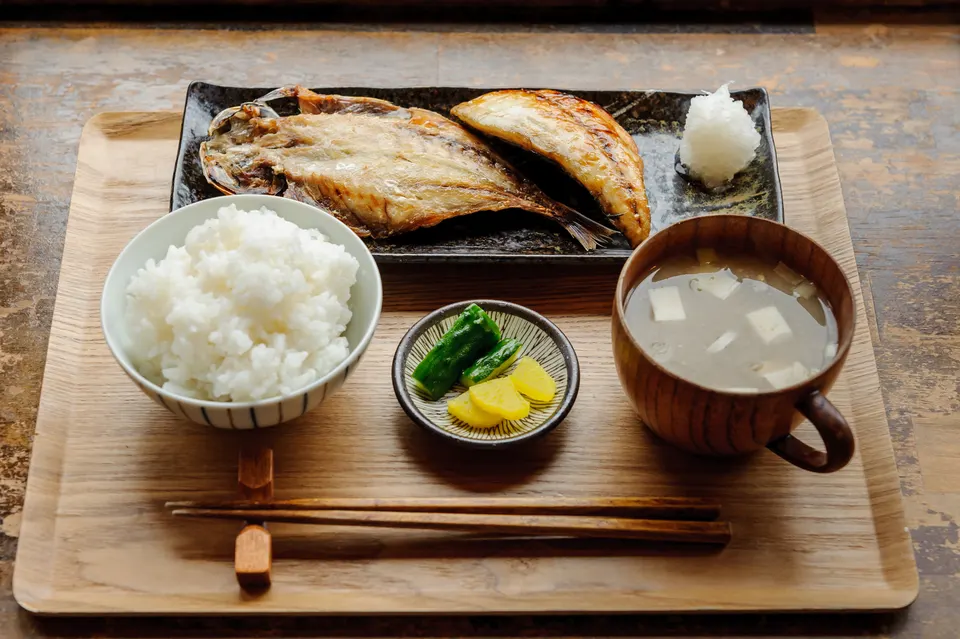
Ichijū sansai, one soup and three dishes, is the basic way of setting out a Japanese meal. The three dishes are usually namasu, raw fish or vegetables cut fine and dressed with vinegar, a simmered dish and a grilled dish. Rice and pickles, kō no mono, come with the meal and are not counted.
On the tray, the rice sits at the front left and the soup at the front right. The namasu goes at the back right, the simmered dish at the back left and the pickles in the middle, and the grilled dish is brought separately. In home cooking the term is used whatever the dishes are, such as one main dish of fish and two vegetable side dishes.
The makunouchi bento packs rice, grilled fish, rolled omelet, fish cake and simmered dishes into one box. Tōge no Kamameshi, the ekiben of Yokokawa Station, comes with five kinds of pickles in a separate container.
Four styles of meal
Honzen ryōri is the formal style of entertaining that took shape in the Muromachi period (1336–1573) along with the etiquette of the warrior class. Each guest has individual trays: the main tray, the honzen, holds rice, soup, namasu, a simmered dish and pickles, and more trays are added for grander occasions. Traces of it remain in the food served at ceremonial occasions such as weddings and funerals.
Kaiseki, written 懐石, is the simple meal served before the tea at a tea gathering. The name comes from Zen monks who put a warmed stone inside their robes to hold off hunger. Its present form is said to have been set by Sen no Rikyū: rice with one soup and three dishes, made from what is in season.
Kaiseki ryōri, written 会席料理, sounds the same and is a meal for a drinking party. It developed from the Edo period (1603–1868), and it is explained variously as the food of haikai poetry gatherings, an offshoot of the tea meal, or a simplified honzen. From 1771, when a restaurant opened near the Hachiman shrine in Fukagawa, in Edo, it grew up as restaurant cooking. Sake is served from the start, and rice comes last, with miso soup and pickles. It is now the mainstream of Japanese cuisine.
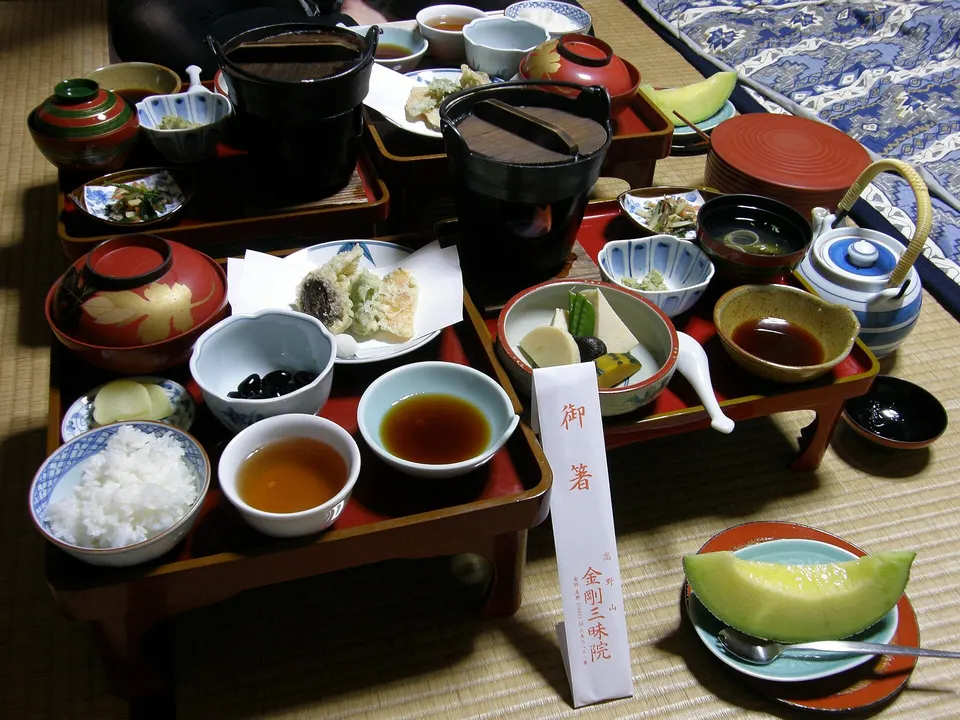
Shōjin ryōri uses no meat, fish or shellfish, only plant foods such as grains, vegetables and seaweed, following the Buddhist teaching against taking life. Zen, which flourished in the Kamakura period (1185–1333), created its own style, and the meals at the monastery of Dōgen, founder of Eihei-ji, are regarded as its prototype. Many dishes borrow the names of bird and game dishes, such as ganmodoki, "mock goose," which is tofu that has been processed and fried.
New Year on the table
The title on UNESCO's list ends with the words "notably for the celebration of New Year." To welcome the deity of the new year, people pound mochi, rice cakes, and prepare osechi, zōni and toso, sake steeped with medicinal herbs. The family eats together from special vessels, and the older members teach the children what each dish means.
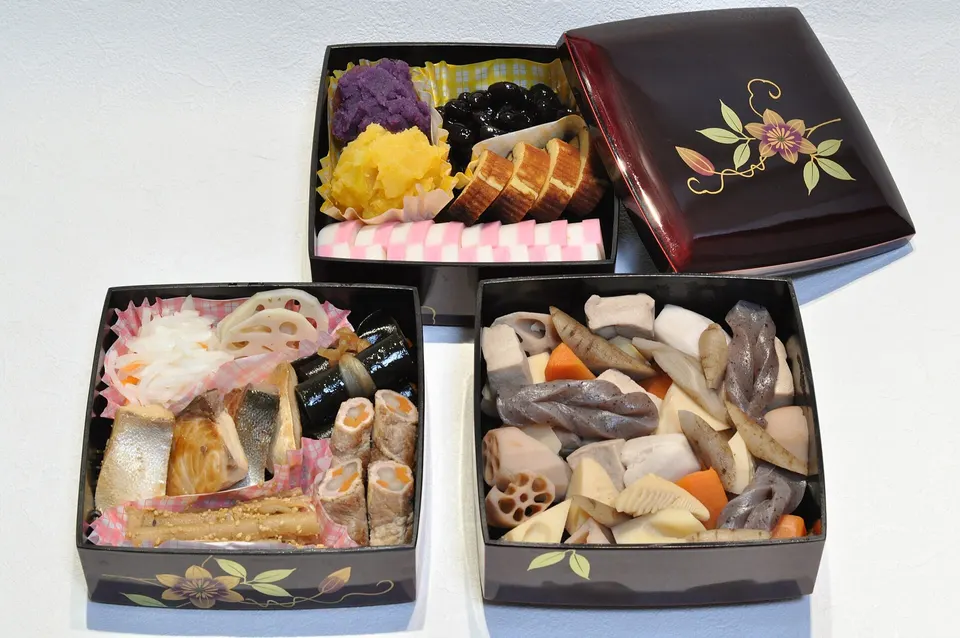
Osechi is the set of New Year dishes: simmered vegetables, kombu rolls, black beans, herring roe, kinton (a sweet mash) and fish cake, among others. They are seasoned fairly strongly and keep well, and they are packed into tiered boxes called jūbako and eaten over the first three days of the year.
Zōni is a soup of mochi with vegetables, seafood or chicken. In Tokyo and the rest of Kantō it is a clear soup with grilled pieces of cut mochi. In Kyoto, Osaka and the rest of Kansai it is made with white miso and boiled round mochi. The other ingredients are local: yellowtail in Hokuriku, oysters in Hiroshima, salmon in Tōhoku and Hokkaido.
References
- UNESCO Intangible Cultural Heritage, "Washoku, traditional dietary cultures of the Japanese, notably for the celebration of New Year"
- Ministry of Agriculture, Forestry and Fisheries, "Washoku inscribed as UNESCO Intangible Cultural Heritage"
- Ministry of Agriculture, Forestry and Fisheries, nomination file for the Representative List (provisional Japanese translation, PDF)
- Kotobank, "Washoku"
- Kotobank, "Nihon ryōri"
- Kotobank, "Ichijū sansai"
- Kotobank, "Honzen ryōri"
- Kotobank, "Kaiseki ryōri" (懐石料理, the tea meal)
- Kotobank, "Kaiseki ryōri" (会席料理, the banquet meal)
- Kotobank, "Shōjin ryōri"
- Kotobank, "Osechi ryōri"
- Kotobank, "Zōni"
- Oginoya, "Tōge no Kamameshi"
Image credits (resized for display):