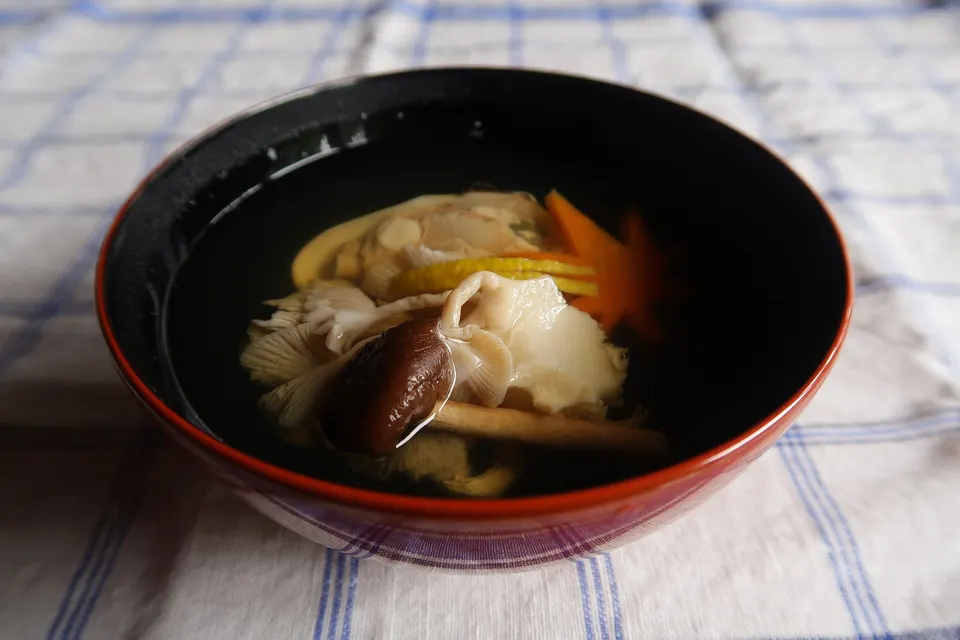
Dashi is the stock of Japanese cooking: water into which the umami of a dried ingredient has been drawn, used as the base of soups and simmered dishes. The two chief ingredients are kombu (dried kelp) and katsuobushi (dried bonito), and neither is boiled for long: the kombu is lifted out just before the water boils, and the katsuobushi goes into boiling water that is taken off the heat at once.
Kombu and bonito have been prized in Japan since the Nara period (710–794), and by the Edo period (1603–1868) making dashi was ordinary practice.
Four ingredients
Kombu and katsuobushi are joined by niboshi, small dried fish, and by dried shiitake.
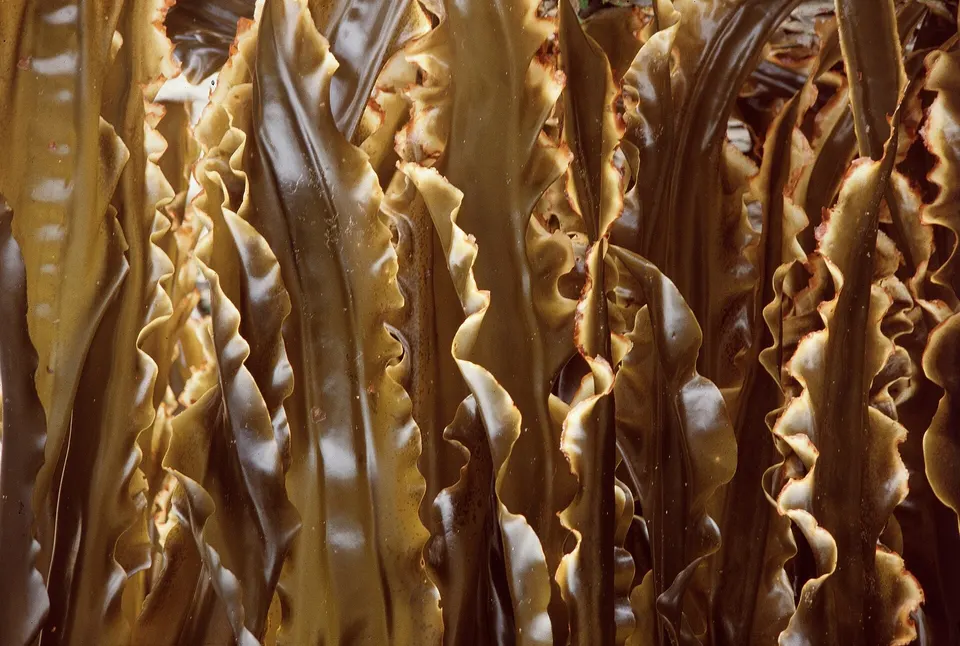
Kombu owes its umami mainly to glutamic acid. More than 95 percent of Japan's kombu comes from Hokkaido, where it is gathered from mid-July to early September and dried in the sun. Four kinds are suited to dashi: ma-kombu, Rausu kombu, Rishiri kombu and Hidaka kombu.
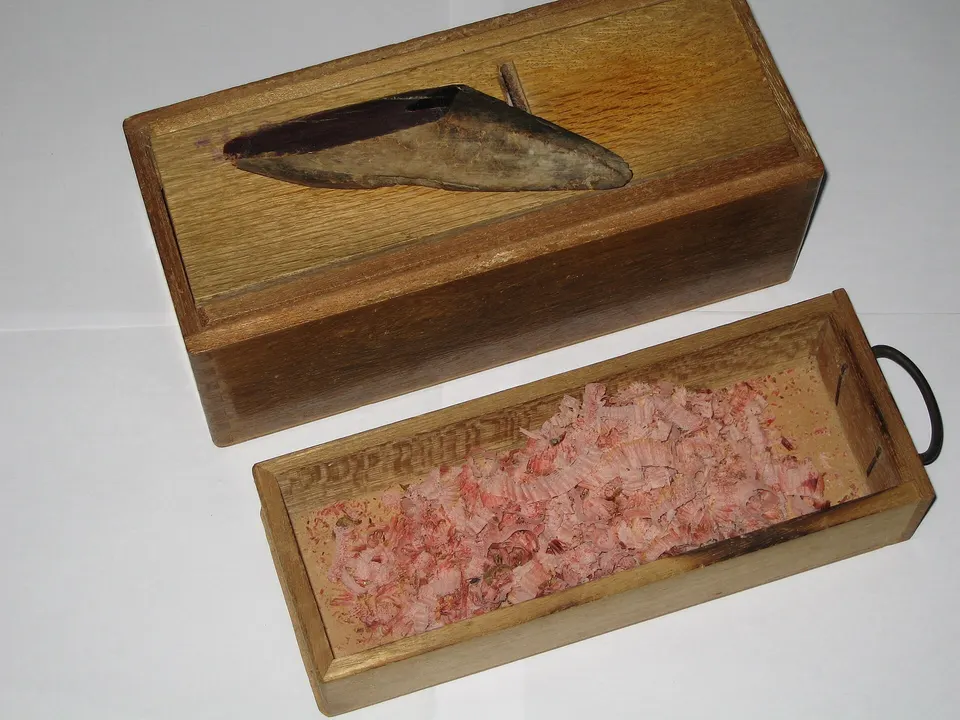
Katsuobushi is bonito that has been simmered, then smoked and dried over and over until its water content is 26 percent or less. The smoking is done over hardwood such as oak and repeated 8 to 12 times. At this stage it is called arabushi. With its surface shaved clean and a mold grown on it, it becomes karebushi, and after four rounds of mold, honkarebushi. The mold reduces the fat and improves the aroma and flavor. The whole process takes close to half a year. The umami substance in katsuobushi is inosinic acid. Kagoshima Prefecture leads Japan in katsuobushi production.
Niboshi are usually small anchovies or sardines boiled in salted water and dried in the sun, and they are used mainly for dashi. The heads and guts are best removed first, and the fish are simmered for 5 to 10 minutes. Their umami substance is also inosinic acid.
Dried shiitake are soaked in water before use, and their umami passes into the soaking water. Their umami substance is guanylic acid. Shōjin dashi, a stock with no fish in it, is made from dried shiitake, kanpyō (dried gourd strips) and kombu.
First dashi and second dashi
A combined stock of kombu and katsuobushi, awase dashi, takes 1 liter of water, 10 to 20 grams of kombu and about 30 grams of katsuobushi. The kombu soaks in the water for about 30 minutes, then the pot goes over medium heat and the kombu is taken out just before the water boils. When the water boils, the katsuobushi goes in, and the heat is turned off as soon as the water comes back to a boil. The shavings are left to sink, unstirred, and the liquid is strained through a cloth.
This is ichiban dashi, first dashi. It is used where the liquid is the dish, as in clear soups and chawanmushi, a savory steamed egg custard.
Niban dashi, second dashi, is drawn from the same kombu and katsuobushi, simmered in another liter of water for about 10 minutes, with about 10 grams of fresh katsuobushi added at the end. Second dashi tastes less clean than first dashi, and it gives umami to strongly seasoned food such as simmered dishes and miso soup.
Umami and the people who found it
Umami is the fifth basic taste, after sweet, sour, salty and bitter. The main umami substances are glutamic acid, an amino acid, and two nucleotides, inosinic acid and guanylic acid.
In 1908 Ikeda Kikunae (1864–1936), a professor at Tokyo Imperial University, found that the main taste component of kombu dashi was glutamic acid, and he named the taste umami. What set him on the search was the kombu dashi in a dish of yudōfu, tofu warmed in kombu stock. In 1913 his student Kodama Shintarō found that the umami substance in katsuobushi was inosinic acid. In 1957 Kuninaka Akira, of the research laboratory of the soy sauce maker Yamasa, found that guanylic acid was an umami substance, and later confirmed it in dried shiitake.
Glutamic acid combined with inosinic acid or guanylic acid tastes far stronger than any of the three alone. This is called umami synergy. Glutamic acid and inosinic acid mixed one to one give the strongest umami, about seven to eight times that of either substance alone. Kombu with katsuobushi is exactly this pairing, and cooks were using it long before the effect was proven.
Katsuobushi in the east, kombu in the west
Cooks in Kantō, the region around Tokyo, mostly build dashi on katsuobushi with kombu in support. Cooks in Kansai, the region around Osaka and Kyoto, do the reverse.
In the Edo period, trading ships called kitamaebune carried Hokkaido kombu by the western sea route, past Shimonoseki and through the Seto Inland Sea, to Osaka, and from Osaka it was shipped to the rest of the country. Cooking with kombu developed in Kansai, and kombu is still counted among Osaka's specialties. The routes that carried kombu are together called the Kombu Road. This road reached Kantō late, and Kantō remains a region that eats little kombu by national standards.
The same difference shows in a bowl of station soba: the broth is dark in eastern Japan, built on bonito and soy sauce, and pale in western Japan, made with kombu and other seafood stock and light-colored soy sauce.
Where the dashi goes
Miso soup is dashi with vegetables, tofu, seaweed or shellfish in it and miso dissolved into it. Kombu dashi is clear, and it is used for clear soups and for ohitashi, boiled greens steeped in seasoned dashi. Awase dashi has stronger umami and serves widely, in simmered dishes and in the broth for udon and soba.
Dashi goes into rice as well. For Tōge no Kamameshi, the ekiben that went on sale at Yokokawa Station in 1958, Oginoya mills its own Koshihikari rice and cooks it with Rishiri kombu and a dashi made to the company's own recipe. The cooked rice and its nine toppings are then packed into a pot of Mashiko ware. Rice cooked from the start with seasonings and other ingredients has a name of its own, takikomi gohan.
References
- Kotobank, "Dashi" (Encyclopedia Nipponica)
- Kotobank, "Dashi-jiru" (Digital Daijisen, Britannica)
- Kotobank, "Katsuobushi" (Heibonsha World Encyclopedia)
- Kotobank, "Kombu" (Heibonsha World Encyclopedia, Encyclopedia Nipponica)
- Kotobank, "Niboshi"
- Kotobank, "Dried shiitake"
- Ministry of Agriculture, Forestry and Fisheries, Traditional Foods of Japan, "Katsuobushi"
- Ministry of Agriculture, Forestry and Fisheries, aff magazine, November 2018
- Japan Kombu Association, "History of kombu"
- Japan Kombu Association, "How to make kombu dashi"
- Umami Information Center, "Umami basics"
- Ajinomoto Group, "History"
- Oginoya online shop, "What makes Tōge no Kamameshi taste the way it does"
Image credits (resized for display):