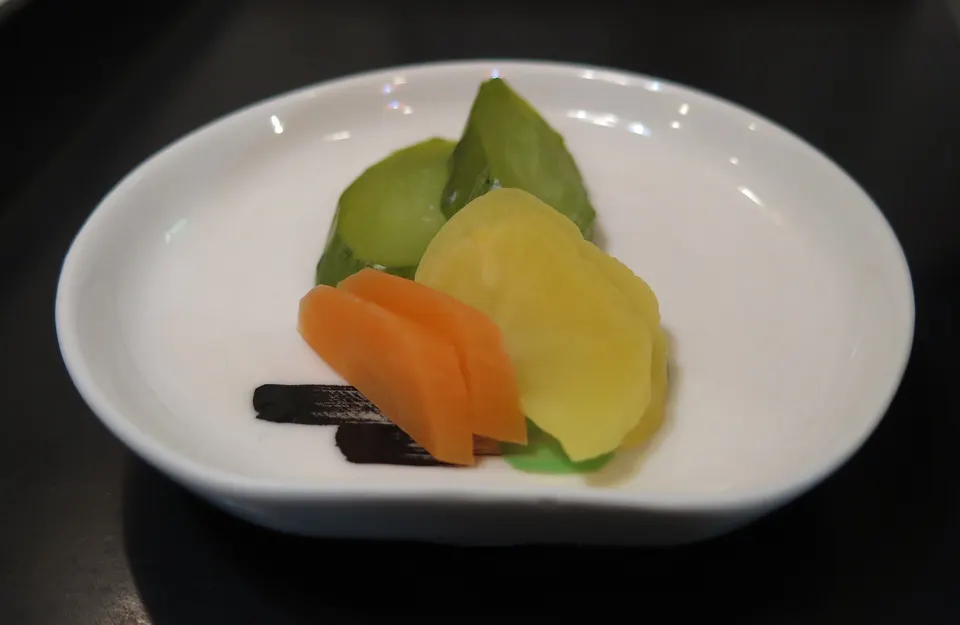
Tsukemono are Japanese pickles: mostly vegetables, cured in salt, rice bran, sake lees, miso, soy sauce, vinegar or kōji, the mold-cultured grain used to brew sake and miso. Some are ready overnight and some ferment for months, and under the name kō no mono a small dish of them has a set place beside the rice on a Japanese meal tray.
What is pickled, and in what
Vegetables are the most common material, followed by fish and shellfish. Each kind of tsukemono is named for the bed or liquid the food goes into.
| Pickled in | Japanese name | Examples |
|---|---|---|
| Salt | shiozuke | umeboshi (plums), nozawana-zuke (the leaves of the nozawana turnip), Chinese cabbage |
| Rice bran and salt | nukazuke | takuan (dried daikon radish), nukamiso-zuke |
| Sake lees | kasuzuke | narazuke, wasabizuke |
| Kōji | kōjizuke | bettarazuke (daikon) |
| Miso | misozuke | burdock root, fish, meat |
| Soy sauce | shōyuzuke | fukujinzuke (mixed vegetables) |
| Vinegar | suzuke | rakkyō, a small bulb of the onion family |
Salt is used in most of them, and pickles made in sake lees, miso or vinegar are usually salted first. The salt draws water out of the cells of the food, and the salt, sugars and acids of the pickling liquid move in, which gives a pickle its flavor and lets it keep.
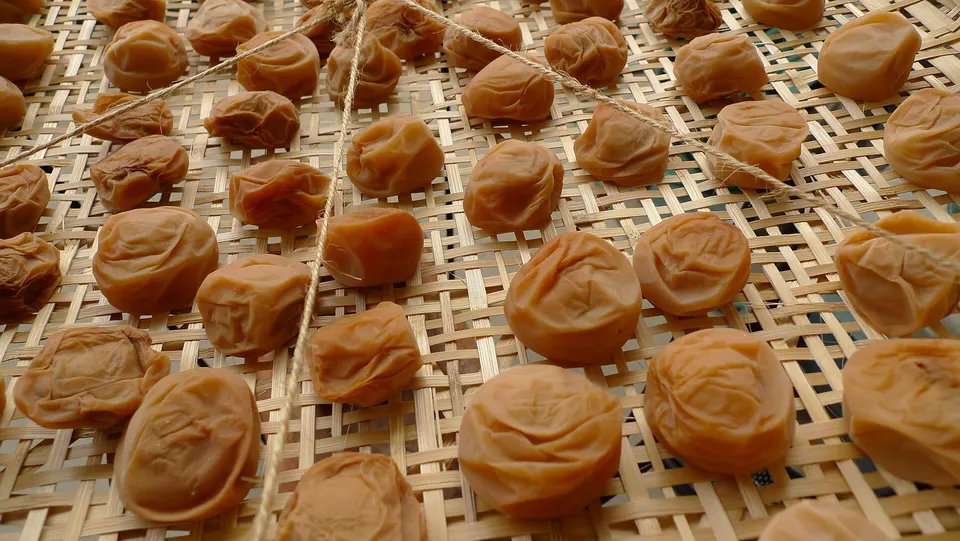
Umeboshi are plums that are salted, dried in the sun for about three days and returned to the liquid the salt drew out of them, often with red shiso leaves that dye them red.
Overnight pickles and pickles that wait
Asazuke, "shallow pickles", are short pickles meant to season a vegetable more than to store it. Ichiyazuke, "overnight pickles", take about half a day and taste close to the raw vegetable. Pickles made for storage stay in the tub from two or three months to half a year or longer, and the longest-kept are called furuzuke, "old pickles".
In a short pickle, the vegetable's own enzymes bring out its savory taste. In a long pickle, microbes do the work: acid, most of it lactic acid, builds up as the pickling goes on, rounds off the saltiness and helps the pickle keep. When the salt is stronger, the lactic acid bacteria are held back and no fermentation takes place.
Kyoto has a fermented pickle and an unfermented one. Suguki, a kind of turnip pickled in nothing but salt, gets its sourness from lactic fermentation. Senmaizuke, thin slices of the large Shōgoin turnip pickled with kombu, is as now made neither fermented nor meant to keep.
Why pickles come with rice
Japan's pickles are mainly vegetables fermented in salt, a food that goes well with rice and keeps through the winter.
At the table they have a second name, kō no mono, in use since the Muromachi period (1336–1573). By one account kō was another word for miso, and the name first meant pickles made in miso. By another account, people at incense gatherings smelled salt-pickled daikon to rest their noses between scents. Shinko, also said o-shinko, comes from shinkō, "new kō", which dates from the Edo period (1603–1868), when tastes moved from old pickles toward quick ones.
On the basic tray of one soup and three dishes, the rice stands at the front left, the soup at the front right, and the kō no mono in the center.
The bento that people carried to work often had miso, pickles or umeboshi as its side dish, and onigiri, rice balls, paired with umeboshi became one standard kind of bento. The first ekiben, sold at Utsunomiya Station in 1885, was two rice balls and two slices of takuan. From the Kantō region northward the only change for the next forty years was that an umeboshi took the place of the takuan.
From wooden tablets to a book of 64 pickles
The oldest record of pickles in Japan is on wooden tablets of the Tenpyō era (729–749), which mention melon and greens pickled in salt. The Engishiki, a collection of court regulations completed in 927, has bracken and butterbur salted in spring, and eggplant and ginger put down in autumn in salt, sake lees, sake and miso.
The bed of rice bran and salt called nukamiso is seen from about the Genroku era (1688–1704), and by the late Edo period it had spread to households everywhere. In 1836 the owner of a pickle wholesaler in Edo, now Tokyo, published Shiki tsukemono shiokagen, a book of methods for 64 pickles beginning with takuan.
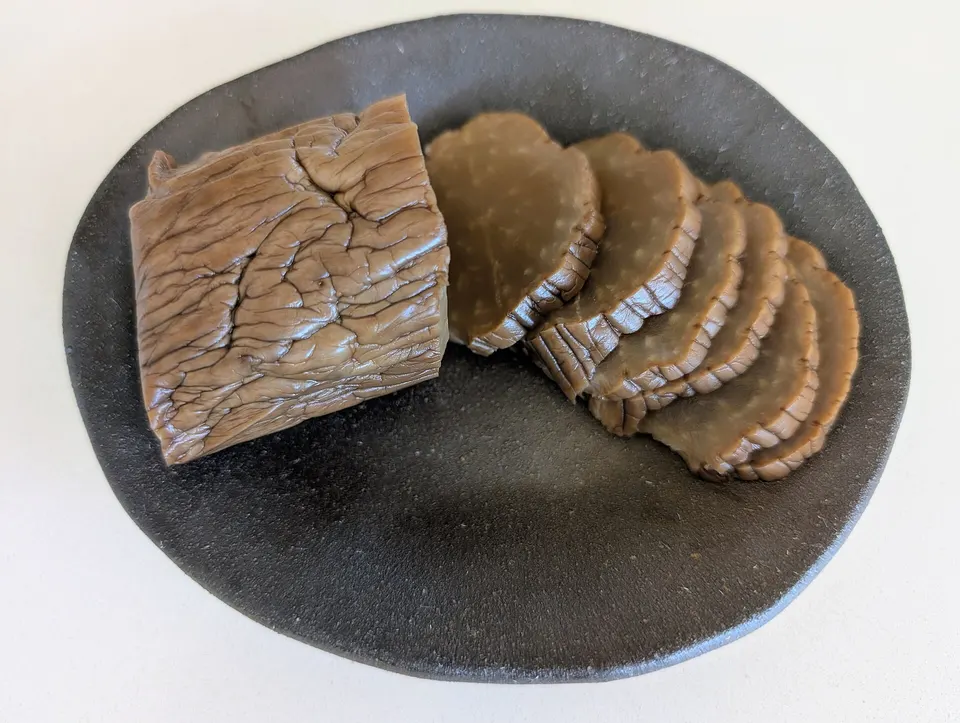
Takuan is dried daikon pickled in rice bran and salt. The daikon is dried well beforehand because sun-drying turns its sharpness into sweetness. Where the name comes from is unsettled. One explanation is that the Zen monk Takuan (1573–1645) was the first to make it, and another is that the name is a worn-down form of takuwae-zuke, "pickle for storing".
Pickles of the regions
Senmaizuke, suguki and shibazuke, which is eggplant and myōga ginger sliced thin and lightly salted with shiso leaves, are known as the three great pickles of Kyoto. Senmaizuke is credited to a cook of the imperial palace in the Edo period.
Narazuke began as the name for pickles made in Nara with the lees of the city's sake, which was renowned in the Muromachi period, and its chief ingredient is shirouri, a pale-skinned melon. Nagano's nozawana, a variety of turnip, is said to go back to 1756, when a temple priest in Nozawa Onsen brought a turnip from Kyoto and planted it.
In the snowy inland south of Akita, daikon put outdoors to dry froze before it had dried, so farm households dried it over the sunken hearth and then pickled the smoked daikon in rice bran and salt. This is iburigakko: iburi means smoked, and gakko is the Akita word for pickles. It was registered under Japan's geographical indication system in 2019.
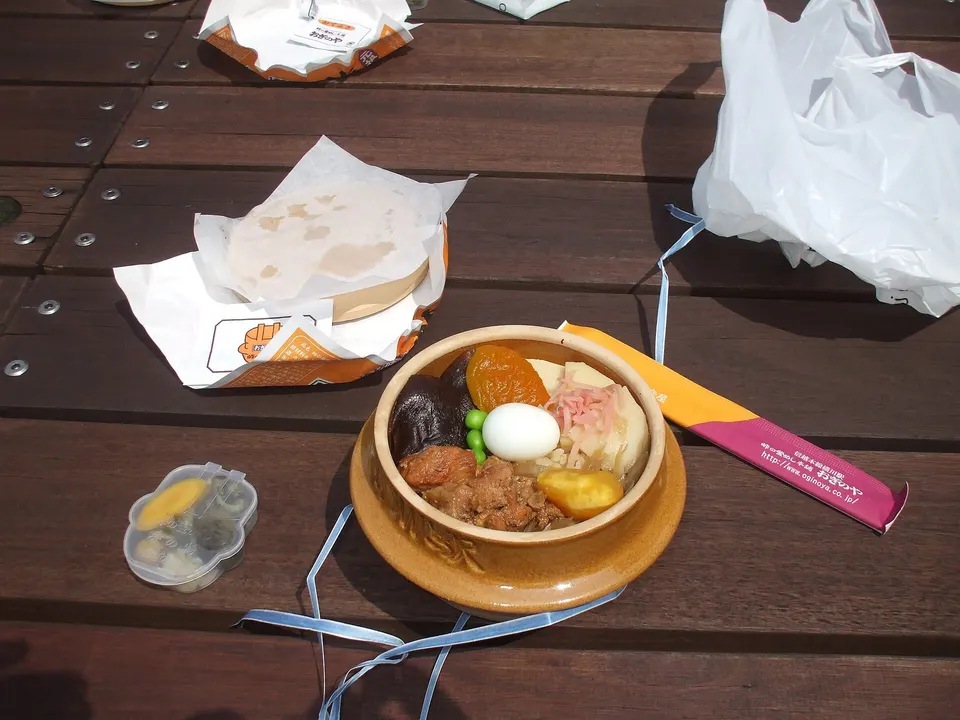
The pickles beside Tōge no Kamameshi
Tōge no Kamameshi, Oginoya's ekiben from Yokokawa Station, comes with kō no mono too. The rice and its nine toppings fill an earthenware pot, and the pickles come beside it in a separate container shaped like a small pot. The container holds five kinds of pickles.
References
- Kotobank, "Tsukemono" (Japanese dictionaries and encyclopedias)
- Kotobank, "Kō no mono"
- Kotobank, "Takuan-zuke"
- Kotobank, "Umeboshi"
- Kotobank, "Narazuke"
- Kotobank, "Ichijū sansai"
- Ministry of Agriculture, Forestry and Fisheries, Our Regional Cuisines, "Iburigakko" (Akita)
- Ministry of Agriculture, Forestry and Fisheries, Our Regional Cuisines, "Senmaizuke" (Kyoto)
- Ministry of Agriculture, Forestry and Fisheries, Our Regional Cuisines, "Sugukizuke" (Kyoto)
- Ministry of Agriculture, Forestry and Fisheries, Our Regional Cuisines, "Nozawana-zuke" (Nagano)
- Oginoya online shop, "What makes Tōge no Kamameshi taste the way it does"
Image credits (resized for display):