Japanese soy sauce, shōyu, comes in five types under the Japanese Agricultural Standard (JAS): koikuchi, usukuchi, tamari, saishikomi and shiro. They differ in how much wheat goes in with the soybeans, in what liquid the mash is brewed with, and in how far the color is allowed to darken.
The five types
Every soy sauce starts from kōji, steamed grain or beans on which a mold has been grown. The standard tells the five types apart by what goes into the kōji and how the mash is made.
| Type | What the kōji is made from | Where it comes from | Share of 2024 shipments | Color and uses |
|---|---|---|---|---|
| Koikuchi ("dark") | Soybeans and about the same amount of wheat | Noda and Chōshi, in Chiba Prefecture | 84.9% | Clear, bright red-orange. Used at the table and in cooking alike |
| Usukuchi ("light-colored") | The same as koikuchi, with the darkening held back during brewing | Born in Kansai, the region around Osaka and Kyoto. Tatsuno, in Hyōgo Prefecture, has long been known for it | 11.5% | Pale. Simmered dishes in which the colors of the ingredients should show |
| Tamari | Soybeans alone, or soybeans with a little wheat | Aichi, Mie and Gifu prefectures | 2.0% | Dark and thick, with dense umami. Sashimi, sushi, teriyaki, rice crackers |
| Saishikomi ("brewed again") | The same as koikuchi, but the mash is made with raw soy sauce in place of salt water | Born in the Yanai district of Yamaguchi Prefecture | 1.0% | Dense in color, taste and aroma. Sashimi, sushi, cold tofu |
| Shiro ("white") | Wheat with a little soybean, with the darkening strongly held back | Born in Hekinan, Aichi Prefecture | 0.6% | Amber, paler than usukuchi, and sweet. Clear soups, chawanmushi (steamed egg custard), rice crackers, pickles |
Koikuchi is what the word soy sauce means in Japan when nothing else is said.
Tamari has long gone by the name sashimi tamari, and heat brings out a clear red in it, which is why it is also used for teriyaki. The word tamari once meant the liquid that collects at the bottom of a vat of miso, and soy sauce is said to have begun with it.
Paler, and saltier
Usukuchi contains about 18 grams of salt per 100 milliliters, and koikuchi about 16. Koikuchi, tamari and saishikomi all fall between 15 and 17 grams.
Salt slows fermentation and aging, and brewers put about one-tenth more of it into usukuchi than into koikuchi so that the sauce takes on less color and less aroma. They also use amazake, rice turned sweet by kōji, to round out the taste.
How soy sauce is brewed
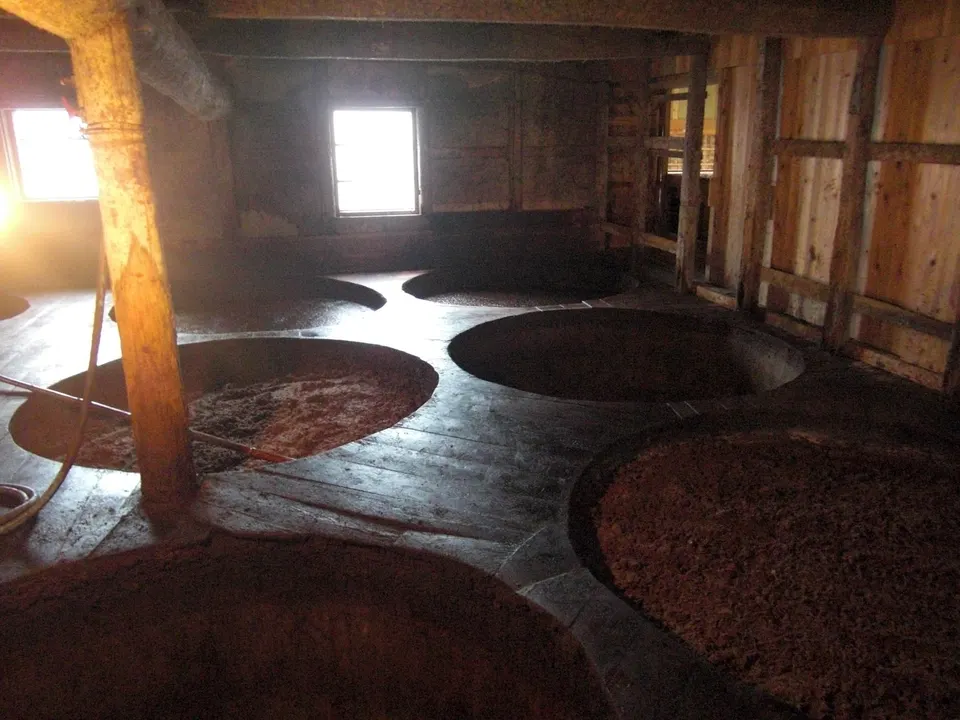
The main ingredients are soybeans, wheat and salt. In the traditional method, called honjōzō, steamed soybeans and roasted wheat are mixed in roughly equal amounts and seeded with mold to make kōji. The kōji goes into a tank with salt water. This mash is the moromi, and for koikuchi it is stirred again and again and left for about six to eight months.
In the moromi, enzymes from the kōji mold break the soybean protein down into amino acids, the source of the umami, and turn the wheat starch into glucose, which gives sweetness and body. Yeast turns part of the glucose into alcohol, which lifts the aroma. The color comes from the amino acids and the glucose combining.
The finished moromi is pressed. The liquid that runs out is raw soy sauce, kiage, and it is heated to pasteurize it and to improve its flavor and color. About 80 percent of Japan's soy sauce is made by the honjōzō method.
Tamari takes about a year. Shiro takes about three months and is kept as cool as possible.
From hishio to shōyu
Soy sauce is traced back to jiang, the salted preserves of ancient China, which Japan called hishio. An office that made hishio from soybeans appears in the law code of 701.
By tradition, the Zen monk Kakushin brought the method for Kinzanji miso back from China in the 13th century, and the liquid at the bottom of the vats at Yuasa, in present-day Wakayama Prefecture, became the beginning of tamari. The story is legend rather than record, but Yuasa is among Japan's oldest soy sauce districts. By the middle of the Muromachi period (1336–1573) something close to present-day soy sauce was being made, and the written word shōyu is said to appear first in a dictionary of 1597.
Brewing grew into an industry in Kansai first, and usukuchi was developed there in 1666.
In Chōshi, Tanaka Genba, regarded as the forerunner of today's Higeta, is said to have gone into business in 1616, and Hamaguchi Gihei, the founder of Yamasa, is said to have done so in 1645. In Noda, Takanashi Hyōzaemon began brewing in 1661.
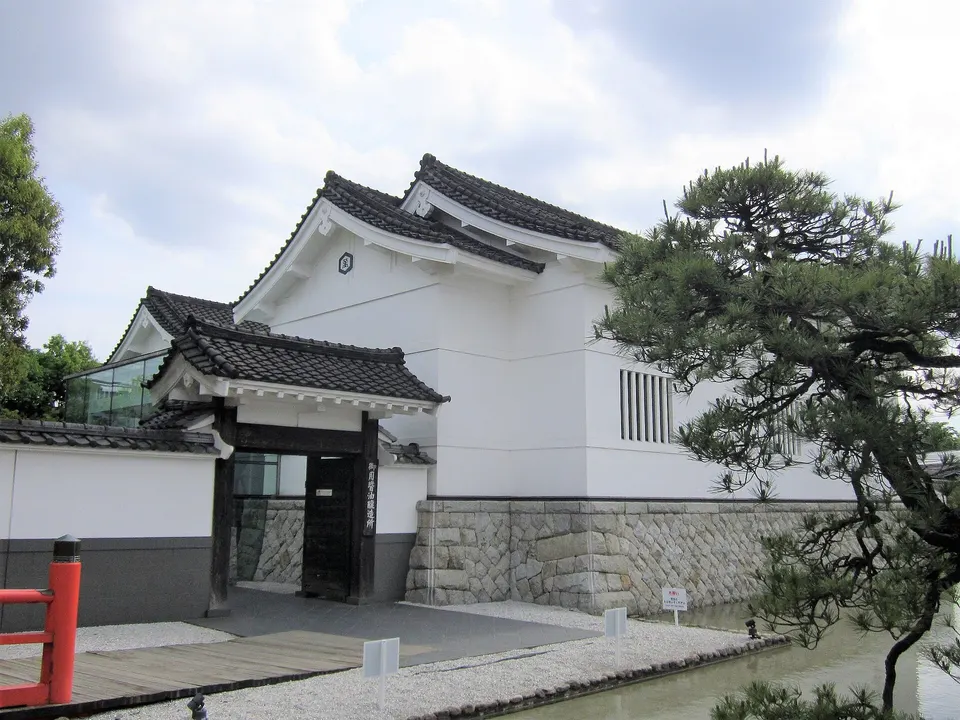
At the start of the Edo period (1603–1868) most of the soy sauce in Edo, as Tokyo was then called, came from Kansai. Chōshi and Noda entered that market in earnest in the years 1751–1764, and in 1821, of the 1.25 million casks of soy sauce in the Edo market, 1.23 million came from Kantō, the region around Edo. Koikuchi suited the city's taste, and the Edo dishes built on it, soba, tempura and grilled eel, are said to have reached their finished form between 1804 and 1830. During the Edo period soy sauce was also exported to Europe through the Dutch.
In 2024 Chiba Prefecture shipped 37.6 percent of Japan's soy sauce, the largest share, and Hyōgo Prefecture came second with 15.7 percent. Kagawa Prefecture, where brewing began on the island of Shōdoshima between 1818 and 1830, came fifth with 5.3 percent.
In the kitchen
Soy sauce is a seasoning that Japanese cooking cannot do without, and it is also sold already mixed: tsuyu is soy sauce combined with mirin, sugar and dashi, for noodles, simmered dishes and hot pots. Pickles cured in soy sauce, shōyuzuke, are one family of tsukemono. The broth of station soba is dark with soy sauce in eastern Japan and pale in western Japan, where usukuchi is used.
Oginoya cooks the rice for Tōge no Kamameshi with Rishiri kombu, dashi and soy sauce blended to its own recipe, and calls this seasoned rice chameshi. Rice cooked from the start with seasonings is takikomi gohan. Among the nine toppings, the bamboo shoot is seasoned in the Kansai manner with usukuchi, and the shiitake in the Kantō manner, a little stronger.
References
- Ministry of Agriculture, Forestry and Fisheries, "Japanese Agricultural Standard for Soy Sauce" (PDF)
- Soy Sauce Information Center, "Types"
- Soy Sauce Information Center, "Production"
- Soy Sauce Information Center, "Ingredients"
- Soy Sauce Information Center, "History"
- Soy Sauce Information Center, "Data"
- Soy Sauce Information Center, "Soy sauce statistics, 2024 results"
- Kotobank, "Shōyu" (Digital Daijisen, Britannica)
- Kotobank, "Tamari" (Heibonsha World Encyclopedia, Mypedia)
- Kotobank, "Noda shōyu" (Encyclopedia Nipponica)
- Kotobank, "Chōshi shōyu" (Encyclopedia Nipponica)
- Kotobank, "Yuasa shōyu" (Encyclopedia Nipponica)
- Kotobank, "Tatsuno"
- Kotobank, "Hiire" (Digital Daijisen)
- Kotobank, "Shōdoshima"
- Oginoya online shop, "What makes Tōge no Kamameshi taste the way it does"
Image credits (resized for display):