Bento is a meal carried to be eaten away from home. The word also covers the boxed meals of rice and side dishes that restaurants and shops prepare. It began as rice balls wrapped in leaves or bamboo sheath; in the Edo period the boxes and their contents grew more elaborate, and the makunouchi bento, made to be eaten between the acts of a play, appeared.
Rice wrapped in leaves
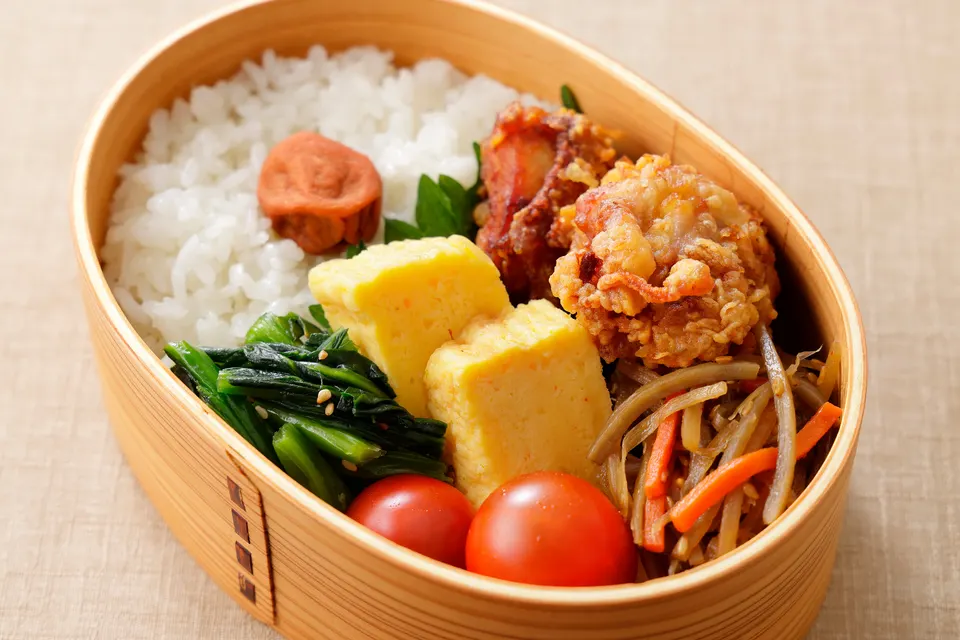
Bento was originally carried by people who worked outdoors and could not go home to eat. What they carried depended on what the region ate: rice, millet or tubers, with miso, pickles or umeboshi, pickled plums, on the side. The containers were bundles woven of straw or rush, baskets plaited from willow or bamboo, and wappa, boxes made by bending thin sheets of cedar or cherry wood. Large oak and magnolia leaves, bamboo grass and bamboo sheath served as wrapping too.
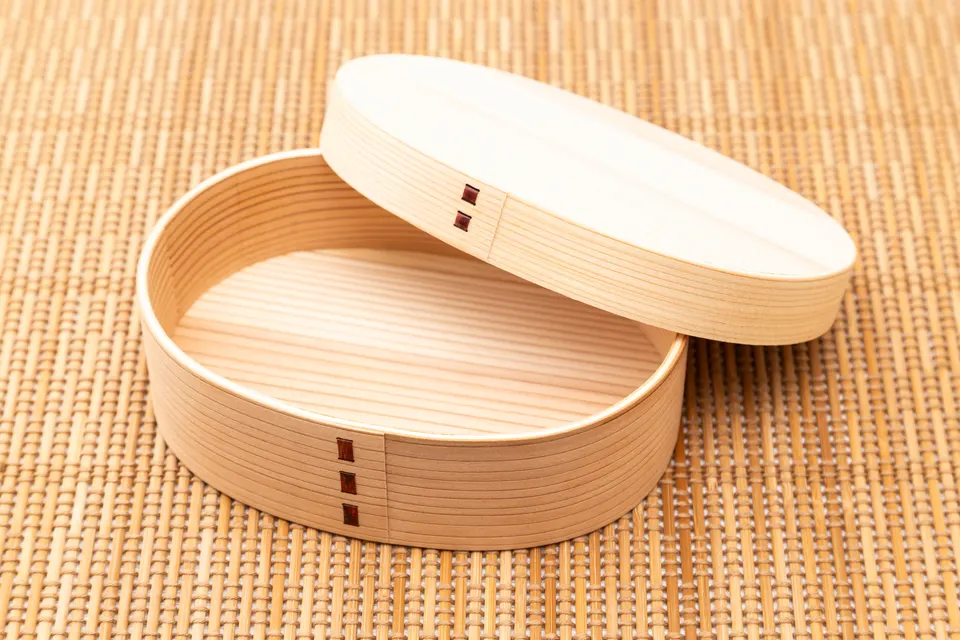
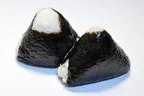
Travelers needed bento as well. Records from ancient and medieval times mention dried cooked rice and rice balls taken on journeys. Rice balls already appear in writings of the Heian period, and paired with umeboshi they became one of the standard forms of bento.
Where the word comes from
There are two explanations. One says that Oda Nobunaga, feeding a large number of people at Azuchi Castle, had the food portioned into simple containers and handed out, and called this bento. The other says the word shifted from mentsū, an individual food container, through mentō to bentō.
Makunouchi: a meal for the theater
Bento developed greatly in the Edo period. There were lavish tiered sets called sagejū; ordinary bento boxes were lacquerware, ceramic or wood. In the cities people took bento on outings and to the theater.
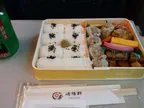
The makunouchi bento takes its name from the time when it was eaten: while the curtain, the maku, was drawn between acts. In the late Edo period a shop called Mankyū in Nihonbashi Yoshichō sold a theater bento under that name. A makunouchi has rice pressed into small barrel shapes and sprinkled with sesame, packed with several side dishes such as grilled fish, rolled omelet, fish cake and simmered dishes.
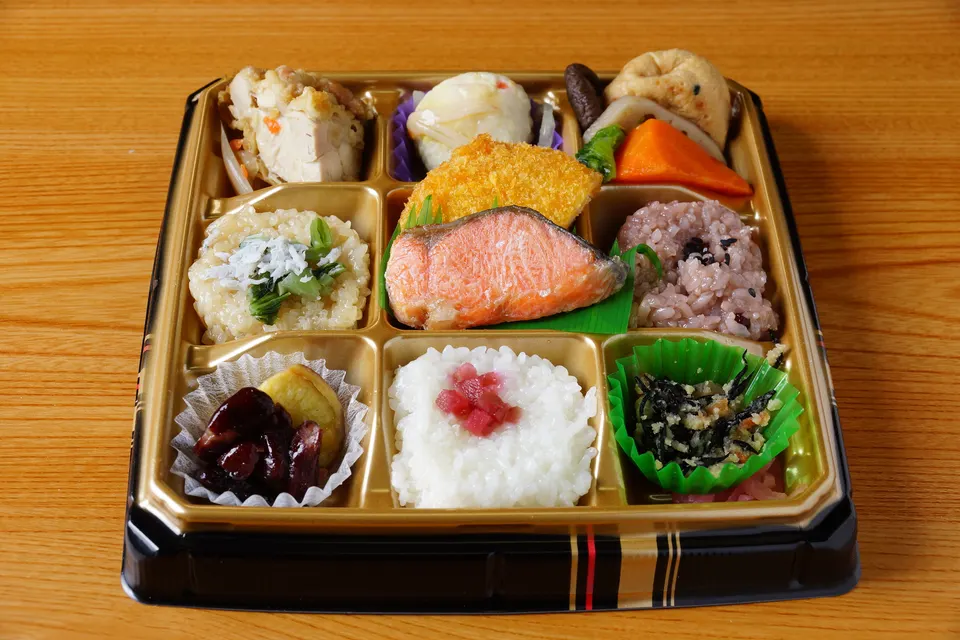
Ekiben, the bento sold at railway stations, appeared in 1885. They took up the makunouchi, the name spread with them, and it is now the most common kind of bento in Japan. In the 1950s the usual ekiben was a cold makunouchi, which is what travelers at Yokokawa Station had in mind when they asked for something warm and were given Tōge no Kamameshi.
Shōkadō: a box divided in four
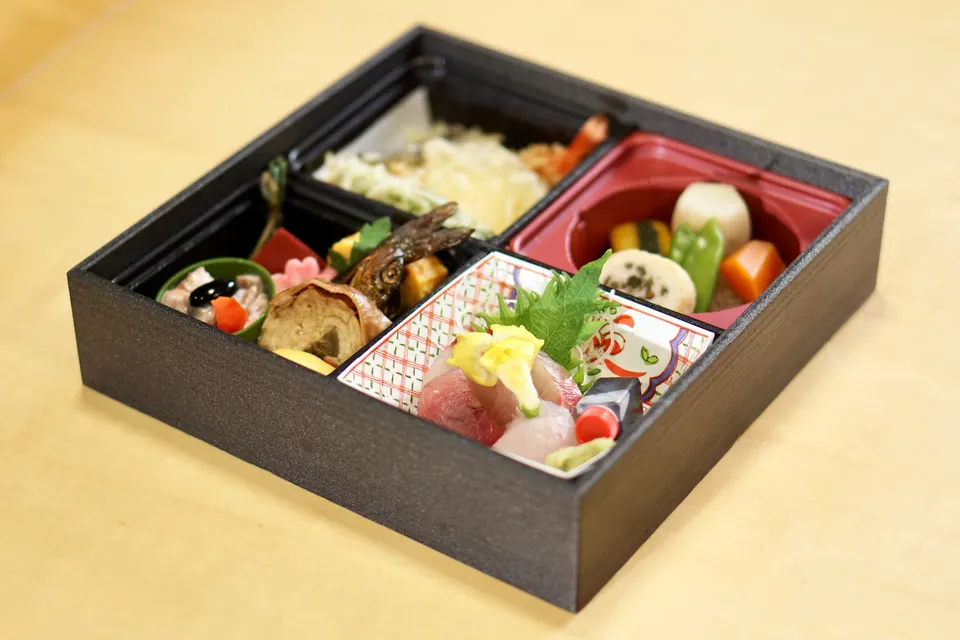
The shōkadō bento is served in a square box with high sides and a lid that fits over it. Partitions in the shape of a cross divide the inside, so that rice, simmered dishes and grilled dishes can be arranged separately and their flavors do not mix. The box goes back to a story about Shōkadō Shōjō, a monk and man of letters of the early Edo period, who kept his paints in a box divided this way.
Made to be eaten later
Food for a bento is chosen for what happens after it is packed. It should not give off liquid, and its taste and color should hold when it cools and as time passes. Anything that spoils easily is left out, cooked items are heated through, and the rice is cooled well before the lid goes on.
From the late Meiji era into the Taishō era, some people went to work with a bento hanging at the waist, and koshiben, "waist bento," became a nickname for a low-paid office worker. Today there are Chinese-style bento, Western-style bento, pork cutlet bento and many more, and more and more of the containers are plastic.
References
- Kotobank: “Bentō” (Japanese dictionaries and encyclopedias)
- Kotobank: “Makunouchi bentō” (Japanese dictionaries)
- Kotobank: “Shōkadō bentō” (Japanese dictionaries and encyclopedias)
- Oginoya: The story behind Tōge no Kamameshi
Image credits (resized for display):