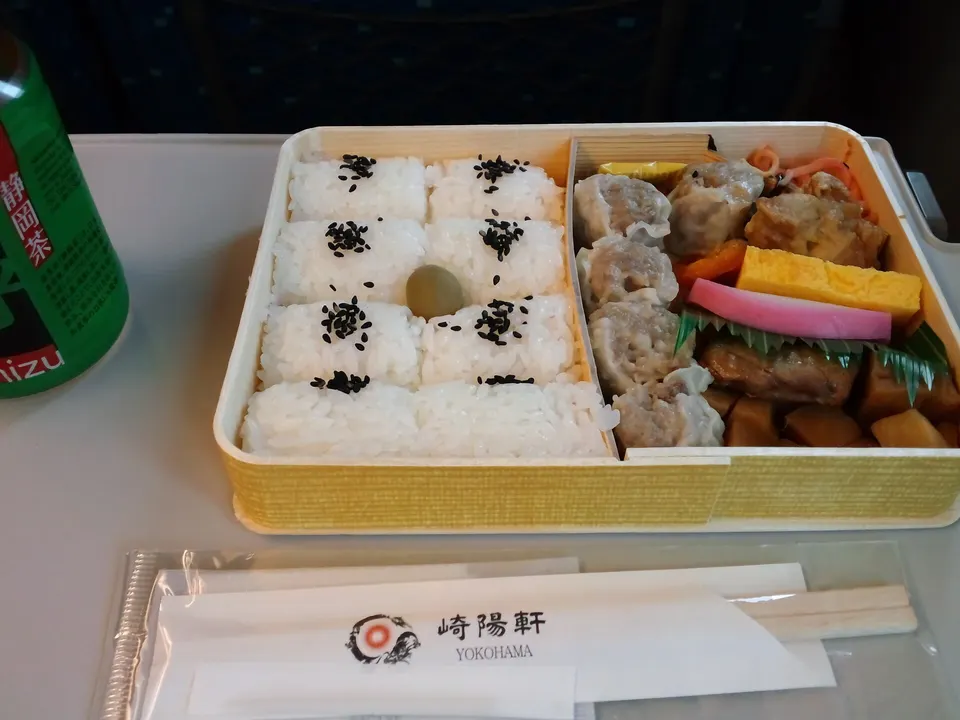
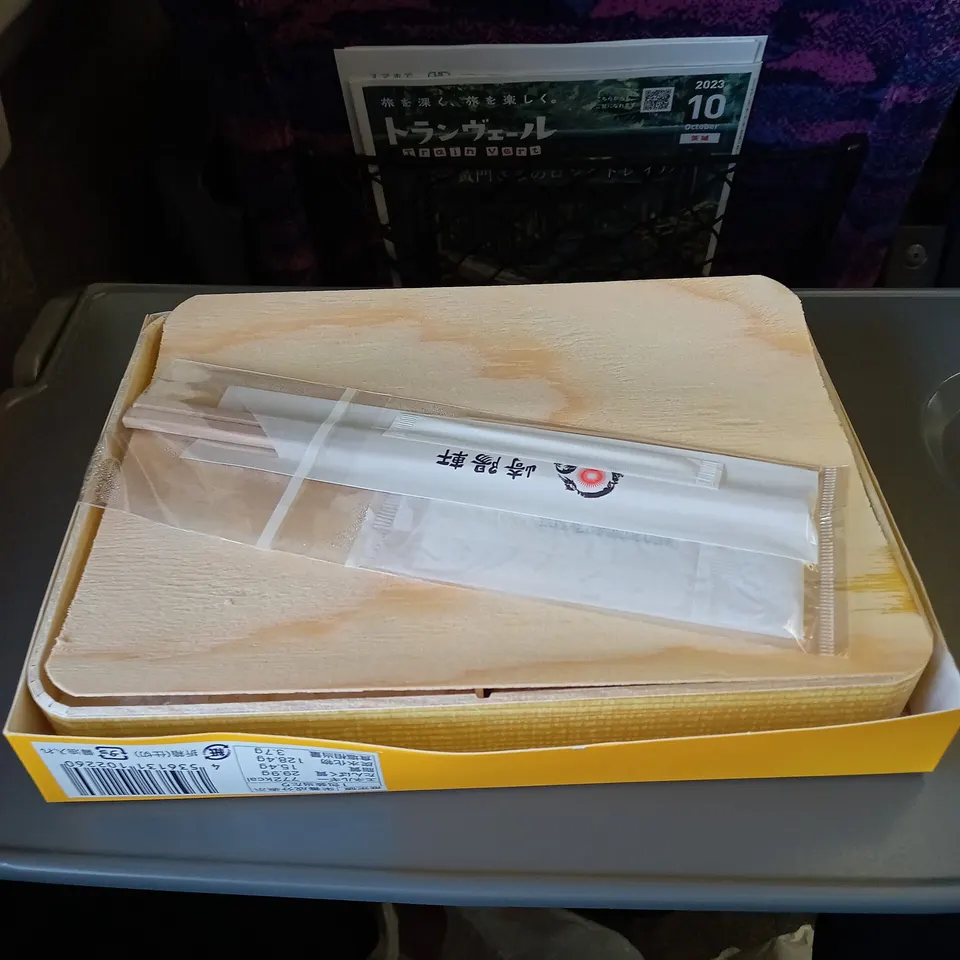
The shūmai bento is the ekiben, or station bento, of Yokohama: a box of thin shaved wood packed with barrel-shaped portions of rice, five pork-and-scallop shūmai dumplings and a set of side dishes. Its maker, Kiyoken, started out at Yokohama Station in 1908, created a shūmai that tastes good cold in 1928, and built this bento around it in 1954.
What is in the box
The rice comes as eight small barrels, sprinkled with black sesame and topped with a small ume plum, and it is cooked with steam. Beside it are five shūmai, tuna that has been marinated and grilled, a slice of kamaboko fish cake, a piece of fried chicken, rolled omelet, simmered bamboo shoots, an apricot, and shredded kelp with slivers of ginger. Grilled fish, omelet and fish cake are called the three sacred treasures of the makunouchi bento, and sesame on barrel-shaped rice is the traditional form as well. After the shūmai, the bamboo shoots are the most popular thing in the box.
Shūmai is a Chinese dim sum: minced pork and chopped scallion wrapped in a skin of wheat flour and steamed. Kiyoken's are bite-sized and made of pork mixed with dried scallop. The company spells the word its own way, shiumai.
The box is made of kyōgi, wood such as spruce or red pine shaved into thin sheets, a material used for bento boxes and confectionery boxes. Kiyoken counts the wooden box among the things it does to make a meal that tastes good cold. The wrapper is yellow, with a red dragon holding a crystal. It is the fourth design; the first showed Yokohama harbor and seagulls.
A station too close to Tokyo
Japan's first railway opened between Shimbashi and Yokohama on October 14, 1872. Kiyoken was founded in 1908 at the original Yokohama Station, which is now Sakuragichō Station. Its founder, Kubo Hisayuki, had been the fourth stationmaster there; after he retired, permission to trade inside the station was granted in the name of his wife, Koto. The business sold drinks such as milk and soda pop, rice cakes and sushi. In 1915 Yokohama Station moved to a new site, Kiyoken moved with it, and in that year it began selling ekiben.
Yokohama Station was a poor place to sell them, because it was so close to Tokyo Station. The city, a port opened in 1859, also had nothing that could be called its specialty. After the Great Kantō Earthquake of 1923, when Kiyoken fed travelers beef bowls and curry rice in front of the station, Nonami Mokichi, who led the company, set out with the founder's grandson to create one. In Nankinmachi, today's Yokohama Chinatown, they noticed the shūmai that restaurants served as a starter. Those were good straight from the steamer and lost their flavor as they cooled, and Kiyoken wanted something for the train that tasted good cold. It brought in a dim sum chef from Nankinmachi, and after about a year of trial and error, in 1928, it had a shūmai of pork and dried scallop that did. It was made bite-sized so that it would not be spilled in a swaying carriage.
Shiumai Girls on the platform
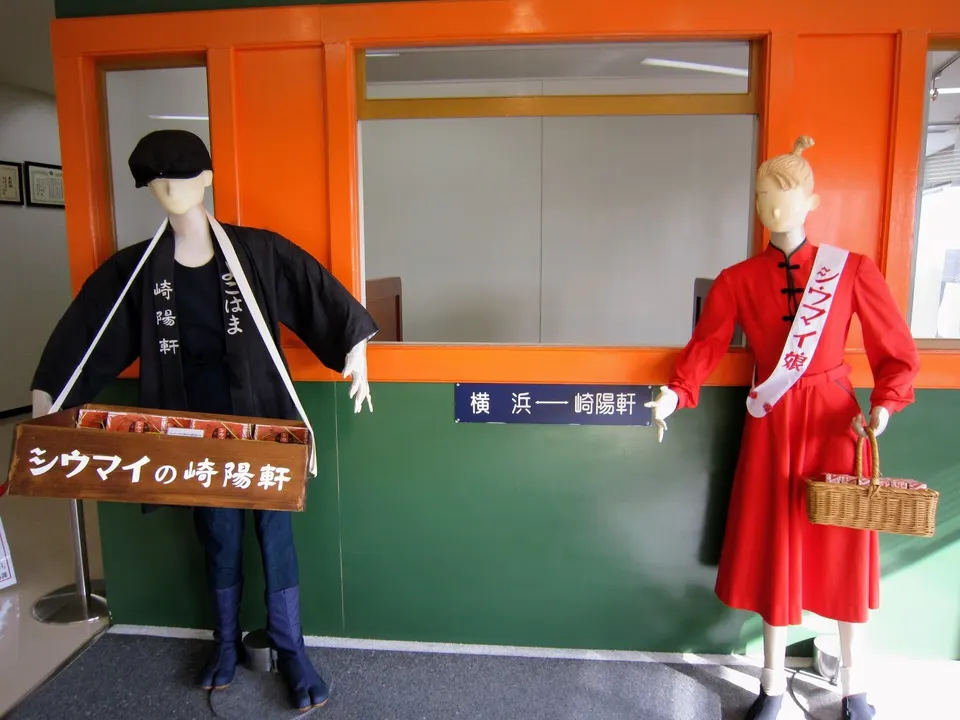
Kiyoken lost its sales office and its restaurant in the air raid on Yokohama in 1945. Around 1948 wartime controls were lifted and it could make pork shūmai again. In 1950, hoping to bring some brightness back to postwar Yokohama, it sent Shiumai Musume, the Shiumai Girls, onto the platforms of Yokohama Station. They wore red dresses and sashes, carried shūmai in hand baskets and sold them at the windows of the trains.
In 1952 the Shiumai Girls appeared in Yassa Mossa, a novel that the Yokohama-born writer Shishi Bunroku serialized in the Mainichi Shimbun, and the novel was filmed the following year. They became known across Japan, and sales of shūmai grew. Kiyoken now makes about 800,000 shūmai a day.
The bento of 1954
By 1954 shūmai had settled in as the specialty of Yokohama, and Kiyoken wanted an ekiben built around it that could only come from there. The shūmai bento put the standard items of an ekiben, grilled fish and rolled omelet, together with three well-known products: Kiyoken's own shūmai, Yokohama kamaboko, and fukujinzuke pickles from Shuetsu, the shop in Ueno, Tokyo, said to have created that pickle. There were four shūmai then, the fish was yellowtail teriyaki, and there was a fried prawn instead of the fried chicken. Because the shūmai was already popular, the bento sold better than expected from the start, and it became one of Kiyoken's two flagship products, alongside the shūmai itself. In 1955 Kiyoken added a simple hand wipe to its ekiben, something no ekiben had come with before.
The contents have shifted a little at a time. The marinated tuna arrived around 1963, about when the plum and the black sesame on the rice became fixed. Customers asked for more shūmai, and four became five. The apricot was once replaced by a cherry and soon restored at customers' request. The bento reached nearly its present form in 1995, the rolled omelet, which had dropped out along the way, came back in 2003, and the lineup has stayed the same since 2007. For seven days in August 2022, when Kiyoken could not obtain enough tuna, grilled salted salmon took its place.
From about 1955, ekiben named for one local dish appeared all over Japan. The usual ekiben of those years was a cold makunouchi. On February 1, 1958, at Yokokawa Station, Oginoya answered travelers who wanted a warm meal with Tōge no Kamameshi, served in an earthenware pot. In October 2022, for the 150th anniversary of the railway, 31 ekiben makers each sold a revival of an old ekiben. Kiyoken's was the shūmai bento of its first years, in the wrapper with the harbor and the seagulls, sold for three days, and Oginoya of Yokokawa was among the 31.
Hyō-chan, the soy sauce bottle
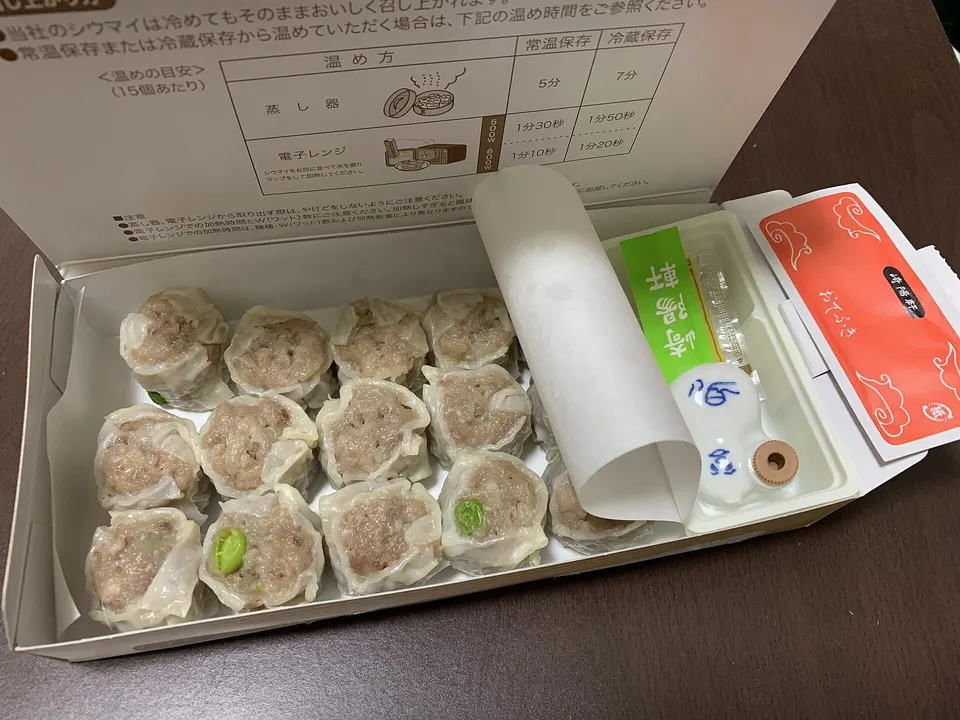
A box of Kiyoken's shūmai comes with a porcelain soy sauce bottle called Hyō-chan. In 1928 the soy sauce came in a little glass bottle. After the war it became a gourd-shaped bottle of white porcelain, and in 1955 the cartoonist Yokoyama Ryūichi, creator of the newspaper strip Fuku-chan, offered to give the bottles eyes and noses. He drew 48 faces, a number taken from the 48 characters of the iroha syllabary, and named the bottle Hyō-chan.
A second generation of 80 designs by the illustrator Harada Osamu followed in 1988, for Kiyoken's 80th anniversary. Yokoyama's originals returned in 2003, and those 48 are the ones found today in boxes of Kiyoken's Old-fashioned Shiumai and Deluxe Shiumai. Once the soy sauce is gone, a Hyō-chan can be used as a chopstick rest.
A bento that stays local
In 2024 the shūmai bento sold an average of 27,000 boxes a day. A Japanese encyclopedia lists it by its station, as the shūmai bento of Yokohama, alongside the ikameshi of Mori and the kamameshi of Yokokawa, ekiben known by the places where they are sold. In 1991 a society of Yokohama cultural figures, which each year honors a person or a thing that suits the city, gave its third grand prize to the shūmai bento. It was the first time the prize had gone to a thing rather than a person.
On June 30, 2018, Kiyoken sold a Taiwanese edition of the bento for a single day at the FOOD TAIPEI 2018 trade fair in Taipei, limited to 160 boxes. At home it sells the shūmai bento only in Tokyo and four prefectures. The reason is in the company's philosophy: Kiyoken does not aim to be a national brand, and aims to be a truly excellent local one.
References
- Kiyoken: History
- Kiyoken: Shiumai Bento (product page)
- Kiyoken: Hyō-chan
- Kiyoken: About Kiyoken's shiumai
- Kiyoken: Shiumai Bento 70th anniversary
- Kiyoken: Company overview
- Kiyoken and others: press release on the revived Shiumai Bento (2022, PDF)
- Kotobank: “Shūmai”
- Kotobank: “Kyōgi”
- Kotobank: “Ekiben” (Japanese dictionaries and encyclopedias)
- Oginoya: The story behind Tōge no Kamameshi
Image credits (resized for display):
- zenjiro / Wikimedia Commons, CC BY 2.0, 2014
- 経済特区 / Wikimedia Commons, CC0, 2023
- KQuhen / Wikimedia Commons, CC BY-SA 4.0, 2010
- inunami / Wikimedia Commons, CC BY 2.0, 2021