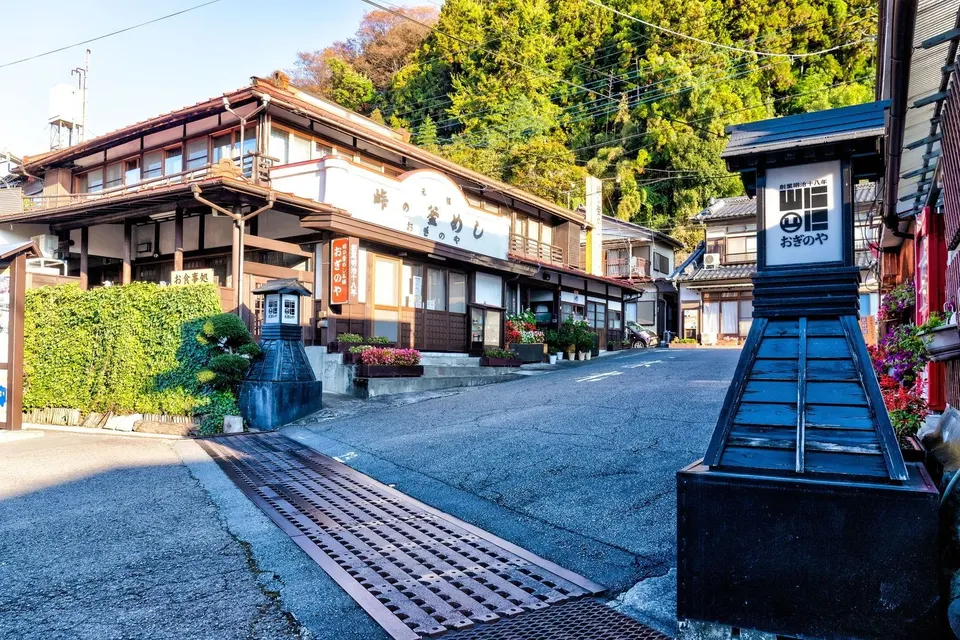
Oginoya is an ekiben maker that began selling meals to rail passengers at Yokokawa Station, in Gunma Prefecture, in 1885. In 1958 it put rice and nine toppings into a clay pot and called it Tōge no Kamameshi. More than 170 million have been sold since.
Rice balls at a new station
Oginoya opened for business inside Yokokawa Station on October 15, 1885, the day the railway from Takasaki reached Yokokawa. Its first ekiben was omusubi, rice balls. Among ekiben sellers in Japan, only the one at Utsunomiya is older.
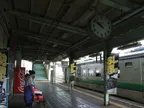
Yokokawa was a small station in the mountains between Takasaki and Karuizawa. Few passengers got on or off there, and the business was a hard one. The company's head office is still in Yokokawa today.
Salted tea and a boxed lunch
After the war, Oginoya sold what it could. In 1947 it began selling sweet-potato lunches and croquettes. In 1948 came squid cured in mineral-spring water and grilled. In 1949 it sold black tea, with salt in it, because sugar could not be had. In 1950 it began selling a makunouchi bento, rice with an assortment of side dishes, made with select rice.
What travelers said on the platform
Takamizawa Mineji, the wife of Oginoya's third president, became its fourth in 1953. She set out to make an ekiben with a character of its own, one that customers would truly be glad to have, and she went about it by standing on the platform every day and asking travelers what they liked.
The usual ekiben at the time was a cold makunouchi. What travelers wanted was something warm, with the comfort of home cooking, that was also a pleasure to look at. Mineji conceived Tōge no Kamameshi in 1957, and Oginoya put it on sale at Yokokawa Station on February 1, 1958: seasoned rice and nine toppings in an earthenware pot.
It did not sell well at first. Travelers talked about it, the magazine Bungeishunjū wrote about it, and then it sold in great numbers. On October 18 of that first year, Tōge no Kamameshi was loaded at Yokokawa Station for Emperor Shōwa, who was on his way to the National Sports Festival in Toyama.
Beyond the station
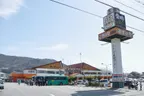
In 1961 Oginoya took Tōge no Kamameshi to an ekiben fair at the Takashimaya department store in Yokohama. On April 20, 1962, it opened the Tōge no Kamameshi Drive-in on National Route 18, just south of Yokokawa Station, for the growing number of people traveling by car. When a bus arrives at an Oginoya shop, and again when it leaves, the staff bow deeply to it.
In June 1967 a television drama modeled on Mineji, Kamameshi Fūfu, went on the air, and Tōge no Kamameshi became known throughout Japan. Shops followed in Karuizawa in 1980, beside the Suwa interchange in Nagano Prefecture in 1983, in Saku in 1994 and in Nagano in 1997. On July 15, 1995, the 100 millionth Tōge no Kamameshi was sold. Mineji had become chair in 1979, and she died in 1983.
After the line closed
On October 1, 1997, the Shin-etsu Main Line between Yokokawa and Karuizawa was closed, and Yokokawa became the end of the line. The Shinkansen to Nagano opened the same day, and Oginoya began selling Tōge no Kamameshi on board between Takasaki and Karuizawa.
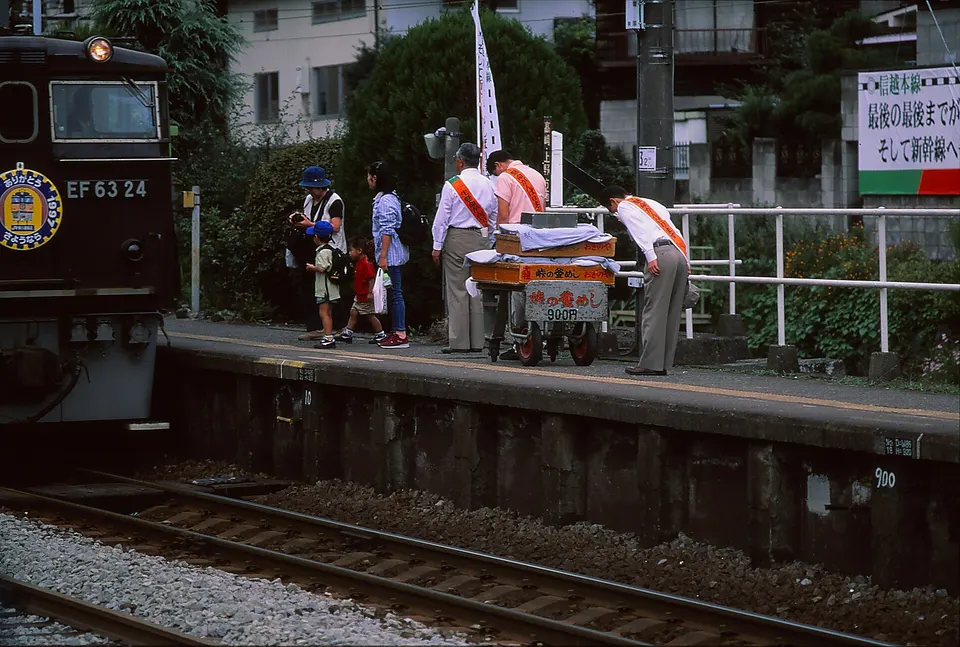
In November 2004 Oginoya joined an ekiben fair in California and made Tōge no Kamameshi outside Japan for the first time. Two thousand were sold in four days. Sales passed 150 million on October 1, 2009.
In April 2017 Oginoya opened in GINZA SIX, its first shop in Tokyo. A combined factory and shop in Suginami followed in 2019, and shops under the railway viaducts at Yūrakuchō and Kanda stations in 2021 and 2022.
References
- Oginoya: Company timeline
- Oginoya: The story behind Tōge no Kamameshi
- Oginoya Tokyo: What is Tōge no Kamameshi?
- Oginoya: Tōge no Kamameshi (English)
- Oginoya: Tōge no Kamameshi in the ceramic pot
Image credits (resized for display):