An ekiben fair (ekiben taikai) is an event at which a Japanese department store gathers ekiben, the bento sold at railway stations, from all over the country and sells them in its event hall for one to three weeks. The first National Ekiben Fair was held at Takashimaya in Osaka in February 1958, and the fair at Keio Department Store in Shinjuku, Tokyo, held every year since 1966, brought together more than 380 kinds of ekiben in January 2026.
From Osaka in 1958
When the Osaka fair opened, ekiben named for a local specialty, "such-and-such rice" or "such-and-such sushi", had been appearing at stations all over Japan since about 1955. Tōge no Kamameshi went on sale at Yokokawa Station in the same month as the fair. Ekiben fairs then spread to department stores and supermarkets around the country, and Oginoya took Tōge no Kamameshi to the one at Takashimaya in Yokohama in 1961, three years after it went on sale.
Department stores already had a form for such an event. A bussanten shows and sells the specialty foods and crafts of one region, and in 1951 Takashimaya had held a Hokkaido fair organized by Hokkaido itself, the first of its kind at a department store. Keio counts its ekiben fair among its bussanten, where it ranks with the largest in both scale and sales.
Why station bento leave the station
For ekiben makers, January and February are the hardest months of the year for sales: tourism is in its off-season and fewer people are traveling. The fairs are held in those two months, and makers either ship their ekiben to the department store or go there to cook and sell in person.
Keio says it wants its fair to prompt visitors to go and eat ekiben where they are sold. An ekiben created for a fair can also outlast it. Taraba-zushi, a king crab sushi from Kushiro Station in Hokkaido, was new when it appeared at Keio's fair in 1999 and went on to become a long seller.
Cooked in the hall or sent from the station
Ekiben reach a fair in two ways. In jitsuen hanbai, demonstration sales, the maker cooks in a glass-fronted booth inside the hall and sells the ekiben freshly made. Yusō ekiben, transported ekiben, are made in their home region and brought in by Shinkansen, plane or truck. Their numbers are limited, and once one has sold out there is no more of it that day. In winter, heavy snow can make them late or keep them from arriving. At Keio's fair in 1998, snow stopped transportation, and neither the ingredients for the booths nor the transported ekiben got through.
To cook on site, a maker has to secure ingredients, staff and hygiene inside the department store, and requests from the store often come to nothing. Keio negotiated for years before Anago-meshi, the conger eel rice of Miyajimaguchi Station in Hiroshima Prefecture, was cooked at its fair for the first time in 2015.
The Kōshien of ekiben
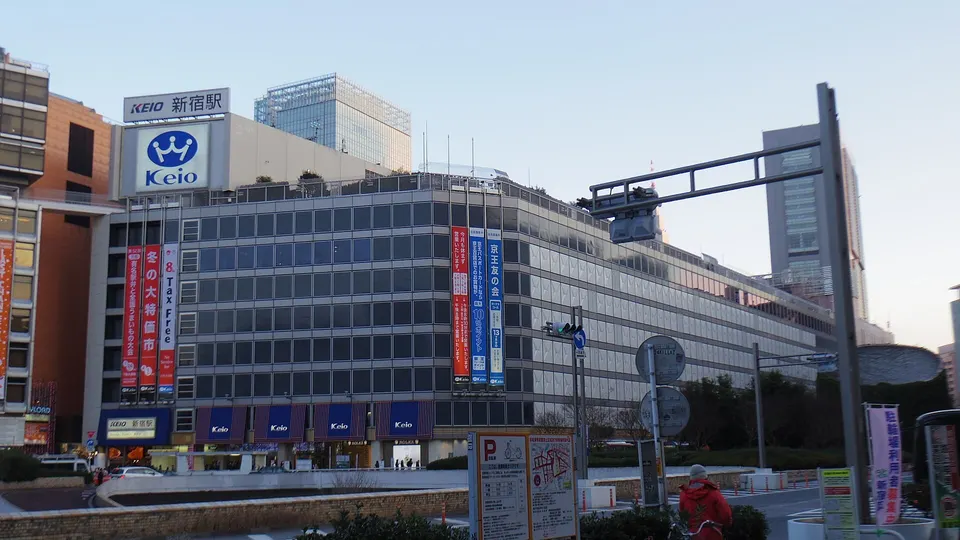
The best-known fair today is the one at Keio Department Store in Shinjuku; the photograph at the top of this page shows the store in January 2017, with a red banner for its 52nd fair at the left of the facade. The store opened in full in November 1964 and held its first ekiben fair in February 1966. That fair lasted nine days and had about 30 kinds of bento, and the highest sales went to a crab sushi from Tottori Station. It has been held every year since. At the 61st, in January 2026, 41 makers cooked on site over 16 days, and about 70 stalls sold other regional foods. The fair has come to be called the "ekiben Kōshien", after the stadium where Japan's national high school baseball tournaments are played.
In 1997 Keio brought back, for the first time, an ekiben that had disappeared along with its station when the line closed: Yamabe-zushi from Kami-Okoppe Station on the former Nayoro Main Line in Hokkaido. The "showdown" series began in 1998, setting side by side ekiben from different regions that use the same ingredient: trout in the first year, crab from east and west in 1999, Yonezawa beef and Tajima beef in 2000. The idea came from the cooking contests then popular on television, and its purpose is to let visitors taste how the ingredients and the cooking differ from place to place.
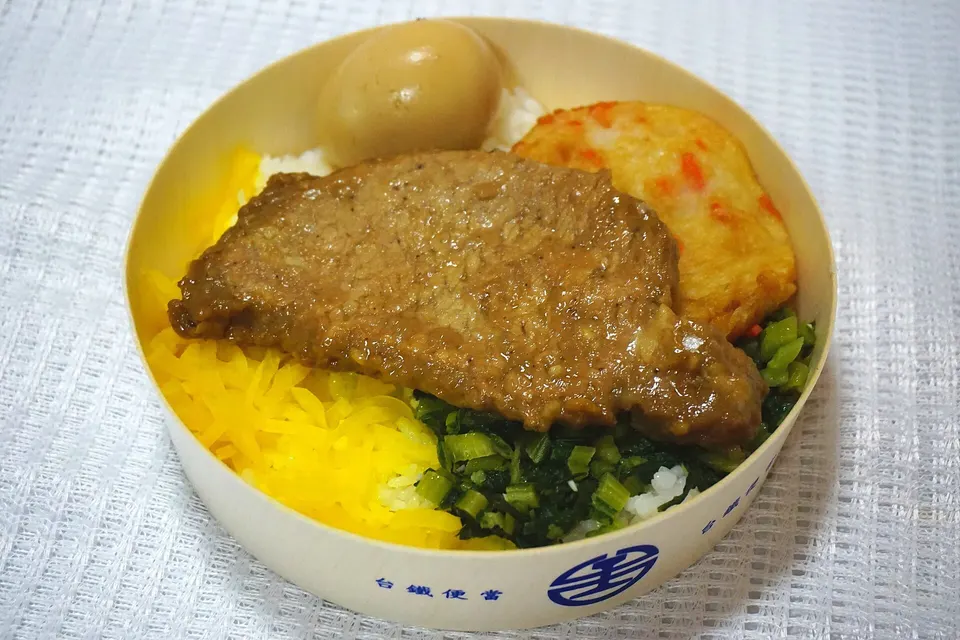
Ekiben from abroad have been sold too. When a bento from Taiwan's railways was offered in 2003, 1,200 people were lining up before the store opened, and it returned in 2016.
The fair ranks the ekiben cooked on site by the number sold. Ikameshi of Mori Station in Hokkaido, squid stuffed with rice and simmered in sweet soy sauce, took first place for the 50th fair in a row in 2020. Keio placed it in a hall of fame, and it has been left out of the top ten since.
Osaka and Kumamoto
In Osaka, the Hanshin department store in Umeda first held its ekiben fair in 2001, and February 2026 was the 25th. An early flyer advertised 140 kinds from 55 stations; the 2026 fair had 309. Its hall has a standing area where visitors eat the ekiben they have just bought, with stands selling beer and sake close by. In Kumamoto, the Tsuruya department store held its 63rd fair in January 2026. In 2018 the three fairs, Keio, Hanshin and Tsuruya, jointly supervised new beef ekiben.
Tōge no Kamameshi at the fairs
At Keio, Tōge no Kamameshi was for many years a transported ekiben, since Shinjuku is close to Gunma Prefecture, and Keio calls it the champion of that category. The kamameshi sent in had a best-before time of 3 p.m., and sales ended two hours before that, at 1 p.m. For the 50th fair, in 2015, Keio gave Oginoya sole use of the kitchen of its rooftop beer garden, which otherwise operates only in summer. Prepared inside the store, the kamameshi could be sold until closing time. More than 20,000 were sold, and in the count of ekiben made at the fair it came second, behind ikameshi.
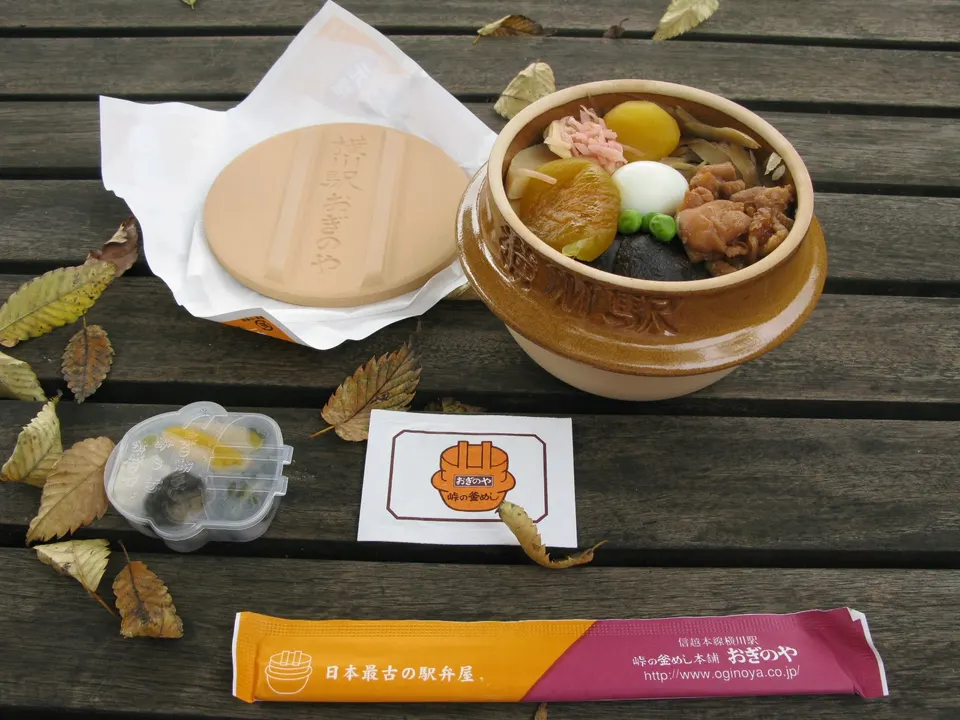
At the 61st fair, in 2026, a Tōge no Kamameshi marking Oginoya's 140th anniversary was among the transported ekiben, and it sold out day after day.
Oginoya has also taken Tōge no Kamameshi abroad. In November 2004 it joined a fair of well-known Japanese ekiben held in California, where Tōge no Kamameshi was made and sold outside Japan for the first time: 2,000 meals sold out in four days. At home it posts the ekiben fairs it is attending on its website. They include fairs at supermarkets, and at some of them the kamameshi comes in the molded-pulp container instead of the ceramic pot.
References
- Kotobank: “Ekiben” (Japanese dictionaries and encyclopedias)
- Keio Department Store: History of the ekiben fair
- Keio Department Store: Looking back on the 61st ekiben fair (April 2026)
- Keio Department Store: Ekiben fair library
- Keio Department Store: press release on the 61st fair (December 2025)
- Oginoya: Company timeline
- Oginoya: Ekiben fair notices
- Takashimaya Archives: History of Takashimaya
- Toyo Keizai Online: YASCORN, behind the scenes of Keio's ekiben fair (January 2017)
- Norimono News: Miyatake Watakaya, how ekiben fairs have changed (January 2022)
- Travel Watch: Miyatake Watakaya, the Hanshin ekiben fair (February 2026)
- Kumamoto Nichinichi Shimbun: Tsuruya's 63rd fair (January 21, 2026)
Image credits (resized for display):
- ITA-ATU / Wikimedia Commons, CC BY-SA 4.0, 2017
- くろふね / Wikimedia Commons, CC BY-SA 4.0, 2016
- pcs34560 / Wikimedia Commons, Public domain, 2010