Ekiben were first sold at shops inside the station building and shops on the platform, and then by vendors who stood on the platform and passed them through the windows of the train. As stops grew shorter and more trains had windows that do not open, the selling moved to station shops and onto the trains, and department stores began holding ekiben fairs.
The vendor on the platform
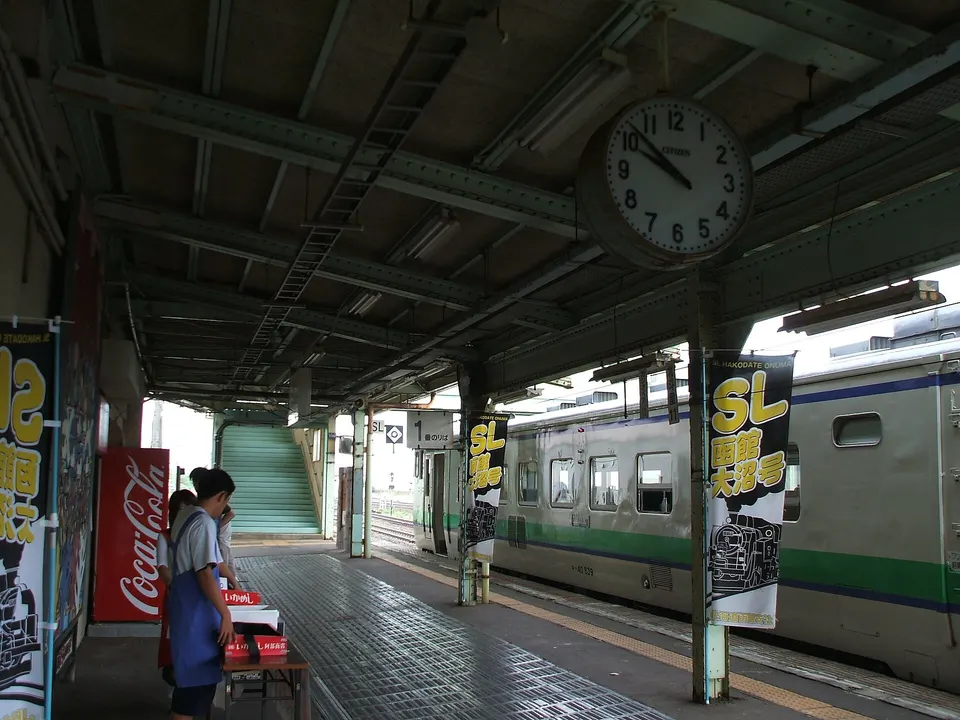
Selling goods while standing in a station or on a street, without a fixed shop, is called tachiuri. The word is also used for the person who does it. At the beginning, ekiben were sold only at shops, some inside the station building and some on the platform. Selling through the train window began around 1897 at Kōzu Station on the Tōkaidō Main Line.
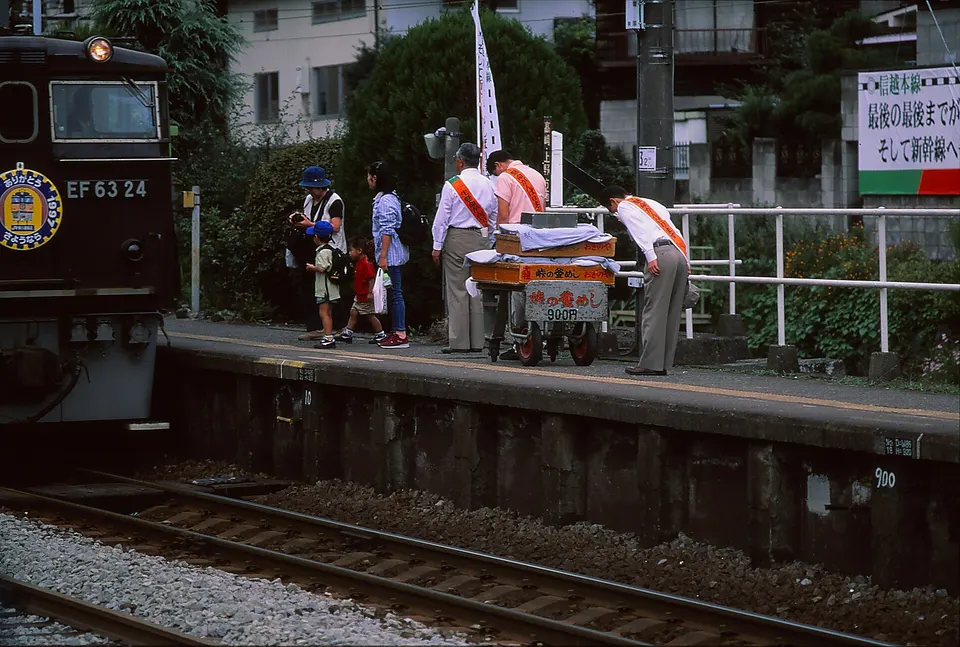
The photograph above shows a vendor selling ikameshi, the ekiben of Mori Station in Hokkaido, on the platform there in 2007. At Yokokawa Station, trains bound over the Usui Pass stopped to have helper locomotives coupled on, and in that short time passengers ran along the platform to buy Tōge no Kamameshi from the vendors standing there.
When the windows stopped opening
Two things changed the trade. Trains spent less time standing at stations, and more of them had sealed windows. Ekiben came to be sold on board as well. Oginoya made that move on October 1, 1997, the day the line between Yokokawa and Karuizawa closed: it began selling Tōge no Kamameshi aboard the Shinkansen between Takasaki and Karuizawa.
Station shops and the train
Today large stations have several shops selling ekiben from different regions, and Tokyo Station gathers them from all over Japan. Small stations stock their own local specialty. Eating on the Shinkansen and on express trains is entirely normal; short-distance local trains are not the place for a meal.
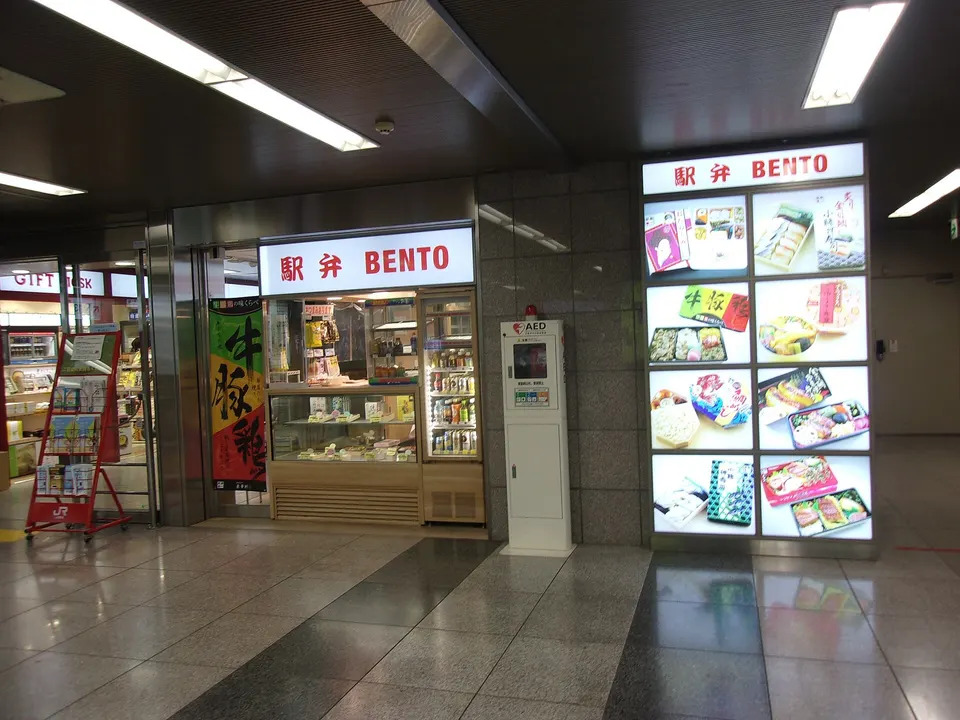
The ekiben makers kept their place in the stations even after one organization, the Railway Mutual Aid Association, took over the selling of goods inside them. Ekiben businesses had been run by the same families for generations, and their right to the trade was respected: the association did not deal in rice meals.
Oginoya also began selling outside the station. In 1962 it opened the Tōge no Kamameshi Drive-in on National Route 18, and people traveling by car became its customers too.
Ekiben at the department store
In February 1958 the first national ekiben fair was held at the Takashimaya department store in Osaka. Ekiben fairs then spread to department stores and supermarkets around the country, and they have drawn crowds ever since. Oginoya took Tōge no Kamameshi to the fair at Takashimaya in Yokohama in 1961. In November 2004 it joined an ekiben fair in California and sold 2,000 meals in four days.
References
- Kotobank: “Ekiben” (Japanese dictionaries and encyclopedias)
- Kotobank: “Tachiuri” (Japanese dictionary)
- Japan National Tourism Organization: Experience Japan's Local Ekiben Culture
- Oginoya: Company timeline
- Santatsu: Yoshinaga Yōichi, the Abt Road on the Usui Pass (May 2021)
- Norimono News: Sakimura Tamaki, on the EF63 locomotive (August 2023)
Image credits (resized for display):