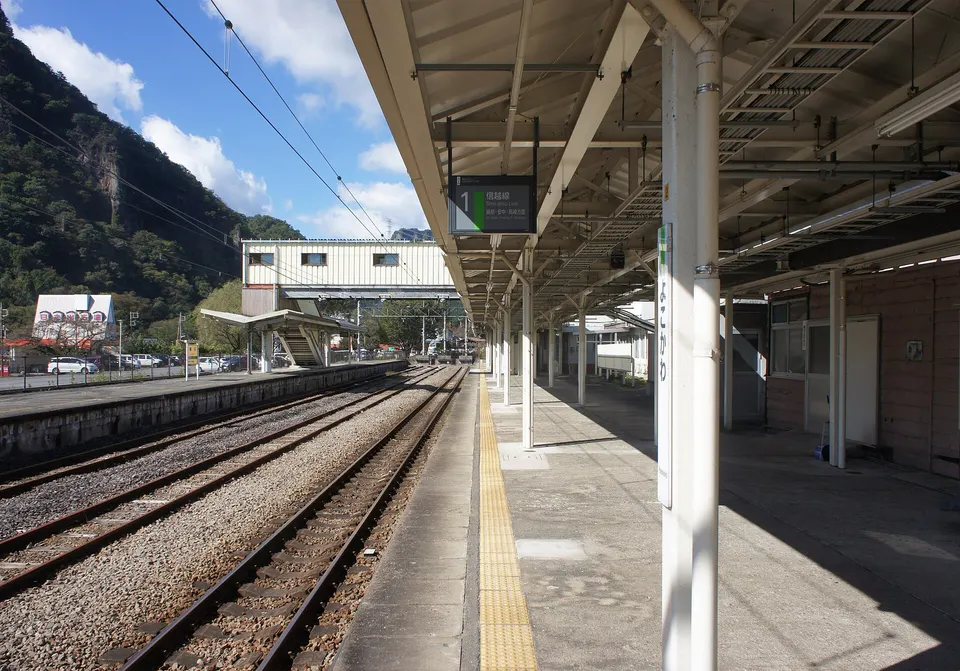
Yokokawa is the station at the foot of the Usui Pass, on the border between Gunma and Nagano prefectures. The railway from here up to Karuizawa climbed as steeply as 66.7 per mil, and every train that crossed the pass stopped at Yokokawa to take on locomotives built for that one slope. While they were being coupled, passengers bought Tōge no Kamameshi on the platform.
66.7 meters up for every kilometer
The Usui Pass joins the Pacific side of Japan to the Sea of Japan side. In the Edo period it had a checkpoint that ranked with Hakone's as the most important in the country. For a railway, the trouble was the grade: at its steepest the line rose 66.7 meters for every kilometer traveled, and Karuizawa stands 553 meters higher than Yokokawa. The slope runs almost entirely one way, up from Yokokawa to the plateau.
Seventy years on a rack rail
The line between Yokokawa and Karuizawa opened in 1893, after construction that took 26 tunnels and 18 brick bridges. To get up the grade it used the Abt system, modeled on the Harz mountain railway in Germany. A toothed rail ran down the middle of the track, and a cogwheel under the locomotive meshed with it, so that the train could climb and descend without slipping.
The first locomotives were steam engines imported from Germany, and the trip took about 80 minutes. With so many tunnels, the smoke was a problem. In 1912 the section was electrified, the first on a Japanese trunk line, with substations at Maruyama and Yagasaki. By the time of the ED42 electric locomotive the crossing took 49 minutes.
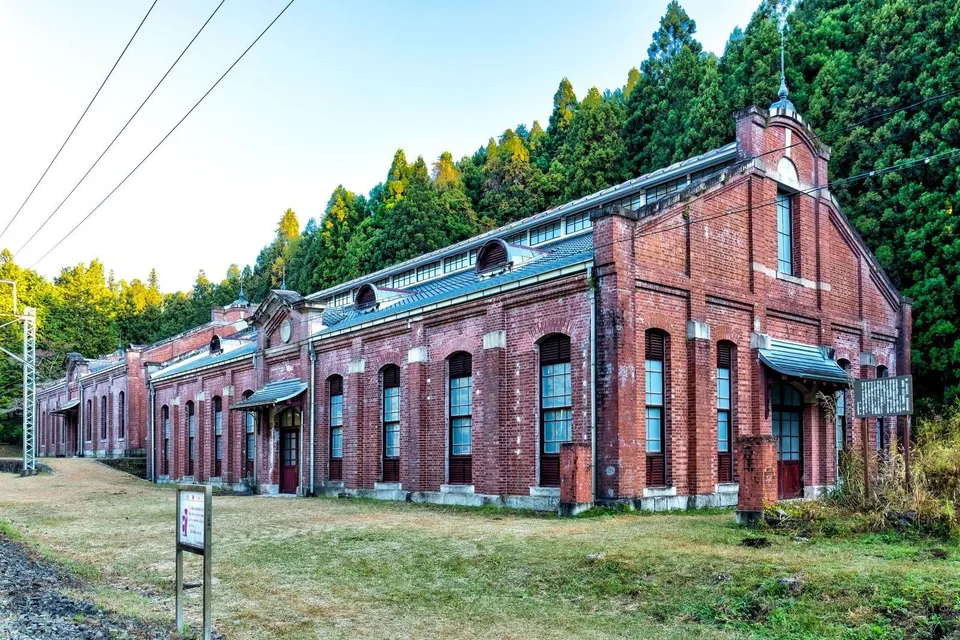
The Abt system was retired in 1963, when a new line took over that ran on ordinary rails. It was double-tracked by 1966.
Coupling up at Yokokawa
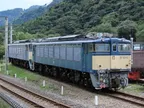
Ordinary rails did not make the pass ordinary. The new line had its own electric locomotive, the EF63, which worked in pairs and only on this section. The pair was always coupled to the Yokokawa end of the train, the downhill end. Going up, it pushed from behind. Coming down, it led and held the train back. The climb now took 17 minutes and the descent 24.
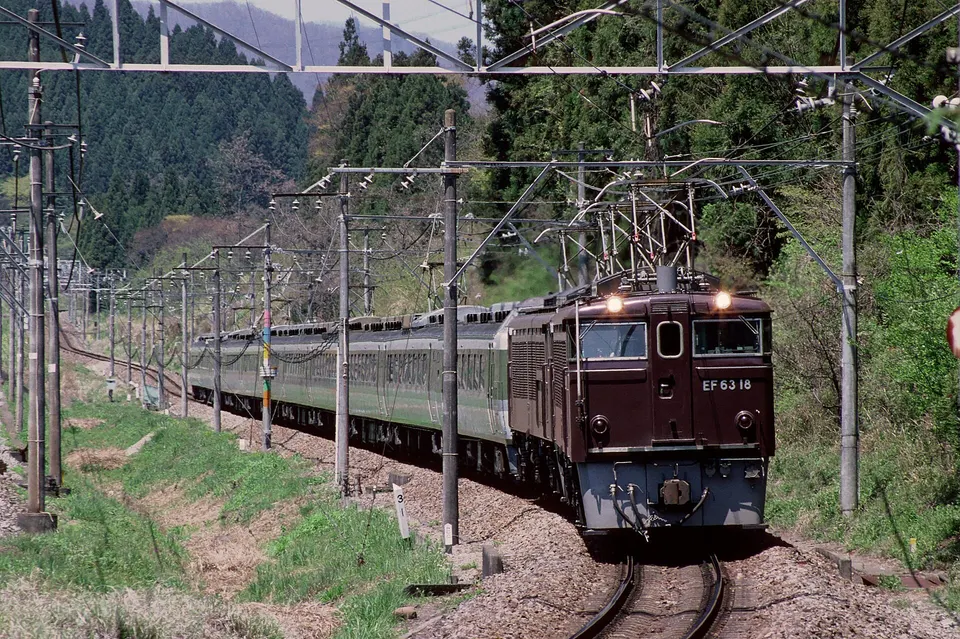
The EF63s were based at the depot in Yokokawa, and trains over the pass took them on at Yokokawa Station. In the short time the coupling took, passengers ran along the platform to buy Tōge no Kamameshi from the sellers standing there. Oginoya had been in business at the station since October 15, 1885, the day the railway from Takasaki reached Yokokawa. For many people, the Usui Pass still brings Tōge no Kamameshi to mind.
The day the line closed
Freight trains stopped using the pass in 1984. On October 1, 1997, when the Shinkansen to Nagano opened, the line between Yokokawa and Karuizawa was closed, 104 years after it opened. The Shin-etsu Main Line from Takasaki now ends at Yokokawa.
What remains
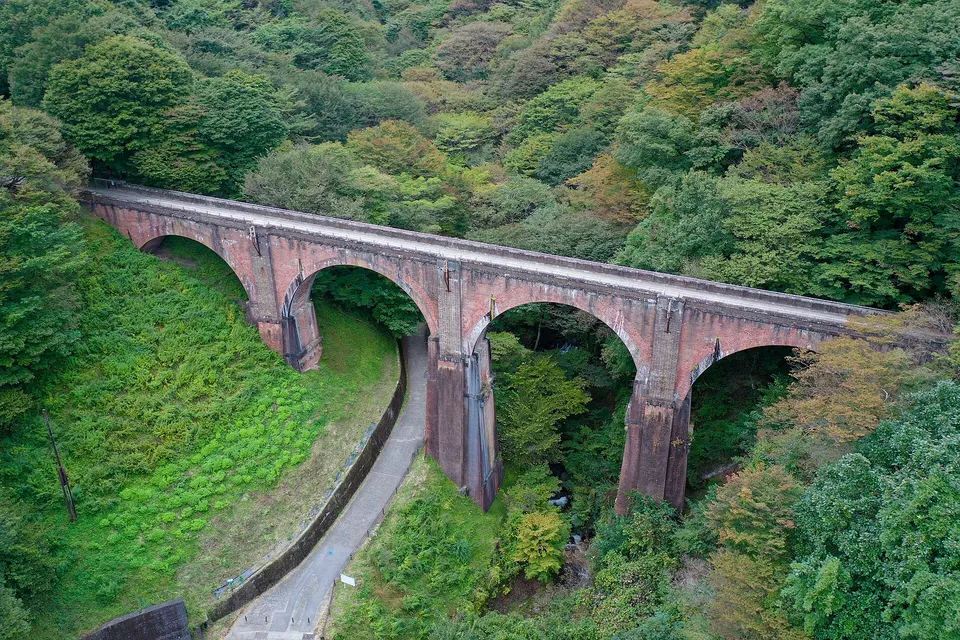
The Usui Third Bridge, known as Meganebashi, and the former Maruyama Substation are Important Cultural Properties of Japan. The city of Annaka is working to have the railway structures of the pass inscribed as a World Heritage site.
In 1999 the Usui Pass Railway Heritage Park opened on the site of the locomotive depot beside Yokokawa Station, set up by the former town of Matsuida with the cooperation of JR East. An ED42 and several EF63s are kept there, and the EF63s are kept in running order.
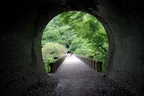
The roadbed of the old rack line is now a walking path, Abt no Michi (the Abt Road), from Yokokawa Station to the former Kumanotaira signal station. In front of the station, worn-out rack rails cover the roadside gutters.
References
- Usui Pass Railway Heritage Park: About the park and the Usui line
- Annaka City: Former Usui Pass railway facilities
- Annaka City: Usui Pass Railway Heritage Park
- Norimono News: Sakimura Tamaki, on the EF63 locomotive (August 2023)
- Santatsu: Yoshinaga Yōichi, the Abt Road on the Usui Pass (May 2021)
- JRE Media: Usui Pass Railway Heritage Park
- Oginoya: Company timeline
Image credits (resized for display):