In Japan a drive-in (doraibu-in) is a restaurant and souvenir shop on a main road with a large parking lot, where travelers park, get out and eat inside. Roadside restaurants took up the name around 1960 and multiplied as private cars and bus tours did, and in 1962 Oginoya, an ekiben maker at a mountain railway station, opened one on National Route 18 as more people took to traveling by car.
Park, get out, eat inside
In Japanese the word has two meanings: a place where you can shop or eat without leaving your car, and a roadside shop or restaurant with plenty of parking for people traveling by car. What people in Japan usually mean is the second.
The first kind appeared in the United States in the 1920s. A customer ordered through a microphone at the parking space and staff carried the food out from the kitchen to the car; at some, waitresses took the orders on roller skates. America also has drive-in banks and drive-in theaters. In Japan, where land is expensive, facilities that need so much space did not develop. The word appears in a Japanese novel of 1956, and from around 1960 roadside restaurants with wide parking lots began calling themselves drive-ins.
Built for cars and tour buses
A drive-in stands outside the city, facing a trunk road, with a parking lot that opens straight onto the road. It has a restaurant and a souvenir shop, and people on fairly long drives stop there to rest and eat. Many are large enough to take several full-size tour buses at once.
Drive-ins with wide parking lots and roomy dining halls went up along the trunk roads in great numbers in the 1960s and early 1970s, as car ownership spread. Japan had about 2.3 million passenger cars in 1966, 7.3 million in 1970 and 16 million in 1975. The buses came too. In the late 1960s group travel by bus was common, sightseeing areas needed places that could take in a crowd at once, and many of the places now called drive-ins were built to receive those groups.
Okawa Oasis, in Sanuki, Kagawa Prefecture, is one of them. The bus company Okawa Bus opened it on National Route 11 in 1964, and the express buses between Takamatsu and Tokushima and tour buses stopped there for a break.
An ekiben maker on Route 18
Oginoya had been in business at Yokokawa Station, in Gunma Prefecture, since 1885, and in 1958 it put Tōge no Kamameshi on sale there. On April 20, 1962, it opened the Tōge no Kamameshi Drive-in on National Route 18, just south of the station, to keep up with the growth in travel by car.
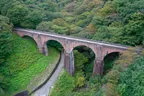
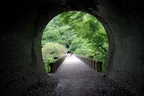
Route 18 is the road over the Usui Pass, between Gunma and Nagano prefectures, the pass that the railway from Yokokawa also climbed. It was fully paved after the Second World War as traffic grew. It was steep, with sharp curves, and it carried a great deal of traffic.
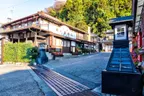
The Yokokawa shop has served people crossing the pass ever since. The factory that makes Tōge no Kamameshi is next door, so the meal is served freshly made and warm. The ground floor has a dining hall with 130 seats, the reserved seating upstairs takes 600 people at a time, and there is a room for bus crews. When a bus arrives at an Oginoya shop, and again when it leaves, the staff bow deeply to it.
Oginoya rebuilt the shop completely and reopened it on March 29, 1978, and on October 1 of that year a company named Oginoya Drive-in was set up. The shop's roadside sign appears in Initial D, the manga set in Gunma Prefecture.
Service areas and michi-no-eki
| Road | Who sets it up | What marks it | |
|---|---|---|---|
| Drive-in | Ordinary main roads | A business: a restaurant, a bus company, an ekiben maker | No strict definition |
| Service area (SA) and parking area (PA) | Expressways | Planned when the expressway is built | A PA about every 15 km, an SA about every 50 km |
| Michi-no-eki | Ordinary roads | A municipality or a public body in its place, registered by the Ministry of Land, Infrastructure, Transport and Tourism | Parking and toilets free to use 24 hours a day; road and local tourist information |
An expressway can be entered and left only at interchanges, so rest stops reached directly from the roadway are placed along it at intervals. A service area has a gas station, a restaurant and a shop as well as parking, a garden and toilets. Japan's first expressway, the Meishin, opened its first 71 kilometers in 1963 and was complete in July 1965.
Michi-no-eki, "roadside stations," are rest stops on ordinary roads. Registration began in 1993 with 103 of them, and on September 4, 2026, there were 1,234. From the start they were meant for individuals and small parties, where most drive-ins had been built for bus groups.
Why there are fewer
Drive-ins have fallen sharply in number. Convenience stores multiplied, michi-no-eki were built, and new roads turned the old ones into back roads. From the 1970s, as expressways were built and many people came to own cars, travel shifted from bus groups to private trips by car. For a time so many drive-ins for groups were put up that they got a bad name, and the word itself gradually dropped out of use. Many operators have turned their drive-ins into convenience stores.
Route 11 in front of Okawa Oasis used to jam with traffic. When the Takamatsu Expressway was completed in 2003 the road went quiet, a michi-no-eki opened close by, and sales at Okawa Oasis fell by half. From around 2020, photographs of its sea view and its old-style coffee-shop menu spread on social media, and the customers came back. The Meihan Ueno Drive-in in Iga, Mie Prefecture, closed in March 2022 after 55 years on the Meihan National Highway.
Beside the interchanges
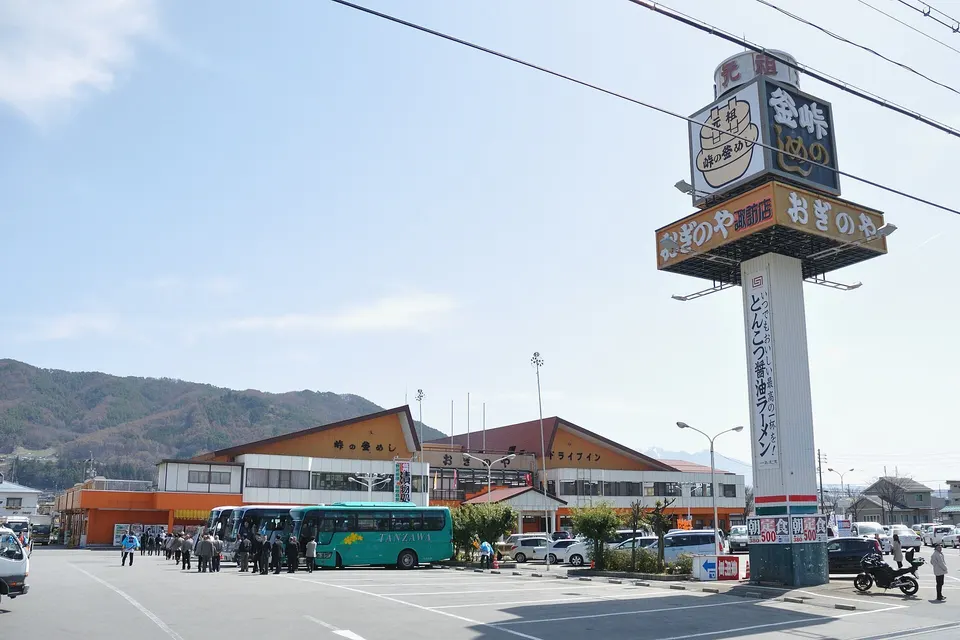
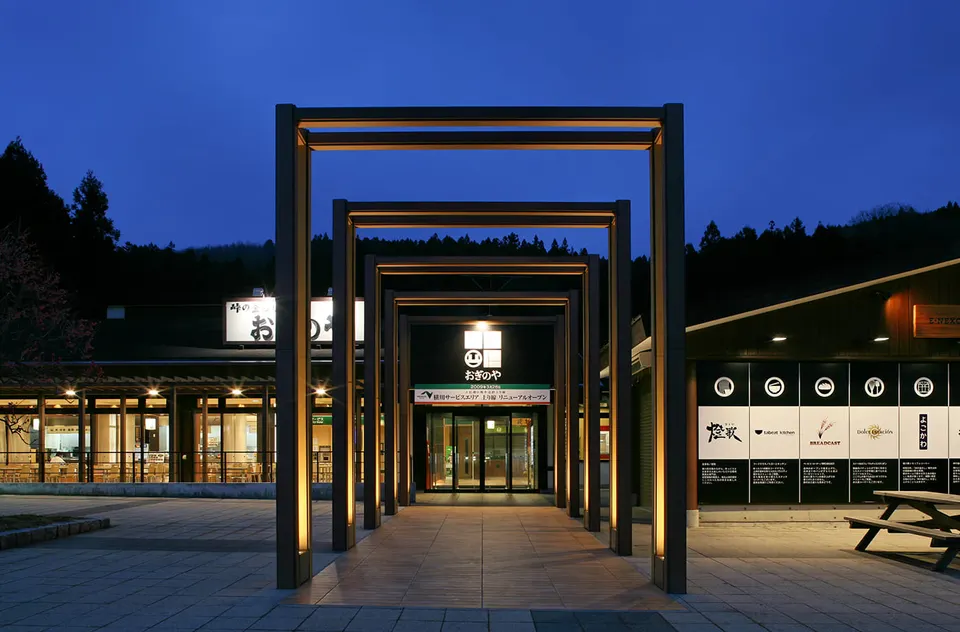
In 1971 the Usui Bypass opened about 3 kilometers south of the pass, and the number of cars going over the pass itself dropped sharply. The Chūō Expressway was completed between Tokyo and Komaki in 1982. On April 21, 1983, Oginoya opened a drive-in about a minute's drive from that expressway's Suwa interchange, in Nagano Prefecture. It is the shop in the photograph at the top, taken in 2010. It too has a factory next door, and its reserved seating upstairs takes 1,200 people at a time.
The Jōshin-etsu Expressway opened from Fujioka to Saku on March 27, 1993. Oginoya opened a drive-in in front of the Saku interchange on July 20, 1994, and another beside the Nagano interchange on January 20, 1997.
On July 15, 1995, the 100 millionth Tōge no Kamameshi was sold. On October 1, 1997, the railway between Yokokawa and Karuizawa closed. The ekiben that began at a railway station had by then come to be sold along the roads as well, at drive-ins and at expressway service areas in Gunma and Nagano prefectures, among them the Yokokawa Service Area on the Jōshin-etsu Expressway.
References
- Kotobank: “Drive-in” (Japanese dictionaries and encyclopedias)
- Kotobank: “Michi-no-eki”
- Kotobank: “Service area”
- Kotobank: “Meishin Expressway”
- Kotobank: “Chūō Expressway”
- Kotobank: “Usui Pass”
- Ministry of Land, Infrastructure, Transport and Tourism: About Michi-no-Eki
- Ministry of Land, Infrastructure, Transport and Tourism: List of Michi-no-Eki
- NEXCO East (Drive Plaza): The difference between service areas and parking areas
- NEXCO East: History of the Jōshin-etsu Expressway
- Automobile Inspection & Registration Information Association: Motor vehicles owned in Japan by year (PDF)
- Norimono News: Miyatake Watana, on the Okawa Oasis drive-in (June 2022)
- Kuruma News: Why Shōwa-era drive-ins are drawing attention again (November 2022)
- Oginoya: Company timeline
- Oginoya Tokyo: What is Tōge no Kamameshi?
- Oginoya: Yokokawa shop
- Oginoya: Suwa shop
- Oginoya: Yokokawa Service Area (inbound)
- Oginoya: Sightseeing around Yokokawa
Image credits (resized for display):