

Hashtags
#RailwayHistory
-
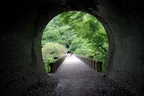
Abt no Michi and Meganebashi: walking the old Usui Pass railway
Abt no Michi is a 6.3-kilometer path on a closed railway over the Usui Pass. It passes a 1911 substation, ten brick tunnels and the Meganebashi bridge of 1892. -
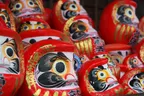
Daruma Bento: Takasaki's ekiben in a red daruma doll
Daruma Bento, the ekiben of Takasaki Station, comes in a red daruma-shaped container that becomes a coin bank. What is inside, and why Takasaki makes daruma. -

A history of ekiben: 140 years of Japan's station bento
Ekiben began in 1885 as two rice balls and some pickled radish. How Japan's station bento became boxed meals, survived the war years and turned regional. -
Ginza and Shimbashi: a silver mint, brick streets and Japan's first railway
Ginza takes its name from a silver mint of the Edo period. In 1872 it was rebuilt in brick, and Japan's first railway opened next door at Shimbashi. -
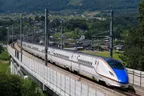
The Hokuriku Shinkansen: from Tokyo over the Usui Pass to the Sea of Japan
The Hokuriku Shinkansen runs from Tokyo to Tsuruga by way of Takasaki, Karuizawa, Nagano, Toyama, Kanazawa and Fukui. Its route, its three openings and its four train names. -
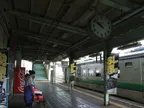
How ekiben are sold: platforms, train windows and department stores
Ekiben were once passed through train windows by vendors on the platform. How the selling of Japan's station bento moved to shops, trains and department stores. -
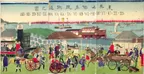
A history of Japan's railways: from Shimbashi in 1872 to the JR companies
Japan's first railway opened between Shimbashi and Yokohama in 1872. How private companies, the nationalization of 1906, the national railway and the 1987 breakup shaped the network. -
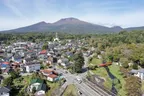
Karuizawa: how a post town on the Nakasendō became a summer resort
Karuizawa stands about 1,000 meters up at the foot of Mount Asama, just west of the Usui Pass. How a fading post town became a summer resort after 1886. -
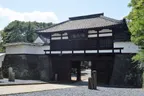
Komoro and Ueda: two castle towns beyond the Usui Pass
Komoro and Ueda are castle towns on the Chikuma River in eastern Nagano: a castle built below its own town, and the Sanada castle that held off two Tokugawa armies. -
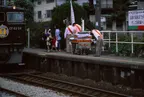
Tachiuri: the platform vendors who sold ekiben through train windows
Tachiuri walked Japan's station platforms with a box of bento hung from their shoulders and sold through train windows. Who they were, and why they vanished. -
Railway heritage in Japan: what has been kept, and who protects it
Brick bridges on a closed mountain line, stations of 1914 still in use, a Kyoto roundhouse and Locomotive No. 1: what Japan has kept of its railways, and how. -
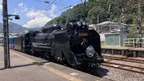
Steam locomotives in Japan: where they still run, and how they came back
Japan's national railway ran its last steam passenger train in 1975, and steam was back within a year. Which locomotives run today, and the steam train to Yokokawa. -

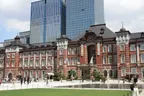
Tokyo Station: the red-brick station at the center of Japan's railways
Tokyo Station opened in 1914 as the capital's central station. Who designed its red-brick building, how it burned in 1945, and how it got its domes back in 2012. -
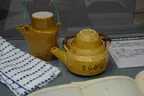
Train tea in Japan: from clay teapots to plastic bottles
Tea sold with ekiben at Japan's stations once came in small pottery teapots called kisha dobin. How glass, polyethylene, cans and PET bottles took their place. -
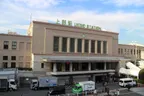
Ueno Station: Tokyo's gateway to the north
Ueno Station opened in 1883 as the Tokyo terminal of Japan's first private steam railway. Why trains for the north started here, its 1932 building and two levels of tracks, and what changed in 1985 and 2015. -
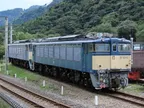
Usui Pass Railway Heritage Park: the Yokokawa depot where visitors drive an EF63
The Usui Pass Railway Heritage Park opened in 1999 on the site of the locomotive depot at Yokokawa. It shows over 30 railway vehicles and lets visitors drive an EF63. -
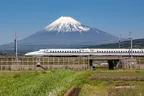
What is the Shinkansen? Japan's high-speed railway, its lines, trains and seats
The Shinkansen is Japan's high-speed railway, built apart from the older lines on wider track. When it began, where it runs, and what the train names and seat classes mean. -
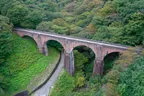
Yokokawa and the Usui Pass: the railway that climbed 66.7 per mil
From Yokokawa Station, trains once climbed the Usui Pass on a grade of 66.7 per mil. How they did it, and why the stop at Yokokawa made Tōge no Kamameshi famous. -
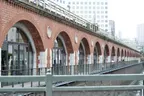
Under the tracks in Tokyo: the brick arches of Yūrakuchō and Kanda
Why restaurants and shops fill the space under the railway at Yūrakuchō and Kanda: a brick viaduct modeled on Berlin's and completed in 1910, and a station closed in 1943.