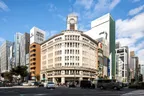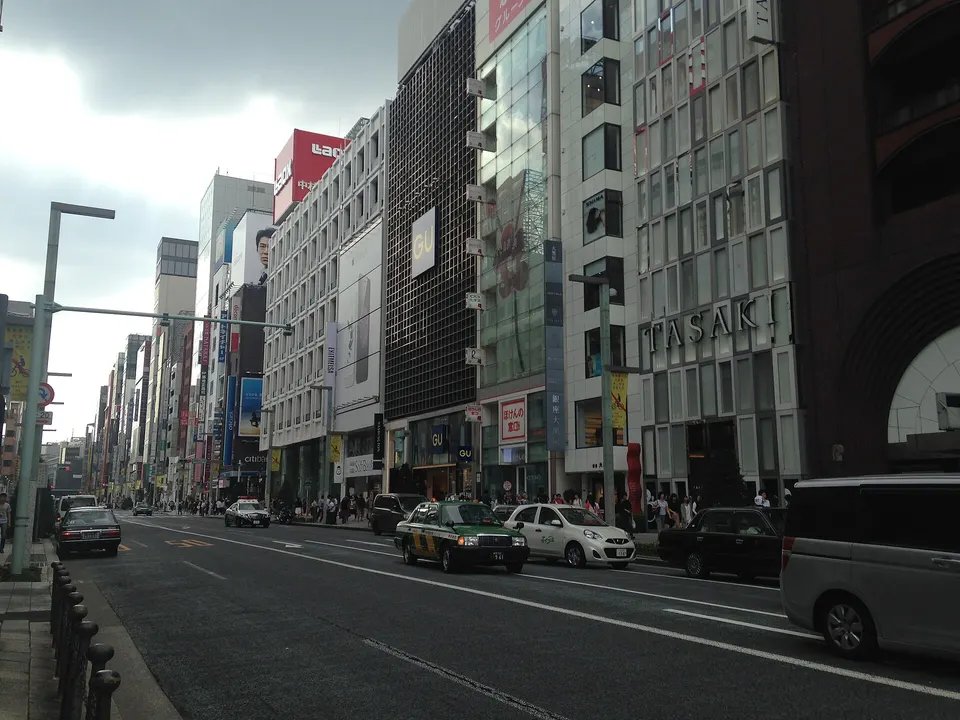
Ginza is named after an office that made silver coins there in the Edo period. After a great fire in 1872 the district was rebuilt in brick, and in the same year Japan's first railway began running from Shimbashi, right beside it. Shops selling goods from abroad gathered along the new streets.
The silver mint
Gin means silver, and a za was an organization licensed by the shogunate. The Ginza made silver coins for the shogunate: it had an office that bought and managed the silver, and a workshop that cast the coins. Tokugawa Ieyasu moved this mint from Sunpu to the place that is now Ginza 2-chōme. The official name of the neighborhood was Shin-Ryōgaechō, and "Ginza" was only its nickname. The gold mint, the Kinza, stood in Nihonbashi, where the head office of the Bank of Japan is today.
After a series of scandals, the silver mint was moved to Nihonbashi Kakigarachō in 1800. Only the nickname stayed behind. Ginza in the Edo period was mainly a quarter where craftsmen lived, but its main street was part of the Tōkaidō highway, and kimono fabric shops along it did a busy trade.
Brick streets after the fire
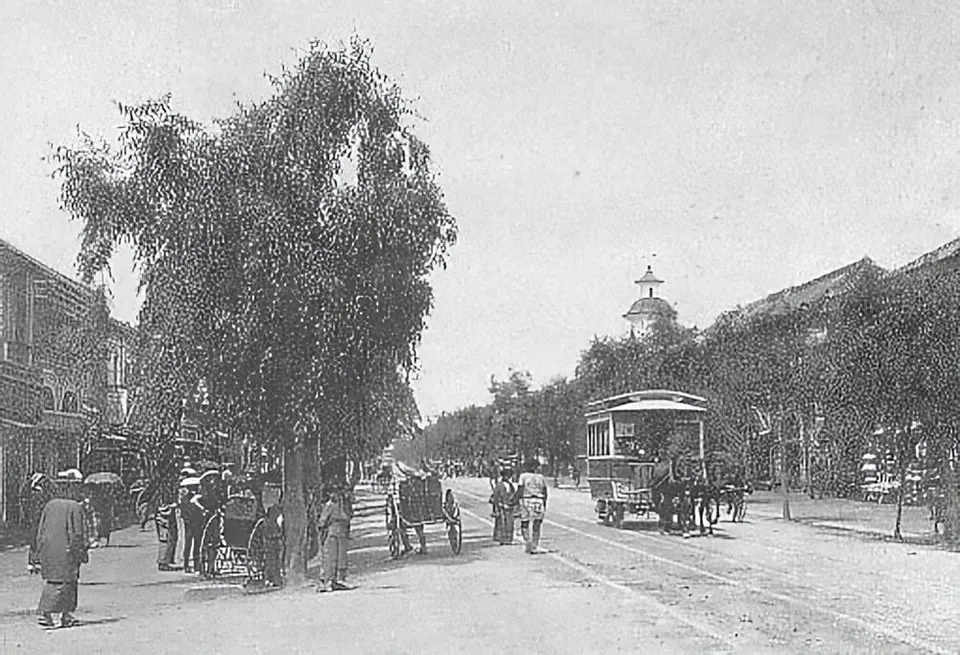
In 1872 a fire burned through Ginza, and the Meiji government took the occasion to rebuild it as a Western-style district of brick. The plan was drawn up by the British architect Thomas James Waters. It had two aims: wider streets, and Western-style buildings of brick that would not burn. The cost came to about one twenty-seventh of the national budget of the time.
Ginza's main street was more than doubled in width, to 27 meters, and divided into a roadway and sidewalks. The sidewalks were paved with brick, gas lamps were lit, and cherry trees, pines and maples were planted along them.
What arrived from the station next door
Work on a railway between Shimbashi and Yokohama began in 1870. On October 14, 1872, the line opened with a ceremony attended by Emperor Meiji. It was the first railway in Japan. The Yokohama station of that day is now Sakuragichō Station.
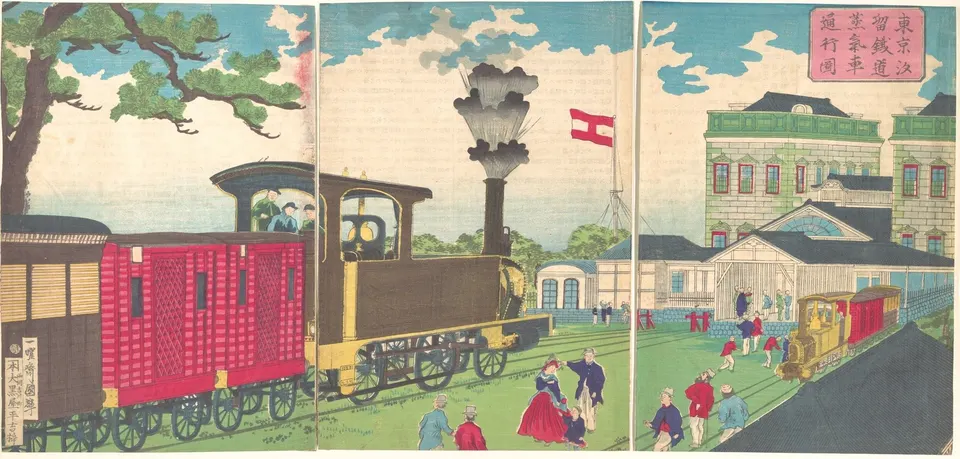
Ginza became, in effect, the shopping street in front of Shimbashi Station. Merchants dealing in imports and in new kinds of goods opened one after another: Western restaurants, bakeries, bag makers, beef hot-pot restaurants, watch dealers, Western furniture stores and tailors. They put show windows at the front of their shops. Newspaper companies gathered in Ginza as well.
Ginbura and the willows
People came to look at the Western-style streets and the shop windows. Strolling through Ginza with no particular purpose came to be called ginbura. The street trees were later changed to willows, and willows became so closely tied to the district that people said "Ginza means willows." In 1911 the Café Printemps opened, modeled on the cafés of Paris.
On September 1, 1923, the Great Kantō Earthquake destroyed nearly all of the brick district.
The first Shimbashi Station today
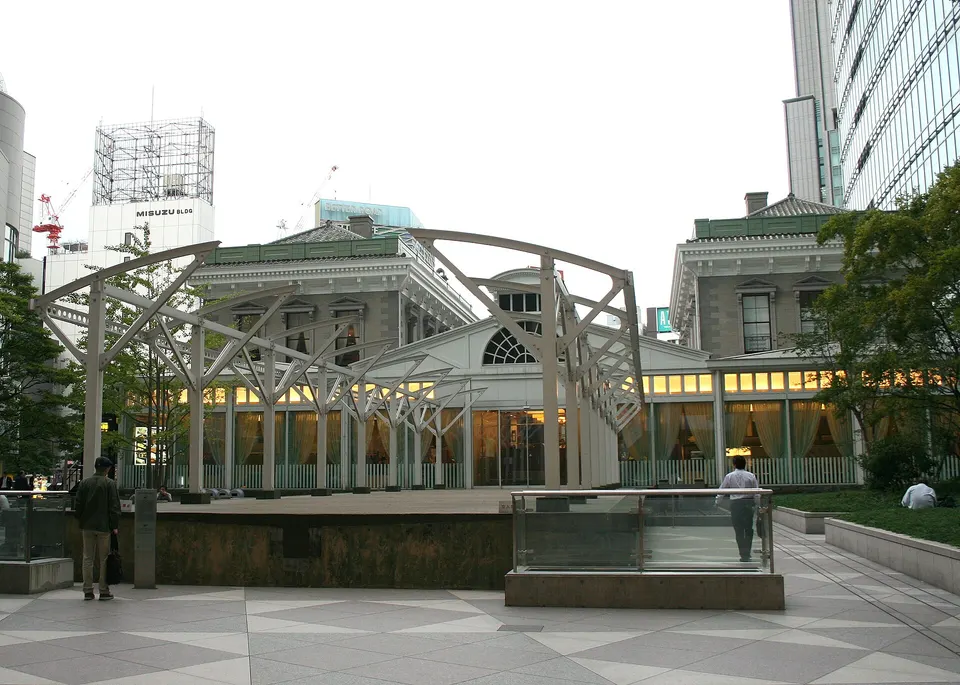
In 1914 the original Shimbashi terminus became a station for freight only and was renamed Shiodome Station. It closed in 1986. The site is now a National Historic Site. The station building has been rebuilt there, and the foundation stones of the 1872 building can be seen through a glass floor inside, along with part of the original platform outside.
Oginoya, which has sold ekiben to rail travelers since 1885, opened its first Tokyo shop in Ginza in April 2017, in the GINZA SIX complex.
References
- GINZA OFFICIAL: History
- East Japan Railway Culture Foundation: The opening of Japan's railways
- East Japan Railway Culture Foundation: Shiodome freight terminal
- Old Shimbashi Station: Railway History Exhibition Hall
- Old Shimbashi Station: Facilities
- Oginoya: Company timeline
Image credits (resized for display):
- そらみみ (Soramimi) / Wikimedia Commons, CC BY-SA 4.0, 2015
- Kimbei Kusakabe / Wikimedia Commons, Public domain, 1880
- Utagawa Kuniteru II (1830–1874) / Wikimedia Commons, Public domain
- User:Sushiya / Wikimedia Commons, CC BY 3.0, 2007