Ekiben, the bento sold at Japan's railway stations, began in 1885 as two rice balls and some pickled radish at Utsunomiya Station. They became boxed meals with side dishes, went on being sold through the leanest years of the war and after, and from the 1950s took on the flavors of their regions.
Two rice balls and some pickle
The usual account starts in July 1885, when the Nippon Railway's line from Ueno in Tokyo reached Utsunomiya. Shirokiya, an inn in Utsunomiya, had been supplying meals to the men building the line, and at the railway's request it began selling food to passengers at the station. The meal was two rice balls and pickled daikon radish wrapped in bamboo sheath, and it cost 5 sen. A bowl of eel on rice cost 10 sen at the time, so this was expensive. Even so it lost money, because only four trains ran each way per day and passengers were few.
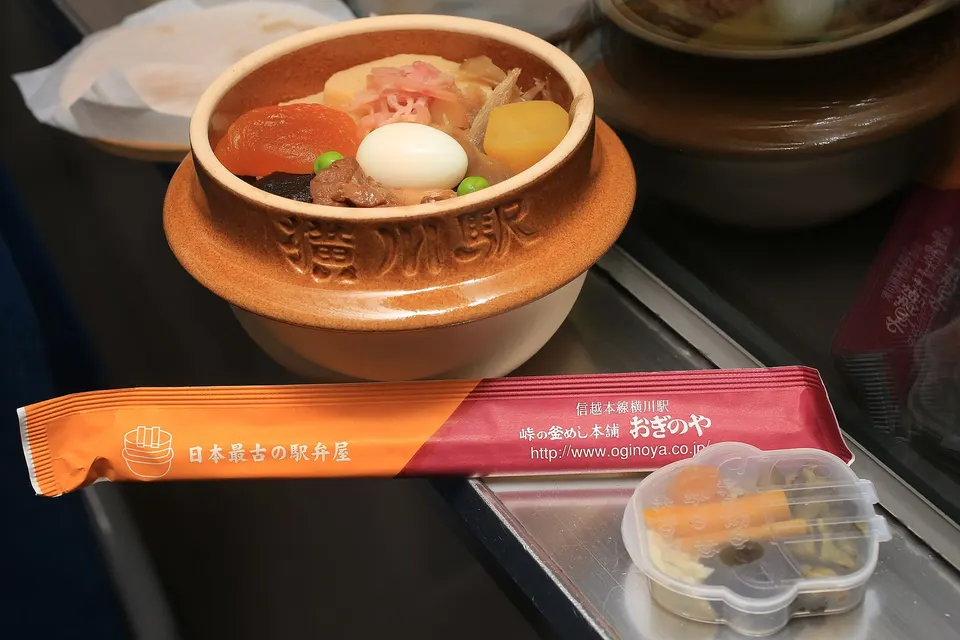
The second station to sell ekiben was Yokokawa, on the Shin-etsu Main Line, in October of the same year. That vendor was Oginoya, and what it sold was omusubi, rice balls. The third was Takasaki, in March 1886. Many of the early ekiben businesses had helped the railway get built and were given permission to sell in return. Third- and fourth-generation owners are not unusual among them today.
The boxed meal arrives
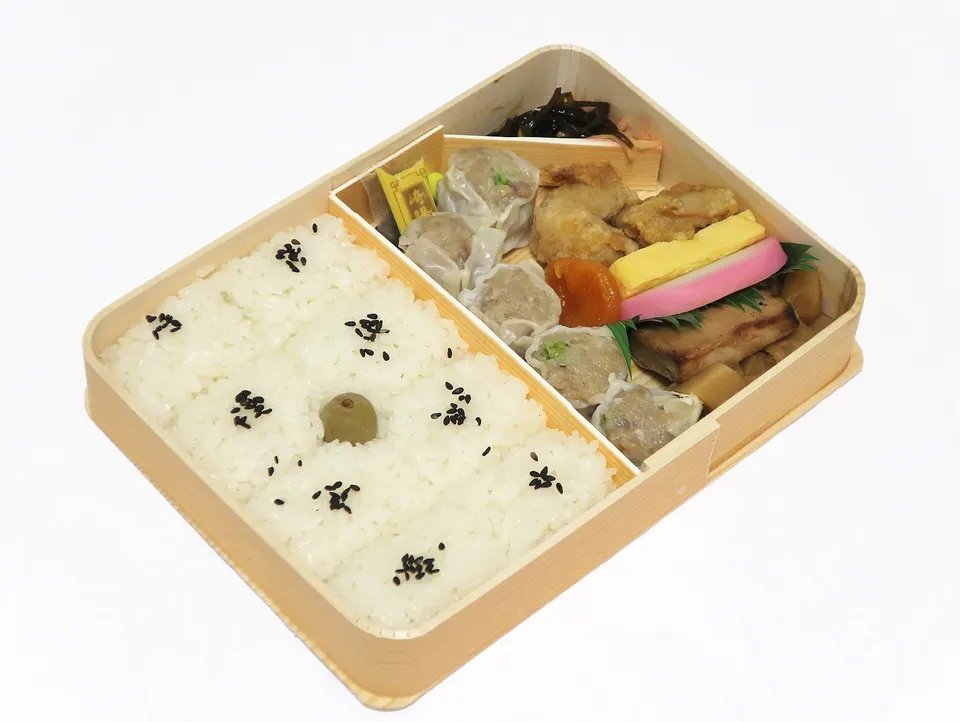
The first ekiben to replace rice balls with a proper meal was sold at Himeji when the San'yō Railway reached there from Kobe; reference works give the year as either 1888 or 1889. The bamboo sheath gave way to a two-tier box of thin shaved wood. Inside were fish cake, sea bream, kinton (a sweet mash), datemaki (a sweet rolled omelet), chicken, lily bulb and Nara-style pickles, among other things.
Ekiben spread from the end of the Meiji era into the first years of the Taishō era. In the Taishō era some boxes had their two tiers joined at one corner by a small metal clamp, so that they could be eaten standing up in a crowded carriage. From the Kantō region northward, ekiben lagged behind those of the Kansai region: at Utsunomiya and elsewhere, the only change until the last years of the Taishō era, which ended in 1926, was that the pickled radish had become a pickled plum.
The ekiben that never stopped
Ekiben have been sold almost without a break since they began. Sales stopped completely only in September 1923, for the few days when trains could not run in the area struck by the Great Kantō Earthquake. They continued under the air raids of the Second World War.
The worst ekiben, in content and in taste, were those of the war and the years just after it. Food was rationed, and an ekiben had to be bought with a meal coupon as well as cash. It might hold a very small amount of rice with nothing but hijiki seaweed boiled in salt, or bread made with bran and a side of pumpkin, daikon leaves and carrot leaves boiled in salt. There was no meat and no fish. Long lines formed on the platforms all the same.
In 1951 ekiben makers began to receive a special allocation of rice, for railway passengers only. The makunouchi bento came back, and ekiben with regional character and inventive ideas began to appear.
Special ekiben
The national railway sorted ekiben into two kinds. Ordinary ekiben were makunouchi, made to suit a wide range of tastes. Special ekiben were built on rice with a special ingredient such as meat or fish. Before the war the special kind meant chicken rice, or sweetfish sushi in summer, and little else.
From about 1955, ekiben with names like "such-and-such rice" or "such-and-such sushi" appeared all over the country. The leading example, Tōge no Kamameshi of Yokokawa Station, went on sale in February 1958. In that same month the first national ekiben fair was held at the Takashimaya department store in Osaka.
Fifteen hundred kinds
By 1982 there were about 1,500 different ekiben. Of these, 1,035 were of the special kind, and 521 were sushi. They were sold at 345 stations by 384 makers. Ten years earlier, in March 1972, when the Shinkansen was extended west from Shin-Osaka to Okayama, the first ekiben priced at 1,000 yen had appeared at Shin-Kobe Station. It was a shabu-shabu bento.
References
Image credits (resized for display):
- Qurren / Wikimedia Commons, CC BY-SA 3.0, 2017
- pcs34560 / Wikimedia Commons, Public domain, 2016