Tachiuri were the vendors who walked the platforms of Japan's railway stations with a box of ekiben, the station bento, hung from their shoulders, calling out and selling through the open windows of stopped trains. They were part of the scenery at stations across Japan until the second half of the 1970s, and went as express trains with windows that opened were replaced by limited expresses with sealed windows and shorter stops.
A box, a strap and a call
The word tachiuri means selling while standing, with no shop, and also names the person who does it. Ekiben were sold at first only from shops in the station, and selling through the train window began around 1897 at Kōzu Station on the Tōkaidō Main Line.
The vendor set out bento and tea in a box, hung it from a strap in front of the body and walked beside the stopped train calling "Bentō, bentō." At Hitoyoshi Station in Kumamoto Prefecture, Shōbu Toyomi began selling ekiben this way in 1969, and his wooden box weighed about 15 kilograms when full. A band crossed over his back took the weight, and he stood very straight and leaned back to hold it.
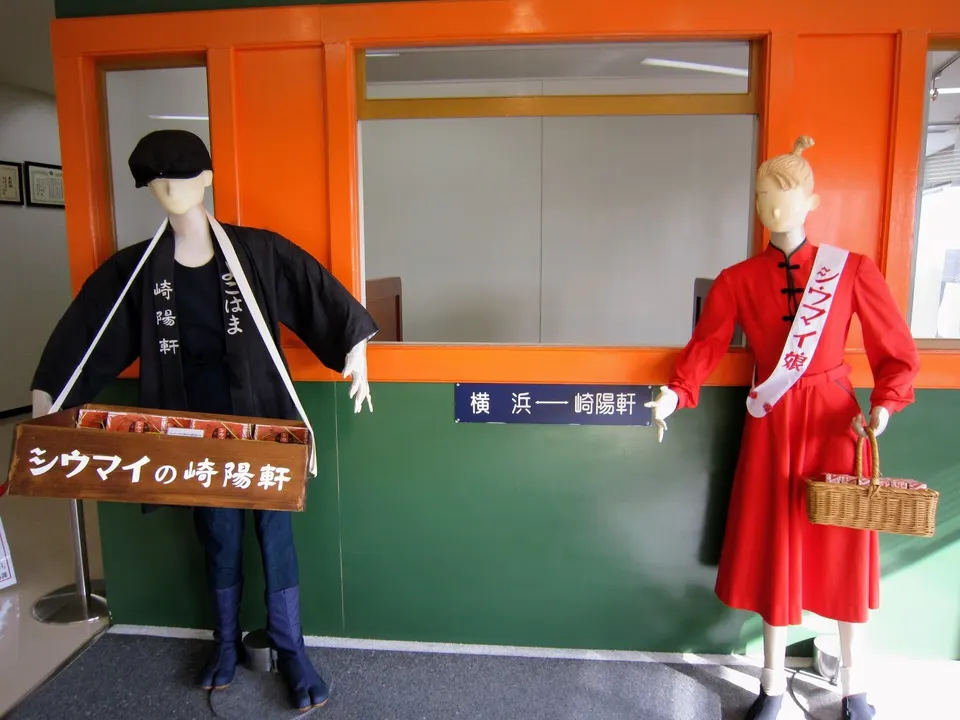
Such loads made station selling a man's job. Kiyoken of Yokohama changed that in 1950, when it sent the Shiumai Girls onto the platforms of Yokohama Station: women in red dresses and sashes who carried shūmai dumplings in hand baskets and went along the train windows asking "Shiumai wa ikaga desu ka?", "Would you like some shūmai?"
Three minutes at the window
When a train came into Hitoyoshi, Shōbu called out, watched for a window to open and ran to it, and then the windows opened one after another. The stop lasted about three minutes. He passed ekiben through the windows and worked out the change in his head. Sometimes the train left before he had handed the change over, and there were times he threw it in through the window.
More than bento
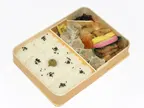
Tosu Station in Saga Prefecture had about nine vendors at a time. Records list what they sold besides bento: in 1942, tea, milk, ice cream, ice pops and cracked ice; in June 1946, tobacco, matches, newspapers, Japanese and Western liquor and slices of watermelon. At Hitoyoshi in 1969, two of the four vendors were women who sold sundries and sweets, and Shōbu sold three kinds of ekiben: chestnut rice, sweetfish sushi and makunouchi.
Tea is said to have been sold alongside ekiben since the decade from 1887 to 1896, in a small clay teapot that came with a cup. Noodles were sold on the platform too: at Himeji Station, Maneki Shokuhin began selling its Ekisoba through vendors on October 19, 1949.
The platform at Yokokawa
Until October 1997 every train over the Usui Pass stopped at Yokokawa Station in Gunma while helper locomotives were coupled on or taken off. Oginoya sold bento from that platform from the Meiji era (1868–1912) until 1997.
Tōge no Kamameshi began there. Takamizawa Mineji, who became president of Oginoya in 1953, stood on the platform every day and asked passengers one by one what kind of bento they would like. They wanted a meal that was warm, homely and fun to look at, and Oginoya's answer, on sale from 1958, was rice and toppings packed in a clay pot. The pot was heavy, and at first the vendors did not want to sell it.
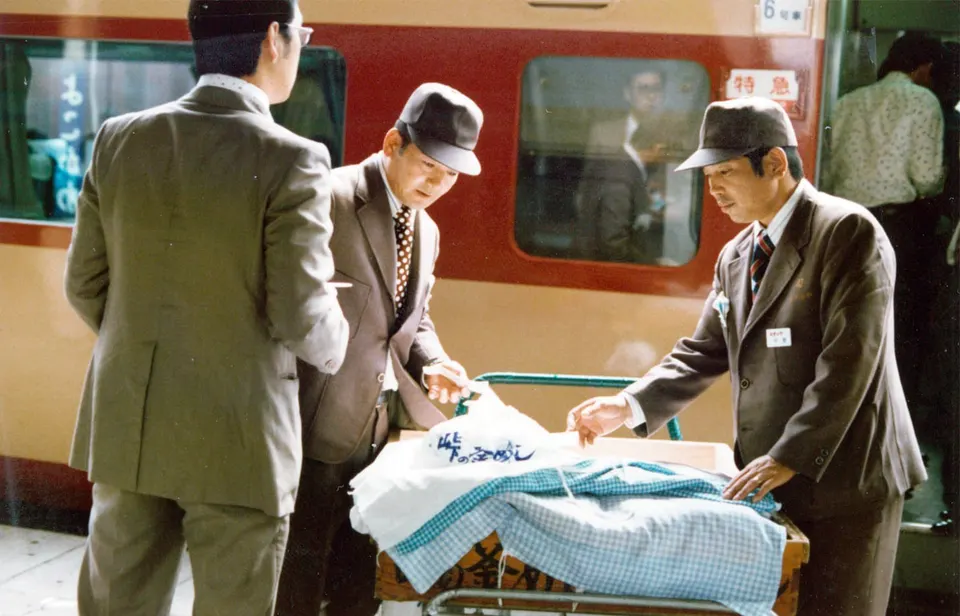
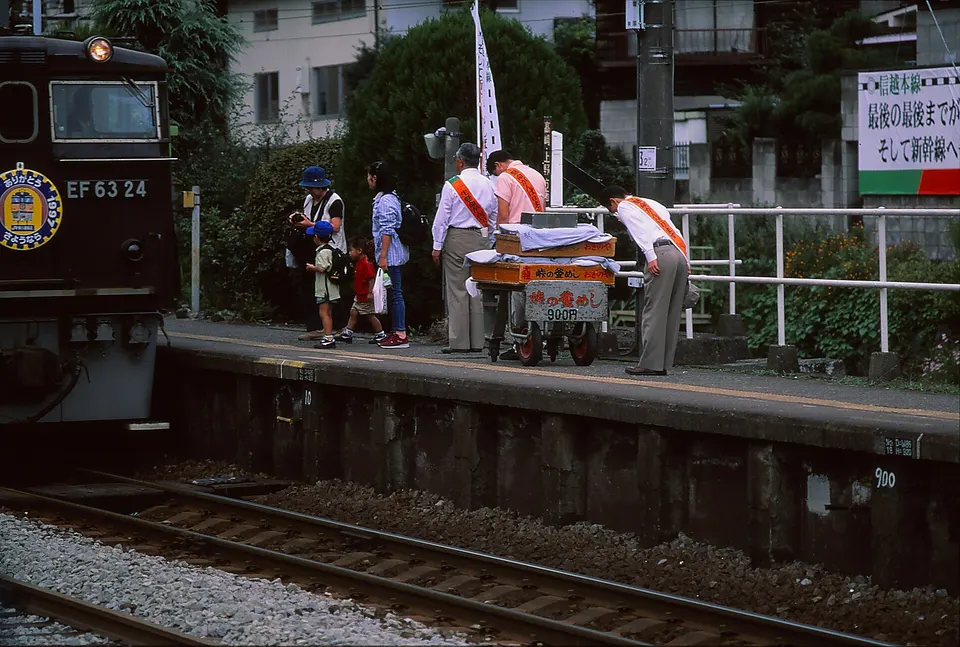
Passengers ran along the platform to buy Tōge no Kamameshi in the short time the coupling took. As each train pulled out, the Oginoya vendors lined up on the platform and bowed, a sight for which Yokokawa became known. The photograph at the top of this page shows the vendors just after a train left, in September 1997. On October 1 the line over the pass closed, and Oginoya lost 99.9 percent of its sales at the station.
Why the windows closed
Long stops belonged to the age of steam. Locomotives had to take on water, and at a station before a mountain pass every train stood for several minutes. Better locomotives and improved track shortened those stops, and some trains were moved to other routes.
In the decade from 1955 to 1964, faster trains began to come with windows that did not open, and selling ekiben on the platform grew harder. At Hitoyoshi, Shōbu sold more in the years 1975–1984 than at any other time, and around 1980 a weekly magazine described him as one of the few ekiben sellers still selling by hand.
Where the call went on
The forerunner of Tōchikuken began selling bento through vendors at Orio and Nōgata stations in Fukuoka Prefecture in July 1921. At Orio the work stopped for two and a half years when the vendor retired, and in February 2013 a 53-year-old employee took up the box. In 2020 he wore a navy cap like a conductor's and a red jacket, with a large wooden box hung from his neck. When a train stopped he spread his arms and sang "Orio meibutsu, kashiwameshi," a song and gestures of his own for the company's chicken-and-rice ekiben, and he bowed to the trains. Tōchikuken explained that trains had become too fast for selling at the window and that it kept its vendor to preserve a scene from an older time. JR Kyushu described Orio in 2024 as a station that still had tachiuri.
In 2019, fifty years after he began at Hitoyoshi, Shōbu stood on the platform three times a day, when the limited expresses arrived. The windows no longer opened, so he waited near the ticket gate for passengers getting off and sold at the doors of departing trains. Visitors from abroad had their photographs taken beside him and, with no shared language, picked out the chestnut rice. He also sold from his box at department-store ekiben fairs. At Mori Station in Hokkaido, where ikameshi was sold from the platform, vendors stood there only in summer by 2019.
References
- Kotobank: “Tachiuri” (Japanese dictionary)
- Kotobank: “Ekiben” (Japanese dictionaries and encyclopedias)
- JR Kyushu: Kyushu Ekiben Grand Prix column (2024)
- Serai.jp: interview with Shōbu Toyomi, ekiben vendor at Hitoyoshi Station (May 2019)
- Tōchikuken: Company profile and history
- Tōchikuken: Our commitments
- President Online: the ekiben vendor at Orio Station (May 5, 2020)
- Crossroad Fukuoka (Fukuoka Prefecture): Kashiwameshi platform vendors
- Kiyoken: History
- Mita Hyōron (Keio University): The new pleasures of ekiben (December 2019)
- Norimono News: Izumi Kazuo, ekiben that vanished and ekiben that survived (July 24, 2018)
- Norimono News: Ōtsuka Keiichirō, Yokokawa 28 years after the Shinkansen (May 24, 2025)
- Toretabi: Why do the Japanese love ekiben? (March 2, 2022)
- Maneki Shokuhin: Ekisoba
- Santatsu: Yoshinaga Yōichi, the Abt Road on the Usui Pass (May 2021)
- Oginoya: Company timeline
- Oginoya online shop: The story of Oginoya
Image credits (resized for display):