Japanese trains are sorted by how many stations they pass without stopping: a local (futsū) stops at almost every station, a rapid (kaisoku) skips some, and an express (kyūkō) or a limited express (tokkyū) stops only at the main ones. On JR lines a local or a rapid needs only the basic fare and a limited express needs a second ticket, while on private railways some limited expresses carry a surcharge and others do not.
Four names, fewer and fewer stops
A futsū (普通) train stops at almost every station on its line. It is also called kakueki-teisha (各駅停車), "stopping at each station." A kaisoku (快速), or rapid, makes fewer stops to run faster. A kyūkō (急行), or express, stops only at main stations, and a tokkyū (特急), or limited express, makes fewer stops than an express. Tokkyū is short for tokubetsu kyūkō, "special express." Railways fit further steps in between: a junkyū (準急), or semi-express, stops at slightly more stations than an express.
Hankyu Railway's Kyoto Main Line has 28 stations from Osaka-umeda to Kyoto-kawaramachi, and a limited express stops at nine of them. Hankyu divides the trains on the line into seven categories, four of which have 特急 in their names.
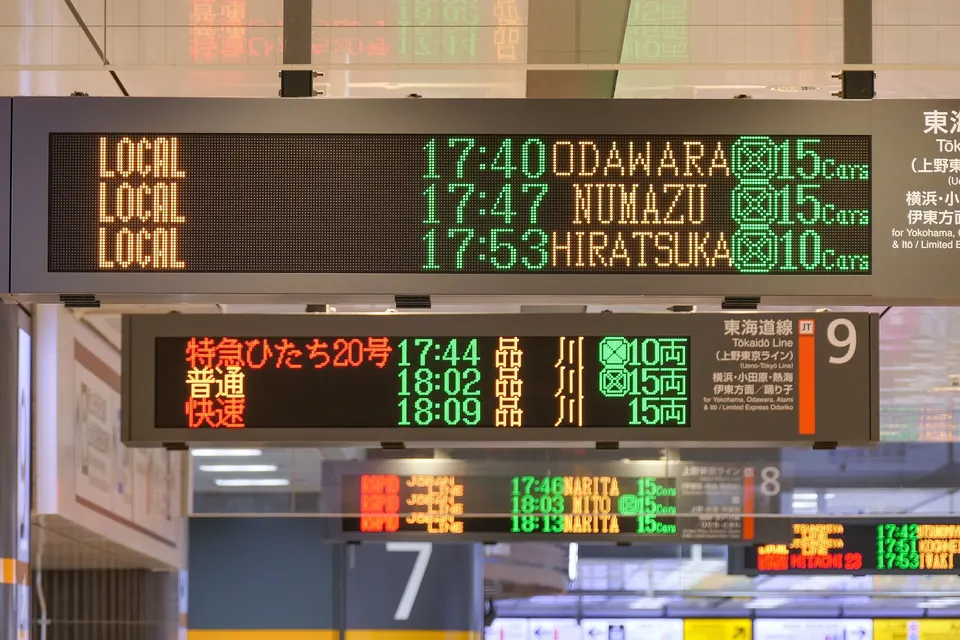
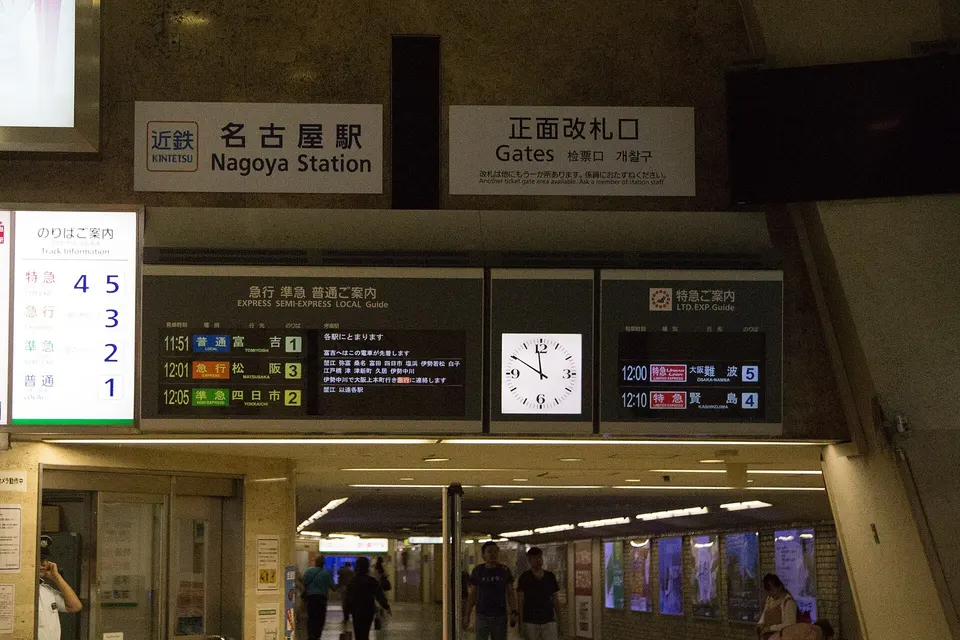
At JR West's stations, electronic boards inside the ticket gates and on the platforms show each train's category and destination. JR West tells visitors to check both before boarding, because a rapid does not stop at as many stations as a local. The boards at Tokyo Station in the photograph above alternate between Japanese and English.
What needs an extra ticket on JR
Every train requires a jōshaken (乗車券), the basic fare ticket. On JR, the category decides what is needed on top of it.
| Train | Needed besides the basic fare ticket |
|---|---|
| Local, rapid | Nothing, for a non-reserved seat in an ordinary car |
| Express | Express ticket (kyūkōken) |
| Limited express | Limited express ticket (tokkyūken) |
| Shinkansen | Shinkansen limited express ticket |
For ticketing, the Shinkansen is a limited express, with charges set separately from those of limited expresses on conventional lines. A limited express ticket is sold either for a reserved seat or for a non-reserved seat. The reserved-seat charge depends on the date of travel, which falls into one of four seasons from off-peak to busiest; the non-reserved charge is the same on every date and is lower than the reserved-seat charge of the regular season.
In JR's ticket rules a rapid is an "ordinary train," the same as a local, however few its stops. JR West's Special Rapid Service (shin-kaisoku, 新快速) stops at fewer stations than a rapid and has been called "the limited express you can ride without a limited express ticket."
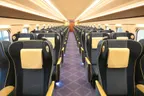
What local and rapid trains do sell beyond the fare is a seat. A reserved seat on a local or rapid train takes a reserved-seat ticket, and JR West sets such seats aside on its Special Rapid Service under the name A-Seat. Local trains in the Tokyo area carry Green Cars, which need a Green ticket of the kind issued for ordinary trains.
The express that left the timetable
The express charge is older than the limited express charge. In 1906 the trains between Shimbashi in Tokyo and Kobe were divided into three kinds, saikyūkō (最急行, "fastest express"), kyūkō and chokkō (直行, "through train"), and the extra charge collected for the saikyūkō was the first express charge. In 1912 the names changed to "special express" and "ordinary express." A special express with an observation car began running between Shimbashi and Shimonoseki, with a ticket of its own and numbered seats. Before the Second World War only a few trains, among them the Fuji, the Sakura and the Tsubame, were special expresses, and the express was the mainstay of long-distance travel.
The Kodama, the first limited express made up of electric railcars, began running from Tokyo to Osaka and Kobe in November 1958. As limited expresses multiplied and stopped at more stations, expresses with aging cars were upgraded to limited expresses, and others lost their express charge and became rapids.
In November 2009 JR had three regularly scheduled expresses left. After the timetable revision of March 17, 2012, it had a single scheduled express, the Hamanasu, an overnight train between Aomori and Sapporo. JR Hokkaido withdrew the Hamanasu with the timetable revision of March 26, 2016, when the Hokkaido Shinkansen opened. JR Central's ticket rules still list the express ticket.
Private railways: the same names, different rules
Private railways run limited expresses of two kinds. Those for commuters use the same cars as local trains and, as a rule, need no extra ticket. Those for leisure travelers use special cars and, as a rule, need an extra ticket.
Hankyu's limited expresses need no extra ticket: they can be ridden for the ordinary fare. The Kyoto Line adds PRiVACE, a reserved-seat car coupled into limited expresses, and a seat in it requires a seat reservation ticket.
Kintetsu's limited expresses carry a charge. They link Osaka, Nara, Kyoto, Ise-Shima and Nagoya, every seat is reserved, and a limited express ticket is required in addition to the basic fare. Odakyu's Romancecar, from Shinjuku in Tokyo to Hakone and Enoshima, has the same rule: all seats are reserved, and both a limited express ticket and a regular fare ticket are needed.
A station where every train stopped
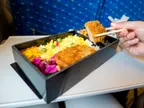
The category matters at mealtime too. On the Shinkansen and on limited expresses a meal at the seat is acceptable, while eating on a commuter train is considered bad manners.
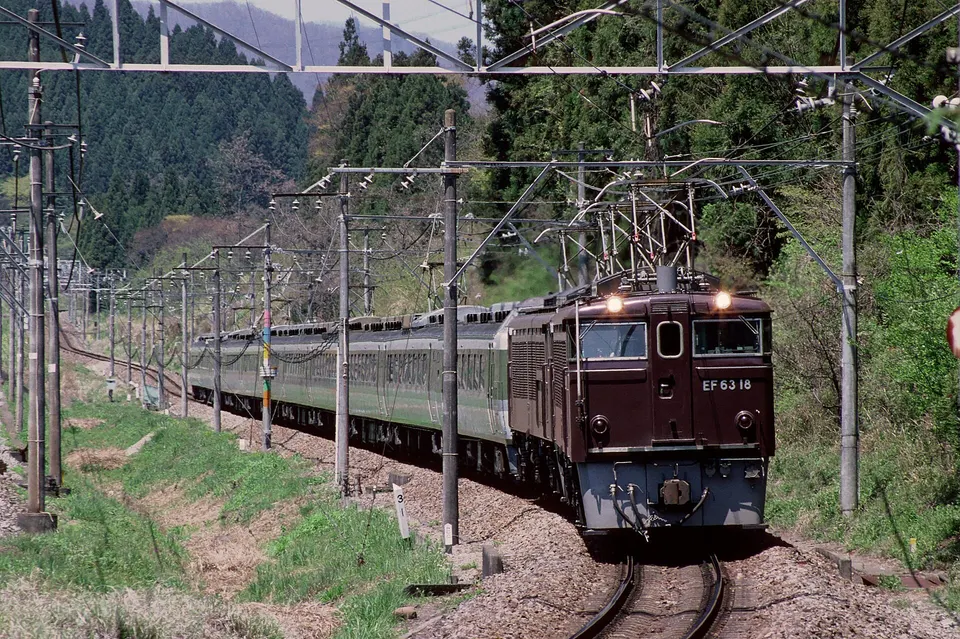
At Yokokawa Station in Gunma Prefecture, every train crossing the Usui Pass stopped, limited expresses included, to take on a pair of EF63 helper locomotives. While the locomotives were being coupled, passengers ran along the platform to buy Tōge no Kamameshi, the ekiben that had gone on sale at the station on February 1, 1958. The line over the pass closed on October 1, 1997.
References
- Kotobank: “Kyūkō ressha” (express train)
- Kotobank: “Futsū ressha” (ordinary train)
- Kotobank: “Shin-kaisoku” (Special Rapid)
- JR Central: Ticket rules
- JR West: Riding the Train, The Basics
- JR Hokkaido: Timetable revision of March 2016 (press release, December 18, 2015, PDF)
- Toretabi: Railway heritage, express trains (November 2009)
- Hankyu Railway: FAQ, Is there a separate limited express charge?
- Hankyu Railway: PRiVACE reserved-seat service
- Hankyu Railway: Kyoto Line route map (PDF)
- Kintetsu Railway: Limited Express Information
- Odakyu Electric Railway: Limited Express Romancecar
- Oginoya: Company timeline
Image credits (resized for display):