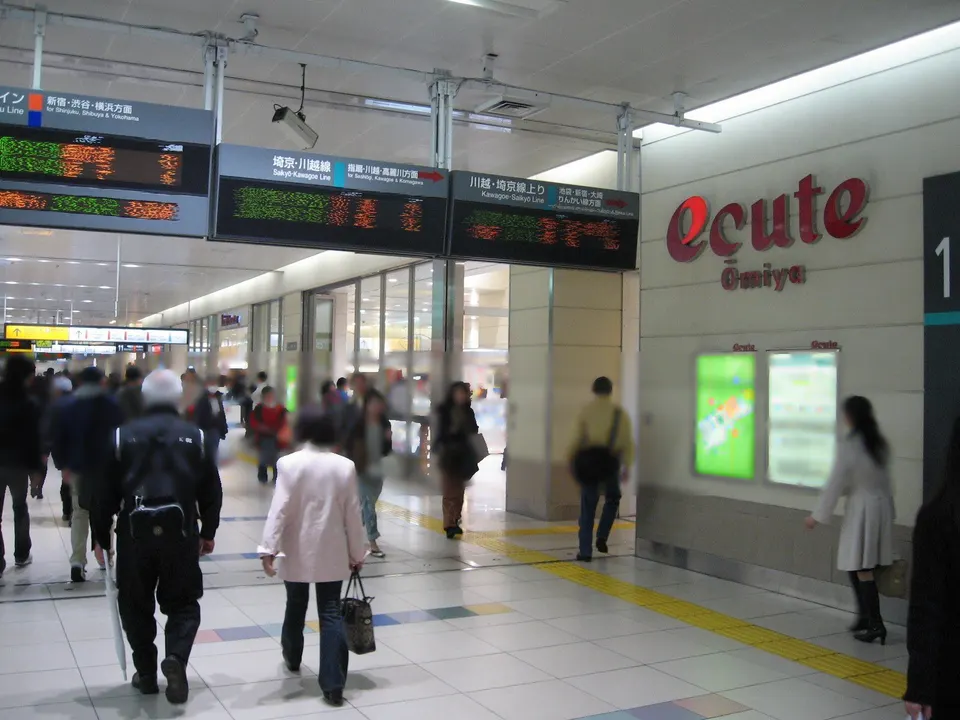
Ekinaka, written 駅ナカ and meaning "inside the station," is the commercial space within a Japanese railway station: strictly the shops and restaurants past the ticket gates, and often those just outside the gates or above the tracks too. It took its present form in 2005, when JR East opened a mall called ecute inside the gates of Ōmiya Station, and it is where a traveler picks up ekiben, the station bento, before boarding.
Kiosks, noodle counters and ekiben
Stations had sellers long before they had malls. Oginoya began trading inside Yokokawa Station on October 15, 1885, selling rice balls as ekiben.
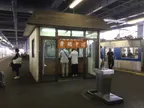
The Railway Mutual Aid Association was founded on February 25, 1932, to help railway workers who had retired after injuries on the job and the families of those killed. The national railway had looked to station stalls as the means of that relief, and the association opened its first stalls at ten places in Tokyo and Ueno stations on April 1, 1932. In 1973 it named them Kiosk; it was then running 4,279 of them at 1,819 stations. The association did not deal in rice meals, which stayed with the ekiben makers. Kiosks and standing soba counters were what a station usually had inside.
2005: from passing through to gathering
Railways turned to their stations when fare income stopped growing, in part because the working-age population was shrinking. JR East had drawn nearly 70 percent of its operating revenue from the railway since it was created in 1987. Its medium-term plan of 2000 made a program called Station Renaissance one of its pillars, under the phrase "from a station of passing to a station of gathering." The reasoning: an attractive shopping area inside a station would bring people there on purpose.
The first ecute, ecute Ōmiya, opened inside the gates of Ōmiya Station in Saitama on March 5, 2005, and ecute Shinagawa followed in Tokyo on October 1. Passengers riding the escalator up from the platforms found a shopping mall spread across the concourse, and sales passed the original targets in the first year.
Tokyo Metro opened its Echika Omotesandō in 2005 too. October 2007 brought ecute Tachikawa, about 11,500 square meters, and, on October 25, GranSta in Tokyo Station. Eki Marché Osaka, about 4,500 square meters, opened in JR Osaka Station in October 2012.
Japan's Census of Commerce for 2007 put annual sales at businesses inside ticket gates at about 233 billion yen, or about 5.05 million yen per square meter of sales floor, nearly eight times the retail average.
What is inside
Many ekinaka are laid out as shopping malls. Their tenants include convenience stores, restaurants, confectioners, delicatessens, bookshops, barbers and massage parlors, and ecute Tachikawa has a nursery school.
Service is built for speed. At ecute, compact wrapping replaced elaborate wrapping and prices were rounded so that no one-yen coins change hands, and a growing number of ekinaka shops take the e-money on a transit IC card.
Station buildings and depachika
Two neighbors of the ekinaka stand outside the gates. An eki-biru, a station building, is a building used partly as the station and partly as a department store or shopping arcade. Many went up under a postwar scheme in which private investors paid toward a national railway station in return for space in it as tenants. The first such station, Toyohashi on the Tōkaidō Main Line, was finished in 1950.
A depachika is the food floor in a department store's basement, selling delicatessen dishes, bento, sweets and alcohol. Depachika are typically connected to train stations, and the Daimaru department store beside Tokyo Station has a depachika. Anyone can walk into a station building or a depachika without a ticket; the ekinaka in the strict sense lies behind the gates.
Getting in without a train to catch
A passenger who has passed the gates on a valid ticket is already inside. For everyone else there is the nyūjōken, the platform ticket: JR Hokkaido tells customers that passing the gates for any purpose other than riding requires one. A platform ticket does not allow boarding, and at every station of JR Hokkaido, JR East, JR Central, JR West and JR Kyushu it is good for two hours from the time of sale. On March 13, 2021, JR East began letting a Suica or another transit IC card serve as a platform ticket: tap in, and tap out at the same station within two hours.
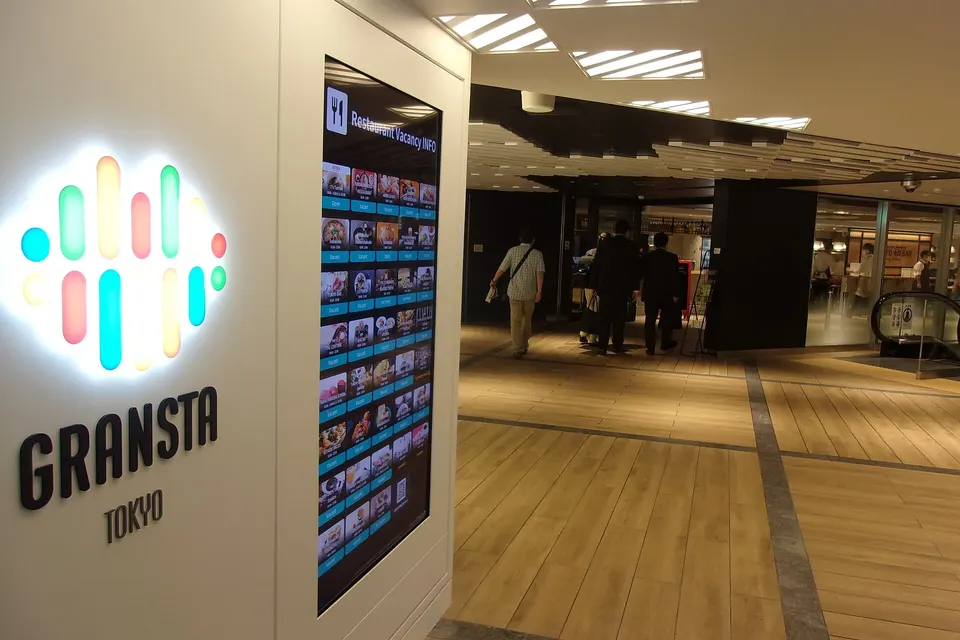
Some complexes straddle the gates. GranSta Tokyo opened on August 3, 2020, with 66 new shops beside 87 existing ones on about 11,300 square meters of Tokyo Station's first floor and first basement. That made it the largest ekinaka complex on JR East, and it has areas both inside and outside the gates.
Ekiben in the ekinaka
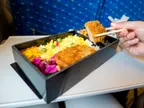
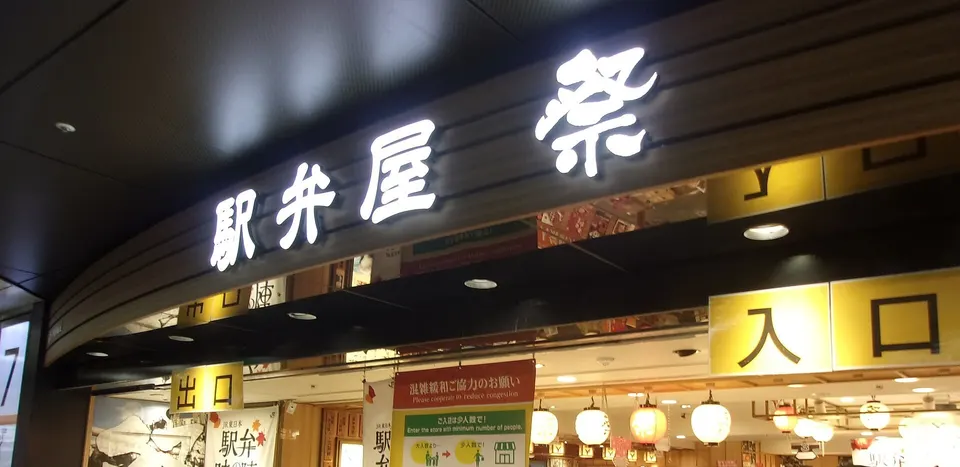
Ekibenya Matsuri, a shop devoted to ekiben, opened on August 9, 2012, on the central passage inside the gates of Tokyo Station. Its predecessor was a restaurant that held ekiben fairs every April and October. The fairs became monthly, and the shop opened on the idea of holding an ekiben fair every day. In 2022 it had 150 to 170 kinds of ekiben on its shelves, from Hokkaido to Kagoshima, and more than 300 over a year. Some were delivered from their makers late at night, some were flown to Haneda Airport and driven over first thing in the morning, and some arrived by Shinkansen during the day.
Tōge no Kamameshi, Oginoya's ekiben in an earthenware pot, first sold at Yokokawa Station on February 1, 1958, was among those ekiben. The shop's manager said in 2022 that Tōge no Kamameshi was mostly put on the shelves before noon, and that some customers work out the hour and the shelf and wait.
On the Tōkaidō Shinkansen, JR Central ended cart sales aboard Nozomi and Hikari trains on October 31, 2023, and one of the reasons it gave was the better selection at shops around the stations.
References
- Kotobank: “Ekinaka”
- Kotobank: “Tetsudō Kōsaikai” (Railway Mutual Aid Association)
- Kotobank: “Minshū-eki”
- Kotobank: “Eki-biru”
- Railway Mutual Aid Association: Chronology
- Government of Japan, Highlighting Japan (April 2017): Destination Station
- JR East Cross Station: ecute Shinagawa 20th anniversary (August 27, 2025)
- JR East Cross Station: ecute 20th Anniversary Project (December 10, 2024)
- ecute official site
- GRANSTA official site
- ITmedia Business Online: Tokyo Station becomes a town (November 5, 2007)
- Travel Watch: GranSta Tokyo opens in Tokyo Station (August 3, 2020)
- ITmedia Mobile: JR East to start Touch de Ekinaka (January 19, 2021)
- JR Central: Ticket rules, platform tickets
- JR Hokkaido: FAQ, entering the gates to see someone off
- Japan National Tourism Organization: Your Guide to Japanese Department Store Food Floors
- Toretabi: Behind the scenes at Ekibenya Matsuri (October 24, 2022)
- Oginoya: Company timeline
Image credits (resized for display):
- 電車(新幹線)でゴー! / Wikimedia Commons, CC BY-SA 4.0, 2020
- ITA-ATU / Wikimedia Commons, Public domain, 2010
- 電車(新幹線)でゴー! / Wikimedia Commons, CC0