The Green Car is the first-class car on Japan's JR trains: a car with wider seats, set farther apart than those of the ordinary car, that a passenger enters with a Green ticket bought on top of the fare. It took the place of the old first-class car in May 1969, when the national railway gave up its system of classes, and a green four-leaf clover beside the door marks it.
What the seat adds
Most Green Cars belong to JR, and they run in the Shinkansen, in limited express trains and in some local trains around Tokyo.
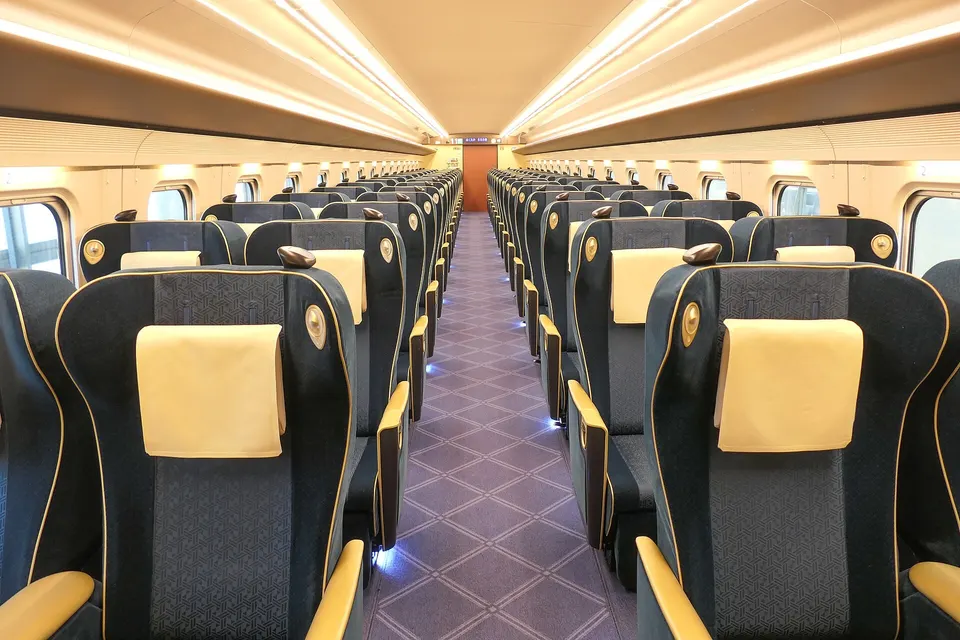
Every train on the Tōkaidō Shinkansen has 16 cars, and cars 8, 9 and 10 are Green Cars, with 200 seats among the three. An ordinary car seats five across: A, B and C on one side of the aisle, D and E on the other. A Green Car seats four across, A and B, then C and D. On the N700S trains a Green Car seat is 480 millimeters wide. In the ordinary car's row of three, the window seat and the aisle seat are 440 millimeters wide and the middle seat 460.
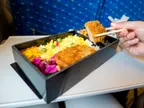
The N700S Green Car seat also has a footrest, a leg warmer and a reading light. Its tables, the place for an ekiben bought at the station, and the way Green Car passengers on the Tōkaidō Shinkansen order food and drinks from the seat are described in Can you eat on trains in Japan?
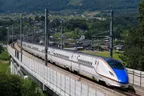
The E7 and W7 trains of the Hokuriku Shinkansen have 12 cars. Cars 1 to 10 are ordinary cars, car 11 is the Green Car, with 63 seats, and car 12 is Gran Class. Rows of seats are 1,040 millimeters apart in the ordinary cars and 1,160 in the Green Car.
The ticket
A Green Car takes a Green ticket in addition to the fare ticket, and on the Shinkansen and on limited expresses the limited express charge is paid as well. Green tickets come in two kinds, A for the Shinkansen, limited express and express trains and B for local trains, and each kind is sold for reserved or non-reserved seats. The Green Cars of the Tōkaidō Shinkansen are all reserved.
The Japan Rail Pass comes in two types, one for Green Cars and one for ordinary cars, each sold for 7, 14 or 21 days. The Green Car type is valid in Green Cars as well as ordinary cars. Some trains have no Green Car, among them most Hikari and Kodama trains on the San'yō Shinkansen between Shin-Osaka and Hakata and all Kamome trains on the Nishi-Kyushu Shinkansen.
Double-decker Green Cars around Tokyo
JR East couples Green Cars to local and rapid trains on the Tōkaidō, Yokosuka, Takasaki, Utsunomiya, Jōban and Sōbu Rapid lines, among others, and added them to the Chūō Rapid and Ōme lines on March 15, 2025. These Green Cars have two decks, an upper deck with a high view and a lower deck that rides close to the level of the platform.
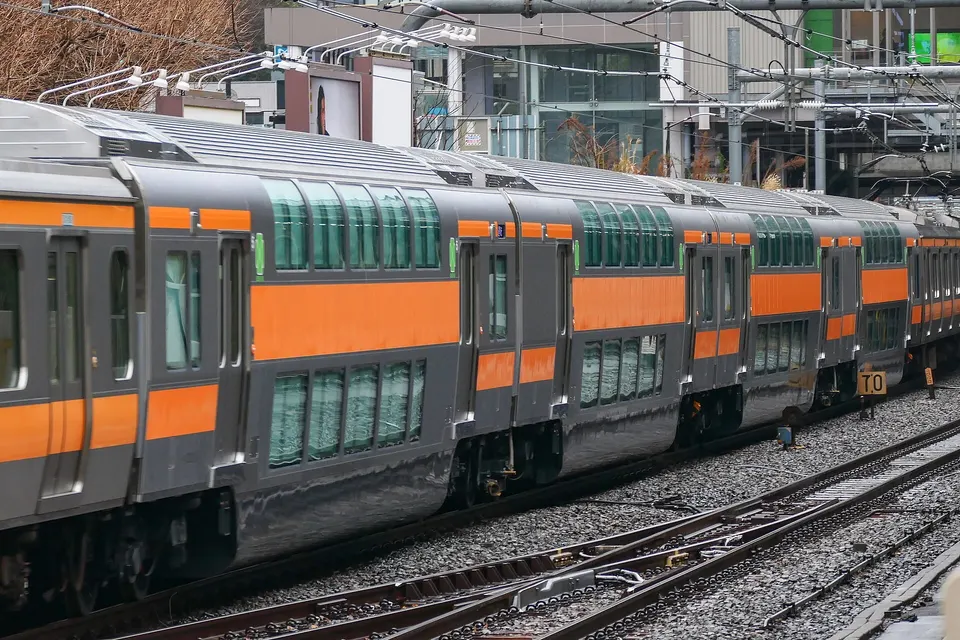
Every seat in these cars is non-reserved. A passenger buys a local-train Green ticket on top of the fare ticket or commuter pass, as a paper ticket, on an IC card or in the Mobile Suica app. A lamp above each seat shows red while the seat is free, and it turns green when the passenger touches the IC card or the phone to the reader over the seat.
From first class to Green
Until 1960 the national railway had three classes. That year the three became two: third class was renamed second, and the old second class became first. In May 1969 the railway did away with classes altogether. The first-class car became the Green Car, and the second-class car became the ordinary car. Under the class system the fare itself had depended on the class. From 1969 there was one fare for everyone, and the Green Car became a service added to that fare for a charge.
Two explanations are given for the word "green." In one, it comes from the pale green band that was painted along the side of first-class cars. In the other, it comes from the pale blue-green covers put over the headrests of reserved seats in the "special second-class" cars of express trains from 1958, to tell reserved seats from non-reserved ones. The railway seems to have been calling its special cars "Green Cars" internally, as a working name, before 1969.
The four-leaf clover is a sign of good luck, and the mark is said to express the wish of the people behind the new car that luck would come to its passengers.
Above the Green Car
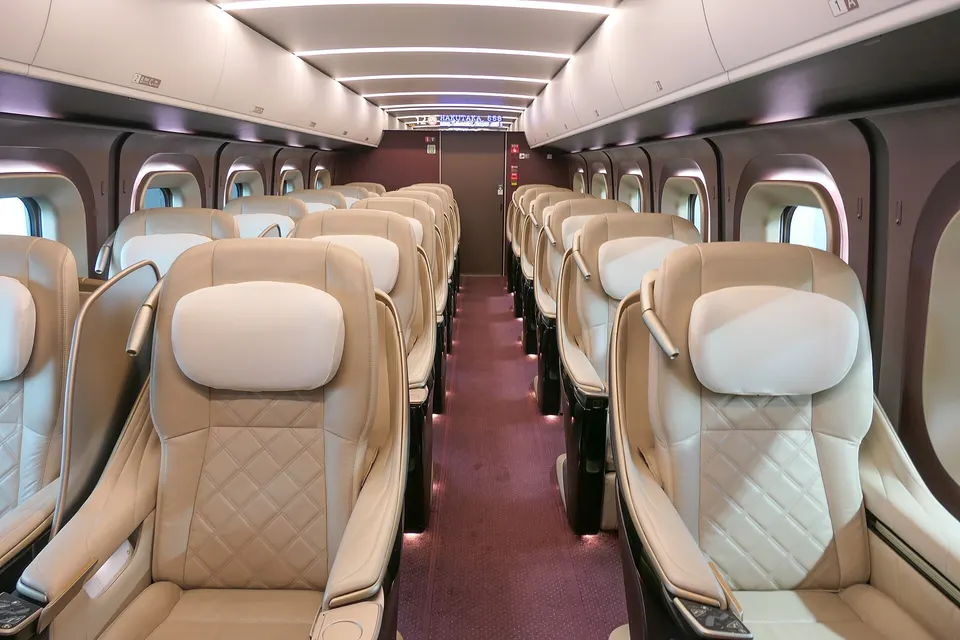
Gran Class is a class above the Green Car. JR East introduced it on the Tōhoku Shinkansen in 2011, and in 2014 it came to the E7 trains of what is now the Hokuriku Shinkansen. The E5 trains of JR East and the H5 trains of JR Hokkaido each carry one Gran Class car, which has 18 seats in rows of two and one. The Green Car of the same 10-car train has 55 seats.
On the E7 and W7 trains, Gran Class rows are 1,300 millimeters apart. The W7 Gran Class seat is upholstered in leather and reclines by electric motor to about 45 degrees at the touch of a switch, and each seat has its own table, side table, reading light and partition. A Japan Rail Pass of either type covers only the basic fare in Gran Class, and the limited express charge and the Gran Class charge are paid separately.
On October 1, 2026, JR Central and JR West opened Supreme Class on the Tōkaidō and San'yō Shinkansen between Tokyo and Hakata, and they rank it above the Green Car. Supreme Class began as private rooms with locking doors in 16-car N700S trains: one room in car 7 for up to two passengers, and one room in car 10 for a single passenger.
References
- Kotobank: “Green-sha” (Japanese dictionaries and encyclopedias)
- Kotobank: “Shinkansen” (Japanese encyclopedias)
- Kotobank: “Jōshaken” (tickets)
- Norimono News: Why is it called the Green Car? (June 2017)
- JR Central: N700S
- JR Tokai Tours: Choosing seats on the Tōkaidō Shinkansen
- JR Central: Supreme Class
- JR Central and JR West: press release on Supreme Class (June 17, 2026, PDF)
- JR West: Hokuriku Shinkansen (W7)
- JR East and JR West: New trains for the Hokuriku Shinkansen (September 2012, PDF)
- Japan Rail Pass: Train accommodations
- Japan Rail Pass: About the pass
- JRE Media: Green Cars on local trains
Image credits (resized for display):