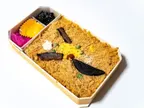
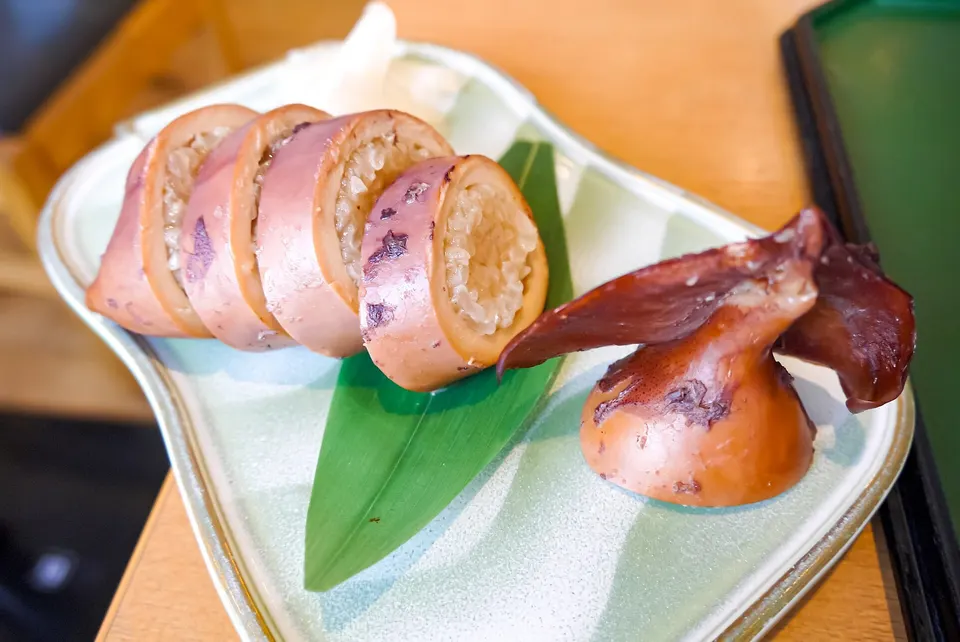
Ikameshi is squid stuffed with rice and simmered in sweet soy sauce, and it is the ekiben, or station bento, of Mori Station in southern Hokkaido. It was created in 1941, in wartime, when squid was plentiful and rice was rationed, and it became known all over Japan through the ekiben fairs of department stores.
Squid stuffed with rice
To make ikameshi, the legs and innards of a squid are removed, the body is filled with rice, and the squid is simmered with soy sauce and sugar until it is sweet and salty. It is a local dish of the Oshima region, the part of Hokkaido around Hakodate, and the ekiben of Mori Station on the Hakodate Main Line.
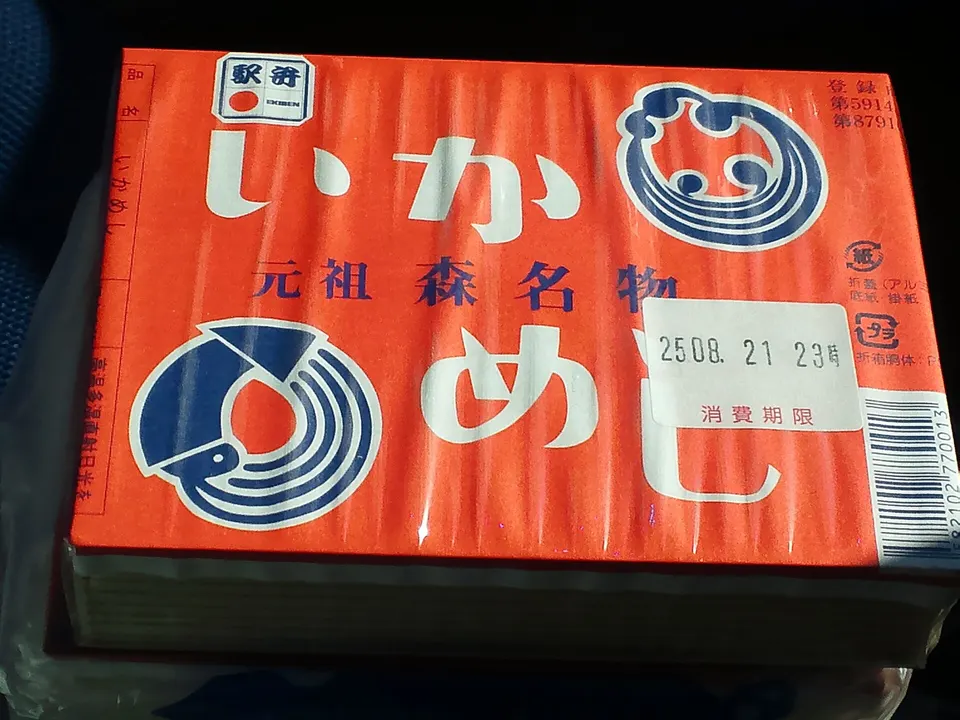
The Mori ekiben is made by Ikameshi Abe Shoten. The squid is surume-ika, the Japanese common squid, which is the squid most commonly eaten in Japan. Raw rice, a blend of ordinary and glutinous rice, is packed into the cleaned squid, and the opening is pinned shut with a toothpick. The squid are boiled over a row of three powerful gas burners, then put into what the company calls its secret sauce to take on flavor, and packed into boxes. The wrapper reads 元祖 森名物, "the original, a specialty of Mori," and its design is based on the second wrapper the company used.
A wartime invention
Abe Shoten dates from June 1903. When Mori Station opened, the Abe family, who kept an inn, received permission to trade inside the station and set up a bento section within the inn. Oginoya had likewise begun selling at Yokokawa Station in 1885, on the day the railway arrived there.
In 1941 Abe Shizuko, the wife of the first president, turned her attention to the surume-ika that was then being caught in great numbers. So much squid was coming ashore near the station that there was more than anyone could use. She had also seen soldiers passing through hungry. The Hakodate Main Line runs from Hakodate to Asahikawa, where an army division had been based since 1900, and they were on their way north to it. She wanted something that would fill them. She first tried stuffing the squid with potatoes, a local crop, and with corn. After much trial and error she settled on rice, a blend of glutinous and ordinary rice, which was cheap and the most filling of all. The soldiers were glad of it.
Rice had gone on the ration in Japan in April of that year. Ikameshi is said to have begun as a dish that made a little rice go further, using squid, which was landed in quantity in southern Hokkaido and easy to get. It was simple to eat, filling and good, and word of it spread. It was talked about among soldiers during the war, and its real popularity came afterward. In 1943 the family closed the inn and kept only the station business.
Mori and its platform
Mori is a town in southwestern Hokkaido, on the Oshima Peninsula, facing Uchiura Bay, which is also called Volcano Bay. Squid and kelp are caught in the bay in quantity. Potatoes and pumpkins are grown on the flat land at the foot of Mount Komagatake, which is 1,131 meters high.
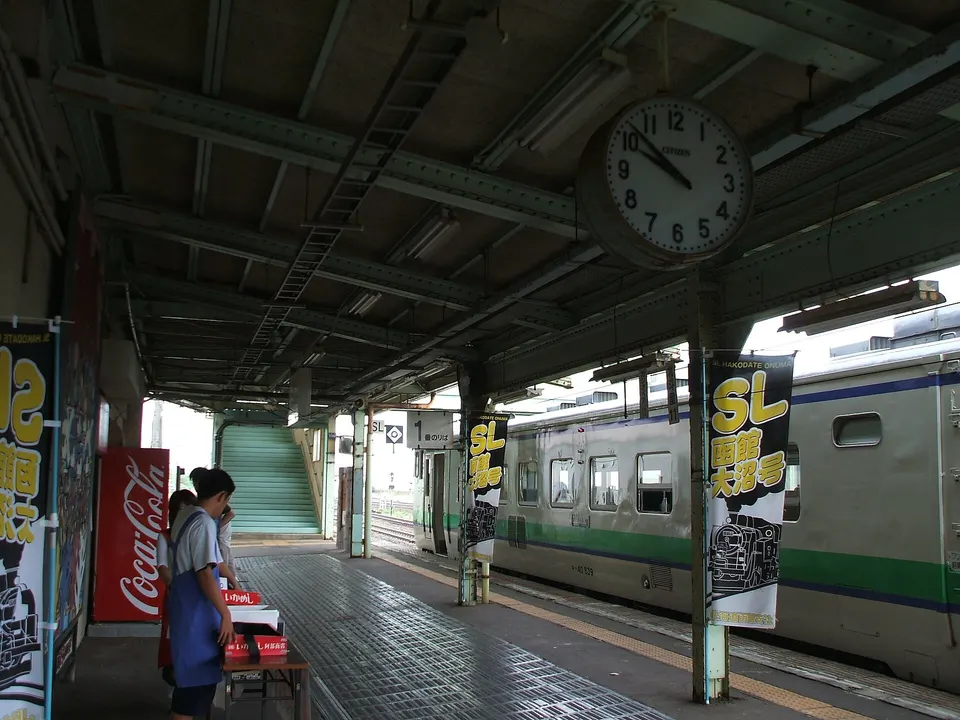
At Mori Station ikameshi was sold by vendors standing on the platform. Imai Maya, the third generation to head the company, saw it as a child of about eight: a train would stop for a minute or so, a crowd would get off, and those who could manage it in that time bought a box. By 2019 the vendors appeared on the platform only in summer, and the company was selling mainly at the food fairs of department stores.
Made in front of the customer
Abe Shoten began taking ikameshi to the regional food fairs of department stores around the 1960s. It has held to jitsuen hanbai, demonstration selling: the food is cooked at the venue and sold on the spot. For each fair its cooks travel to the store, stuff raw squid with rice there and season it there, so the taste differs a little from one cook to another. That is how ikameshi became a popular product across the country.
Fifty fairs at number one
The Keio Department Store in Shinjuku, Tokyo, held its first ekiben fair in February 1966. It lasted nine days and had about 30 kinds of bento. Ranked by sales, ikameshi came fourth, after a crab sushi from Tottori Station, a kamameshi from Kuroiso Station and a shrimp rice bento from Niitsu Station.
The ranking is now counted in boxes sold, among the ekiben cooked at the venue. At the 50th fair, in 2015, Tōge no Kamameshi, which is normally delivered ready-made, was prepared in the store, and it finished second. First was ikameshi. Tōge no Kamameshi went on sale at Yokokawa Station in February 1958, seventeen years after ikameshi, as the leading example of the ekiben named for a local specialty that had been appearing all over Japan since about 1955.
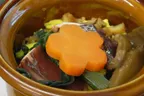
At the 55th fair, in 2020, ikameshi took first place for the 50th fair in a row. Keio placed it in a hall of fame, and it has been left out of the top ten ever since. Two years later Abe Shoten brought ikameshi served in a bowl, a form it had never taken since it went on sale in 1941, with squid simmered in the sauce, vegetables and cheese over rice cooked in the same sauce. The fair reached its 61st edition in January 2026, with 41 makers cooking on site and more than 380 kinds of ekiben from around Japan.
Ikameshi at home
In southern Hokkaido ikameshi is also made at home, all year round, and eaten as a side dish, as a snack or with sake. The cleaned body is filled with glutinous rice, ordinary rice or both, pinned with a toothpick, and simmered in a pot with soy sauce, sugar, salt and sake. Some cooks add the finely chopped legs, bamboo shoots, shiitake or green peas to the rice. A squid packed with too much glutinous rice bursts as it cooks, so a few holes are pricked in the body with a toothpick beforehand. A large squid is cut into rings about 2 centimeters thick and a small one is served whole, with thin slices of red pickled ginger. Ikameshi is also sold in retort pouches, in supermarkets and by mail order.
References
- Ikameshi Abe Shoten: The story of ikameshi
- Ikameshi Abe Shoten: How ikameshi is made
- Ministry of Agriculture, Forestry and Fisheries: Our Regional Cuisines, “Ikameshi” (Hokkaido)
- Mita Hyōron (Keio University): The new pleasures of ekiben (December 2019)
- Keio Department Store: History of the ekiben fair
- Keio Department Store: Looking back on the 61st ekiben fair (April 2026)
- Kotobank: “Ikameshi”
- Kotobank: “Ekiben” (Japanese dictionaries and encyclopedias)
Image credits (resized for display):