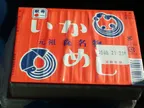
Ekiben fall into two broad kinds: the makunouchi, rice with an assortment of side dishes, and the ekiben built around one local specialty. The second kind includes meals so tied to their stations that reference books list them by station name, such as the ikameshi of Mori, the kamameshi of Yokokawa and the shūmai bento of Yokohama.
Makunouchi and the specialties
The basic ekiben is the makunouchi bento, rice with several side dishes. Alongside it are the many "special" ekiben, which bring in the produce of their own region. The terms come from the national railway, which sorted ekiben into ordinary and special: a special ekiben was rice with a special ingredient such as meat or fish. In 1982 there were about 1,500 ekiben in Japan, of which 1,035 were of the special kind and 521 were sushi.
Ekiben known by their stations
| Ekiben | Station | Prefecture |
|---|---|---|
| Ikameshi | Mori | Hokkaido |
| Kanimeshi (crab rice) | Oshamambe | Hokkaido |
| Kamameshi | Yokokawa | Gunma |
| Shūmai bento | Yokohama | Kanagawa |
| Unagi-meshi (eel rice) | Hamamatsu | Shizuoka |
| Beef bento | Matsusaka | Mie |
| Kakimeshi (oyster rice) bento | Hiroshima | Hiroshima |
| Kani-zushi (crab sushi) | Yonago | Tottori |
| Whole sea bream sushi | Misumi | Kumamoto |
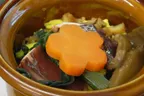
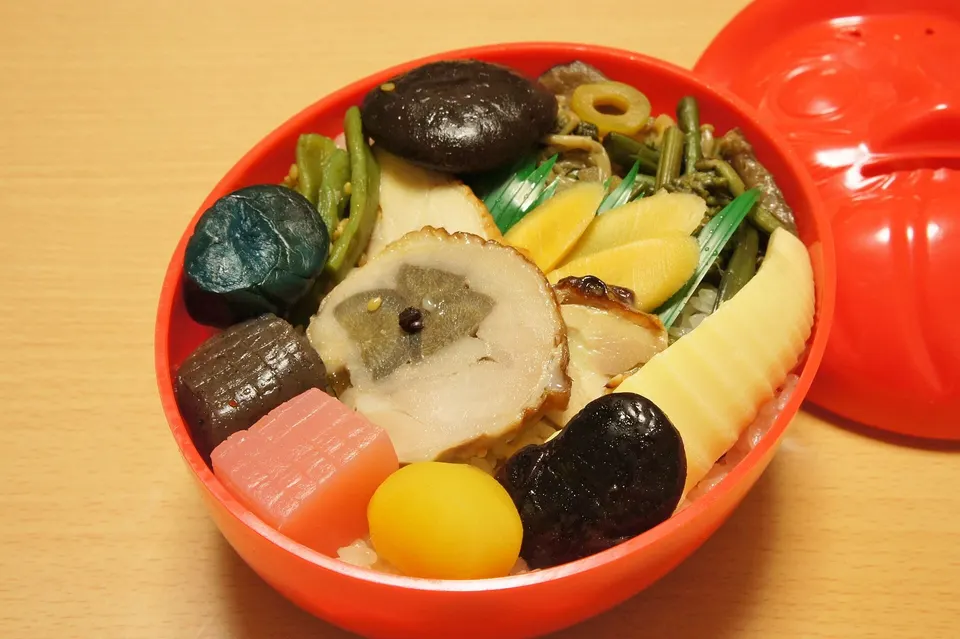
The kamameshi of Yokokawa is Tōge no Kamameshi: seasoned rice topped with nine ingredients in an earthenware pot of Mashiko ware. It went on sale in February 1958, and it is regarded as the leading example of the ekiben with names like "such-and-such rice" and "such-and-such sushi" that appeared all over Japan from about 1955.
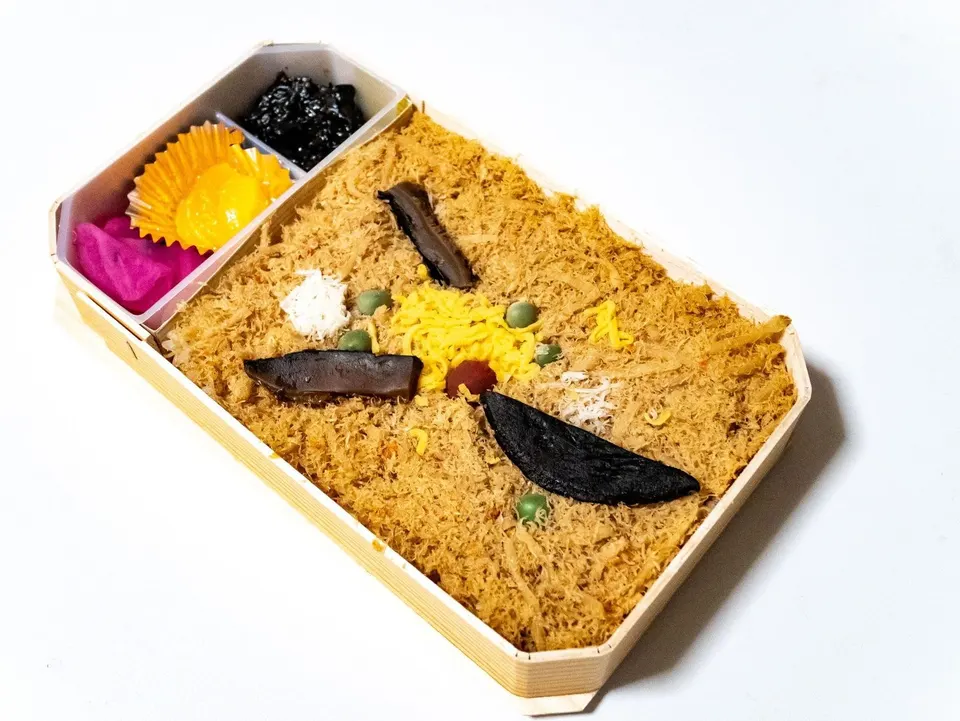
Tai-meshi, sea bream rice, is another ekiben known by its stations. Rice is cooked with a light seasoning of soy sauce and topped with flaked sea bream. The tai-meshi ekiben of Shizuoka, Odawara, Mishima and Numazu stations are well known.
Sushi wrapped in leaves
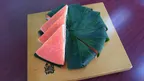
Masu-zushi, trout sushi, is a local dish of Toyama and a kind of pressed sushi. Bamboo grass leaves are laid in the bottom of a container of bent wood, vinegared rice is packed in, thin slices of vinegar-cured trout are laid over it, the leaves are folded over the top, and a weight is set on it. It became widely known after it was sold as an ekiben at Toyama Station.
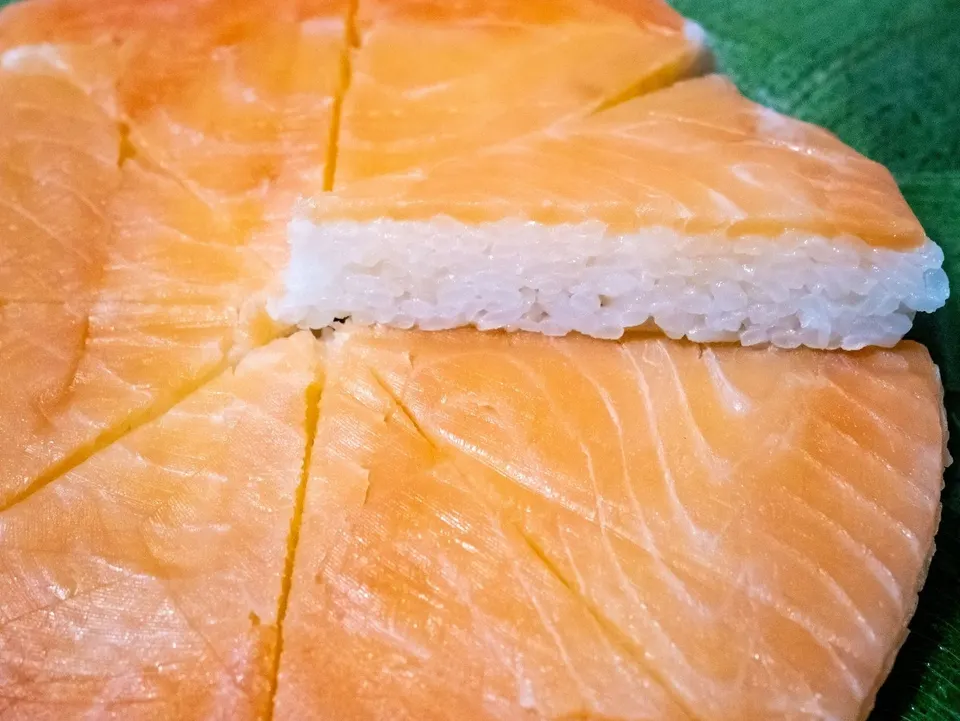
Kakinoha-zushi comes from Nara and Wakayama and is pressed sushi as well. Mackerel or other fish cured in salt or vinegar is sliced, set on bite-sized pieces of vinegared rice, wrapped in a persimmon leaf and pressed under a weight.
Ekiben remembered for the container
Some ekiben are known as much for what they come in. Daruma Bento, from Gunma, uses a container shaped like a daruma doll, a symbol of the prefecture, and once the meal is finished the container works as a coin bank. Hipparidako Meshi, from Nishi-Akashi in Hyogo Prefecture, is soy-seasoned rice topped with simmered octopus, conger eel and vegetables in a ceramic pot modeled on the pots used to catch octopus. Moo Taro Bento, from Mie, has a cow-shaped container that plays music when the lid is lifted. A beef tongue bento from Miyagi has a heating element in its base: pull the string, wait a few minutes, and the meal is hot.
References
- Kotobank: “Ekiben” (Japanese dictionaries and encyclopedias)
- Kotobank: “Masu-zushi” (dictionary of Japanese regional dishes)
- Kotobank: “Tai-meshi” (dictionary of Japanese regional dishes)
- Kotobank: “Kakinoha-zushi” (dictionary of Japanese regional dishes)
- Oginoya: Tōge no Kamameshi in the ceramic pot
- Japan National Tourism Organization: Experience Japan's Local Ekiben Culture
Image credits (resized for display):
- くろふね / Wikimedia Commons, CC BY 4.0, 2021
- くろふね / Wikimedia Commons, CC BY 4.0, 2022
- Qurren / Wikimedia Commons, CC BY-SA 3.0, 2014