Japan's railway heritage runs from the foundation stones of its first terminus, opened in Tokyo in 1872, to the brick bridges of a closed mountain line, two station buildings of 1914 still in daily use, a roundhouse in Kyoto and one of the first locomotives to run in the country. The national government protects those it judges important as Important Cultural Properties or Historic Sites, and the railways have kept their own list of railway monuments since 1958.
Who protects a railway
An Important Cultural Property is designated by the national government under the Law for the Protection of Cultural Properties of 1950. Its owner needs permission to alter it and can receive public money toward its upkeep. The same law protects places, among them the remains of transport facilities, as Historic Sites.
Railway monuments (tetsudō kinenbutsu) are the railways' own scheme. Japanese National Railways began it on October 14, 1958, for structures, rolling stock and documents of historical value. It had named 35 monuments by the time it was privatized, and JR West and JR Hokkaido have added to the list since 2004. One of the monuments named in 1958 is the former Nagahama Station in Shiga Prefecture, opened in March 1882, the oldest railway station building still standing in Japan.
The Ministry of Economy, Trade and Industry also certified 1,115 items as Heritage of Industrial Modernization in fiscal 2007 and 2008, and the Japan Society of Civil Engineers has been selecting civil engineering heritage since 2000.
Where the first line began
Japan's first railway opened between Shimbashi and Yokohama in 1872. The site of the Shimbashi terminus has been a National Historic Site since 1965, and the foundation stones of the 1872 station building can be seen there through a glass floor.
The line was about 29 kilometers long, and for about 2.7 kilometers it ran along an embankment built out in the sea, because land on the shore was hard to obtain. The stone walls of this embankment were found in April 2019 during construction work around Shinagawa Station, and in 2021 the sections preserved in place were added to the Historic Site as the Takanawa embankment.
Locomotive No. 1 was built in Britain in 1871 by the Vulcan Foundry, one of ten steam locomotives imported for the opening. It was later sold to the Shimabara Railway in Nagasaki Prefecture, then bought back by the national railway to be preserved. It became a railway monument in 1958 and an Important Cultural Property in 1997, and it stands in the Railway Museum in Saitama.
The Usui Pass: a mountain line in brick
The railway over the Usui Pass, between Yokokawa in Gunma Prefecture and Karuizawa, opened in 1893 and closed in 1997. Its locomotives climbed on the toothed rail of the Abt rack system, and the story of the line is told here. What the line left in the city of Annaka is an Important Cultural Property, the Former Usui Pass Railway Facilities: seven brick bridges, eleven tunnels and three substation buildings.
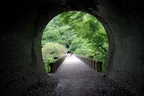
The bridges and tunnels were built for the line that opened in 1893. The Third Bridge, known as Meganebashi or "spectacles bridge", has four brick arches and is 91.1 meters long.
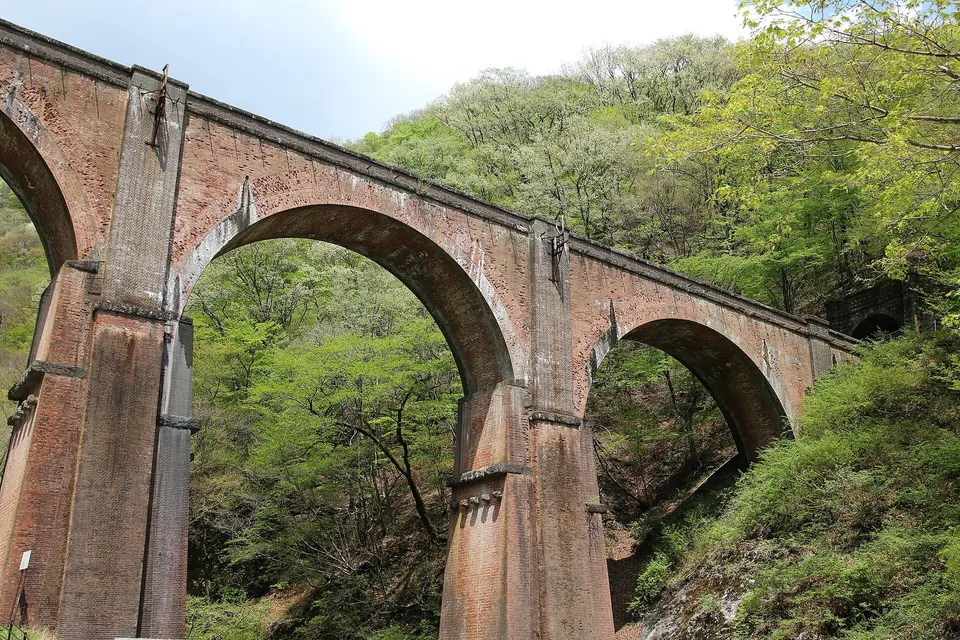
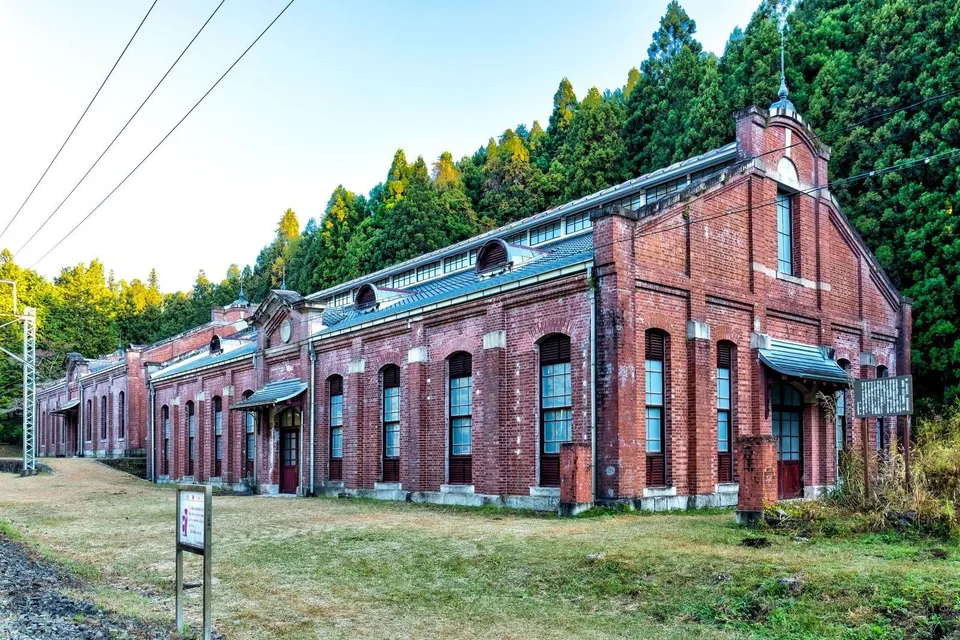
Five of the bridges, the Third Bridge among them, were designated in 1993. Ten tunnels and the two buildings of the former Maruyama Substation followed in 1994. The substation's machine room was built in brick in 1911, the year before the Usui Pass became the first trunk line in Japan to use electric locomotives. Two more bridges, one more tunnel and the Kumanotaira Substation of 1937 were added in 2018.
The roadbed of the rack line is now a walking path, Abt no Michi (the Abt Road), from Yokokawa Station to the former Kumanotaira signal station. Yokokawa is where Oginoya opened for business on October 15, 1885, the day the railway reached the station, and where it put Tōge no Kamameshi on sale in February 1958.
Two stations of 1914, still in use
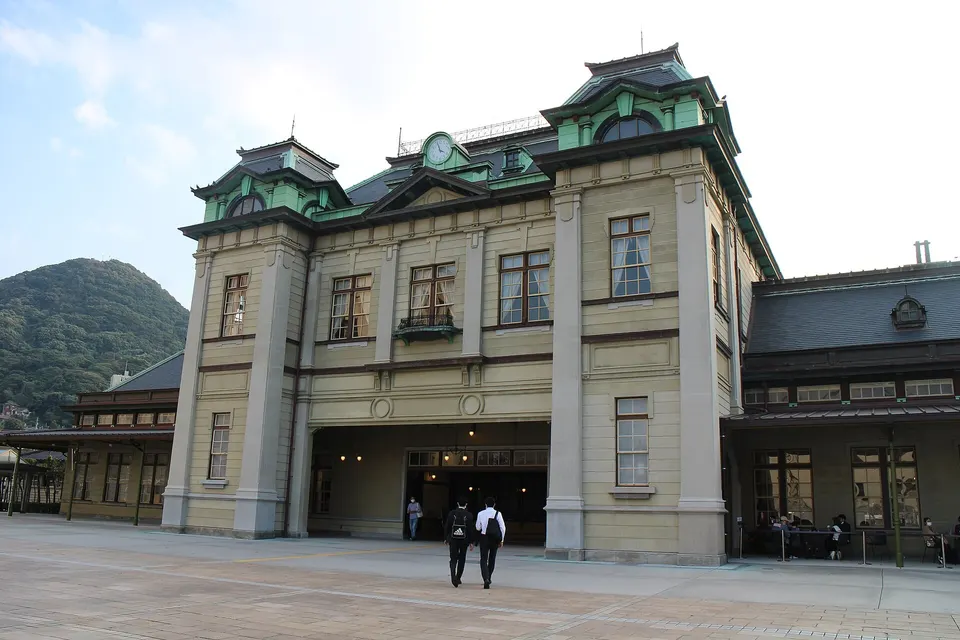
Mojikō Station in Kitakyushu was the first railway station in Japan to be designated an Important Cultural Property, in 1988. It opened in 1891 as Moji Station, the rail gateway to Kyushu, and was renamed in 1942 when the Kanmon railway tunnel opened. The building of 1914 is wooden, finished to look like stone, with a two-story center and single-story wings. Repair work that began in 2012 returned it to its 1914 form, and the restored building opened in full on March 10, 2019.
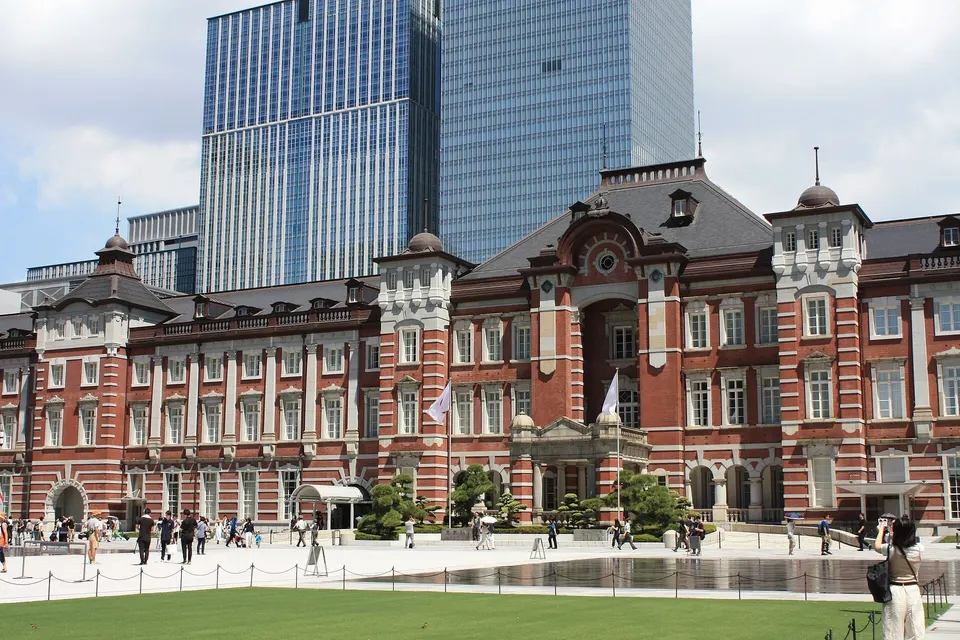
The Marunouchi building of Tokyo Station was completed in December 1914 to a design by Tatsuno Kingo. It is about 335 meters long, built of brick on a steel frame, and first stood three stories high. Fire from an air raid burned the roof in 1945, and in 1947 the building was finished again with two stories. It was designated an Important Cultural Property in 2003, and work from 2007 to 2012 rebuilt the third story and returned the building to its original form.
A roundhouse in Kyoto
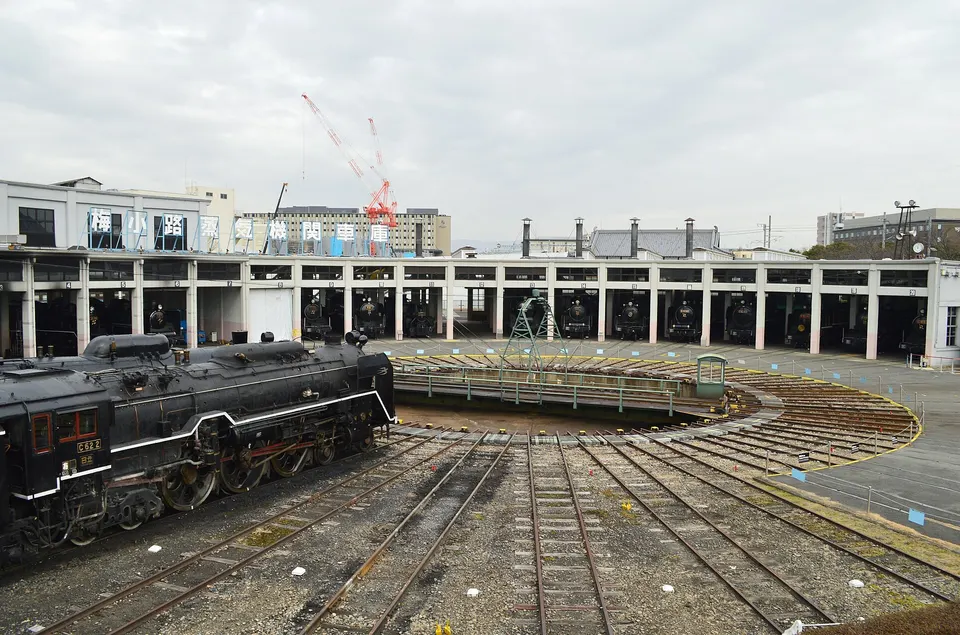
The Umekōji locomotive shed in Kyoto, finished in November 1914, is the oldest reinforced-concrete locomotive shed still standing in Japan. It is fan-shaped, built around a turntable, with 20 tracks running into it. In 1972 the Umekōji Steam Locomotive Museum was set up here for the centenary of Japan's railways, to keep and show steam locomotives of the Taishō and Shōwa eras. The shed became an Important Cultural Property in 2004, and in April 2016 the Kyoto Railway Museum opened on the site and took over the collection. Where steam locomotives still pull trains is the subject of a separate article.
On the World Heritage List
The Sites of Japan's Meiji Industrial Revolution, inscribed on the World Heritage List in 2015 with 23 component parts, include the track bed of the electric railway that once carried coal from the pits of the Miike mine to Miike Port. Annaka is working to have the railway structures of the Usui Pass inscribed as well.
References
- Agency for Cultural Affairs, Cultural Heritage Online: Former Usui Pass Railway Facilities, Third Bridge
- Agency for Cultural Affairs, Cultural Heritage Online: Former Maruyama Substation machine room
- Agency for Cultural Affairs, Cultural Heritage Online: Tokyo Station Marunouchi Building
- Agency for Cultural Affairs, Cultural Heritage Online: Mojikō Station main building
- Agency for Cultural Affairs, Cultural Heritage Online: Umekōji Locomotive Shed
- Agency for Cultural Affairs, Cultural Heritage Online: Locomotive No. 1
- Agency for Cultural Affairs: Old Shimbashi Station Site and Takanawa Embankment Site
- Agency for Cultural Affairs: on the designation of the Takanawa Embankment Site
- Annaka City: Former Usui Pass railway facilities
- Usui Pass Railway Heritage Park: About the park and the Usui line
- JR West: Railway monuments
- Kotobank: “Tetsudō kinenbutsu” (railway monuments)
- Kotobank: “Kyoto Railway Museum”
- Ministry of Economy, Trade and Industry: Heritage of Industrial Modernization
- Japan Society of Civil Engineers: Civil Engineering Heritage
- City of Kitakyushu: Mojikō Station restored
- Tokyo Station City: the Marunouchi station building
- Old Shimbashi Station, Railway History Exhibition Hall: facilities
- UNESCO World Heritage Centre: Sites of Japan's Meiji Industrial Revolution
- Oginoya: Company timeline
Image credits (resized for display):