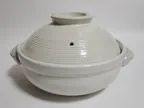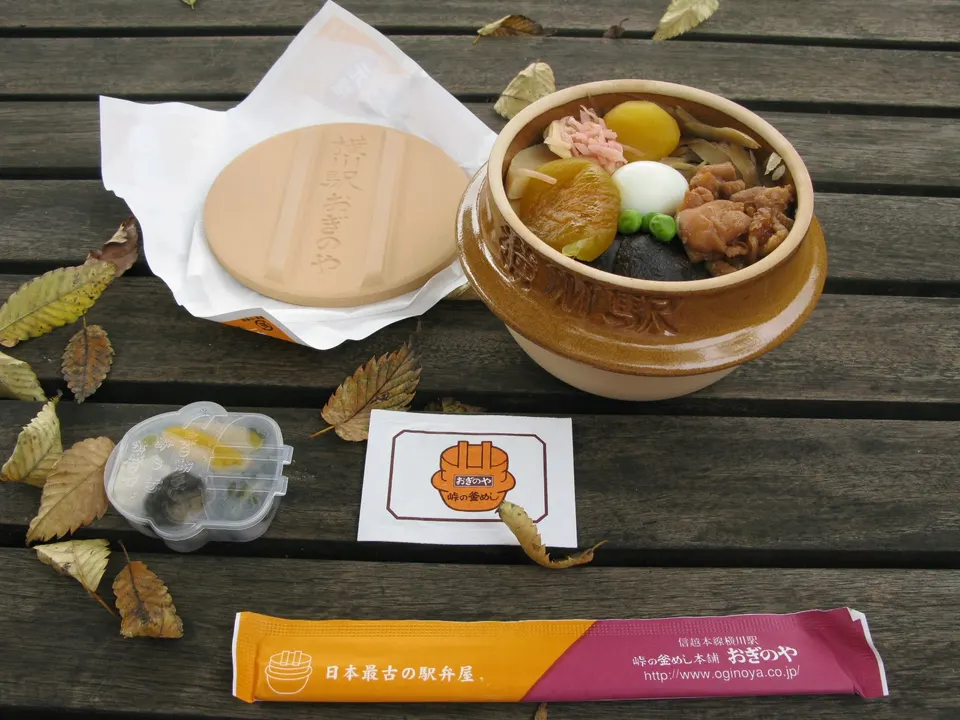
The pot of Tōge no Kamameshi is an earthenware pot of Mashiko ware, pottery from the town of Mashiko in Tochigi Prefecture, sized to hold one gō of rice, a single serving. It was chosen so that a station bento could be handed over warm, and a meal that has gone cold can be reheated in the pot in a microwave.
An earthenware pot from Mashiko
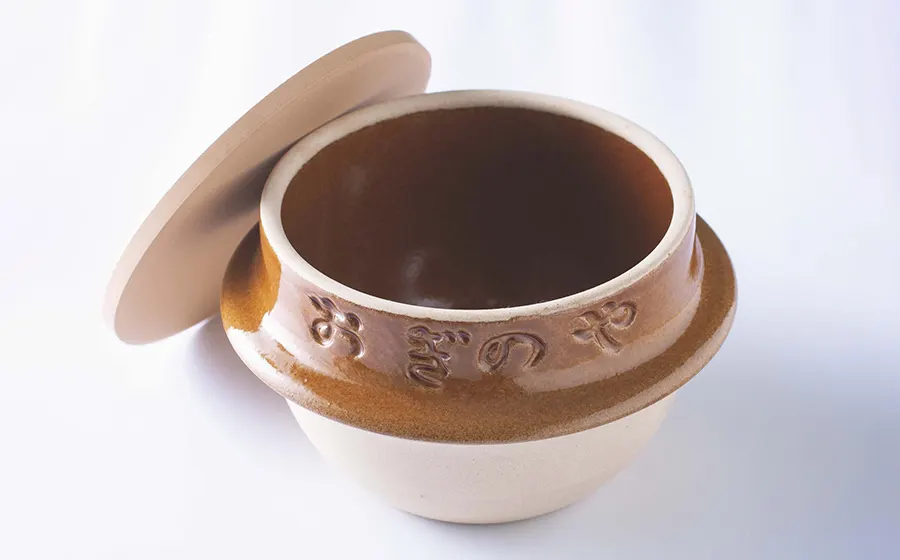
Mashiko ware began around 1853 and grew up on everyday vessels: water jars, grinding bowls, teapots. The pot belongs to that line. It holds one gō of rice, about 150 grams before cooking.
A band of brown glaze runs around the upper part, with the name おぎのや, Oginoya, cut into it. Below the band the clay is left unglazed and pale. The lid is a flat ceramic disc. When the pot is sold as a bento, a sheet of paper lies under the lid.
A vessel for a warm meal
When Tōge no Kamameshi went on sale at Yokokawa Station on February 1, 1958, a station bento was expected to be a cold makunouchi. Oginoya chose a ceramic vessel because passengers worn out by long train journeys said they wanted a warm one.
The pots and lids are washed with steam at 85°C before use. Sterilizing a ceramic pot at high heat also means it holds its warmth, and so the meal can reach the customer warm. The rice and toppings are cooked in Oginoya's plants and then packed into the pot.
Reheating it in the pot
A Tōge no Kamameshi that has cooled can be warmed in its pot in a household microwave at 600 watts.
- Take off the lid and the paper under it, and take out the apricot, the quail egg and the red pickled ginger.
- Lay the paper back over the pot as a cover.
- Heat the pot in the microwave for about three minutes.
- Put the apricot, the quail egg and the ginger back on top.
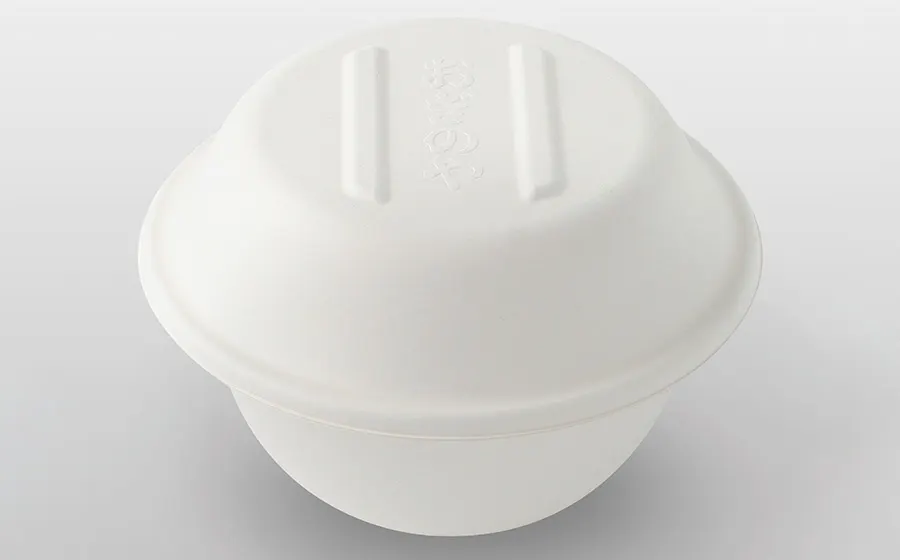
The version in the molded-pulp container is heated in its container for about two minutes. The clear inner lid, the pickles and the wet towel come out first, the same three toppings are set aside, and the outer lid goes back on.
After the meal
Oginoya collects the pots used inside its own shops, checks them for damage, washes them twice with steam and uses them again. It also publishes a collection of 29 recipes that use the empty pot.
A lighter container
The pot is heavy, and the molded-pulp container exists because customers said they did not want to carry the weight. It is made from materials such as sugarcane residue and the husks of bamboo shoots, which would normally be treated as industrial waste, and it won a Good Design Award in 2013.
References
- Oginoya: Tōge no Kamameshi in the ceramic pot
- Oginoya: About the containers
- Oginoya online shop: Safety and hygiene
- Oginoya: Frequently asked questions
- Kotobank: “Mashiko ware” (Japanese dictionaries and encyclopedias)
- Oginoya: The story behind Tōge no Kamameshi
- Oginoya: Recipes
Image credits (resized for display):
- pcs34560 / Wikimedia Commons, Public domain, 2010
- Oginoya