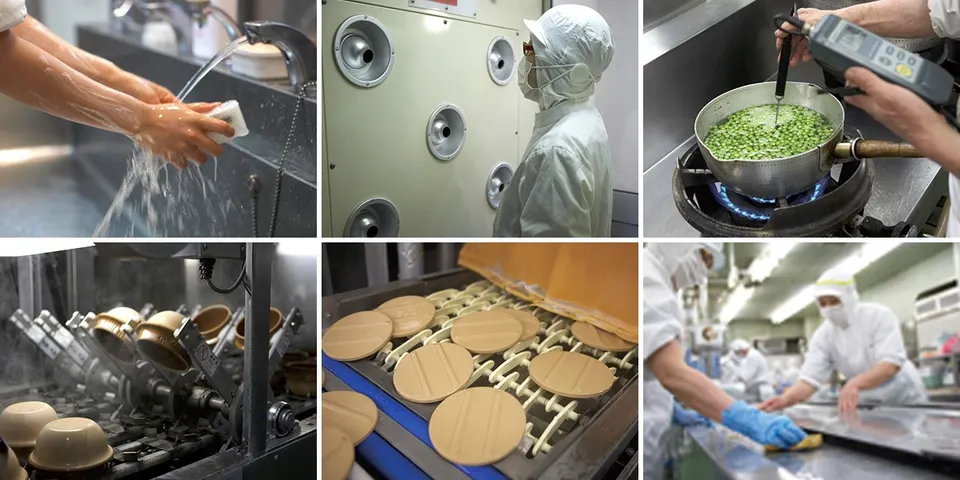
Tōge no Kamameshi is made in two Oginoya plants, one at Yokokawa in Gunma Prefecture and one at Suwa in Nagano Prefecture. The rice and the toppings are cooked there and packed into Mashiko ware pots that have been cleaned with steam. Together the two plants can turn out about 52,000 of them in a day.
Two plants
Each plant stands next to an Oginoya store. The one beside the Yokokawa store is called the Central Kitchen; the other is beside the Suwa store. Both also make makunouchi bento.
| Plant | Tōge no Kamameshi, per hour | Tōge no Kamameshi, per day | Makunouchi bento, per day |
|---|---|---|---|
| Central Kitchen, Yokokawa | about 3,600 | about 37,000 | about 7,000 |
| Suwa | about 1,600 | about 15,000 | about 7,000 |
These are the most each plant can make. The rice is Koshihikari, milled by Oginoya and cooked with Rishiri kombu and dashi; each of the nine toppings is prepared on its own.
Pots cleaned with steam
Before they are filled, the pots and their lids are washed with steam at 85°C, which sterilizes them. Pots that have been used once and collected for reuse are steam-washed twice. The heat has a second effect: a ceramic pot sterilized at high temperature holds its warmth, and that is how the meal reaches the customer still warm.
Hands washed every 30 minutes
Staff wash their hands every 30 minutes without exception, and after washing they sterilize them with ethanol down to the fingertips. An air shower over the whole body blows dust off their clothing. The disinfectant solution is replaced about every two hours; its concentration is checked, and it is replaced at once if it turns cloudy.
The cooked toppings and rice are checked for temperature to confirm they have been heated through, and the heating temperature is measured and recorded for each product. The production line is stopped and cleaned at least six times a day. Ultraviolet sterilizing lamps are installed around the plants.
Hygiene is managed in the stores too. Each Oginoya drive-in store has two to four hygiene staff on duty at all times, inspecting and cleaning. The 1st and 15th of every month are Cleanliness Days, when the store and the area around it are cleaned.
Since 1957
Oginoya began disinfecting with sodium hypochlorite and ethanol decades ago, before the practice was common. In 1957, the year before Tōge no Kamameshi went on sale, the Yokokawa plant received an award from the Minister of Health and Welfare.
Ministerial awards followed for the Suwa plant in 1999 and 2010 and for the Yokokawa plant in 2009. In 2010 the Central Kitchen was certified under Gunma Prefecture's food hygiene scheme, which is based on HACCP principles.
References
- Oginoya online shop: Safety and hygiene
- Oginoya online shop: What makes Tōge no Kamameshi taste the way it does
- Oginoya: About the containers
Image credits (resized for display):