Kamameshi, like paella, the palov of Central Asia and biryani, is rice cooked in one pot with meat, seafood or vegetables. Kamameshi differs from them in its pot, its rice, its sequence and the number of people it feeds: raw Japanese rice, the other ingredients and the seasoning all cook together in a small pot that holds one portion, and that pot is carried to the table.
The pots
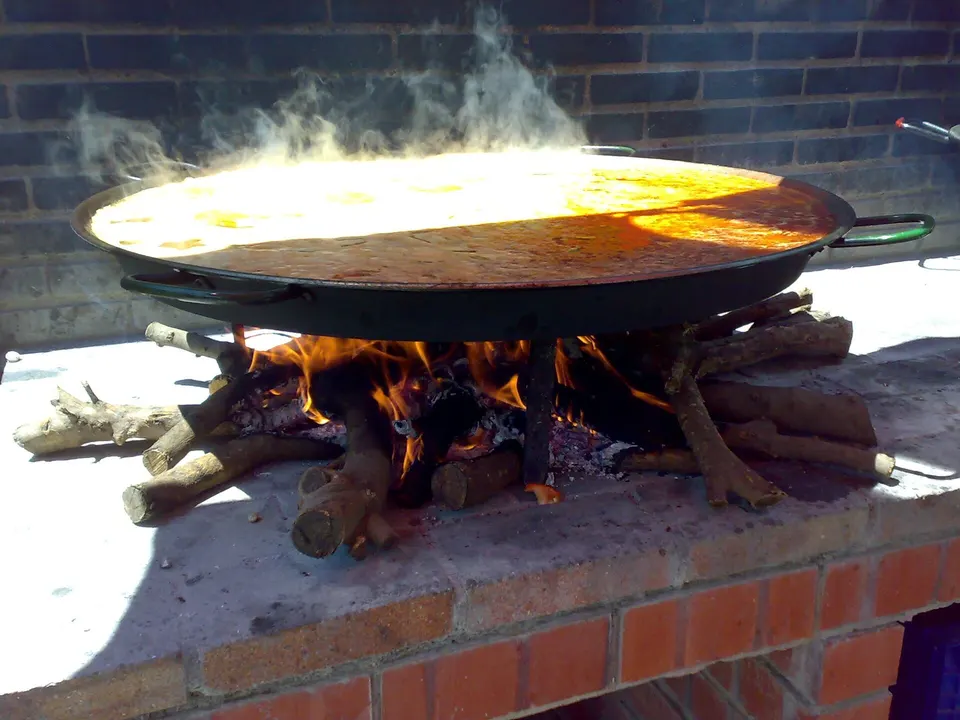
In Spanish, paella names the pan as well as the dish: a shallow metal vessel with a round base and two handles. The rice is spread in as thin a layer as the number of diners allows, and the pan goes over a wood fire or over gas burners that heat the whole pan evenly.
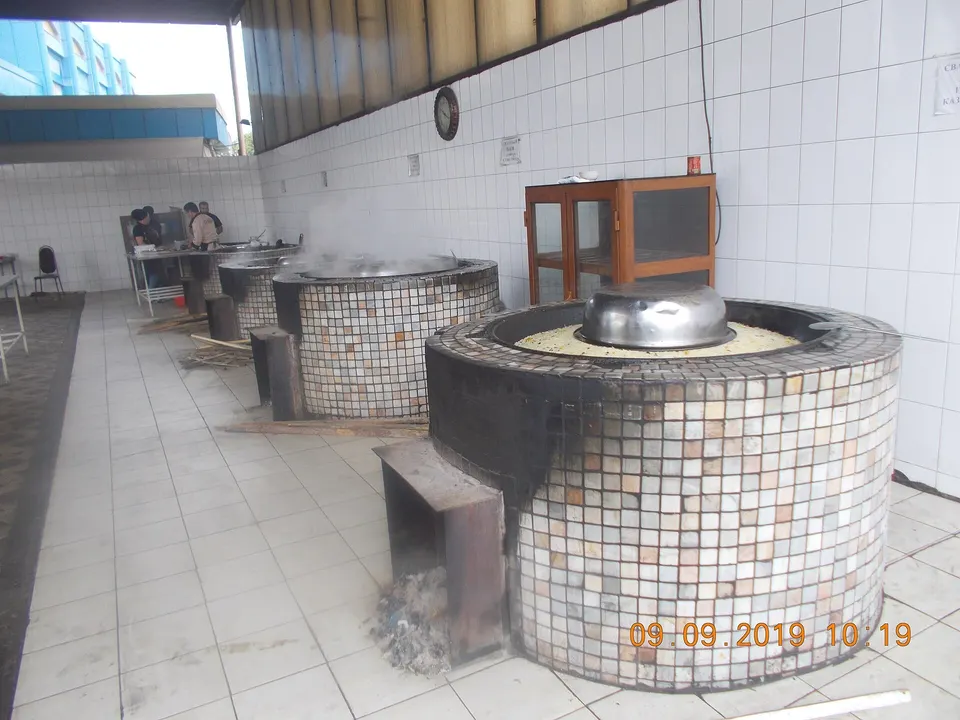
Tajikistan's oshi palav is made in a big pot with a skimmer, the tool that a master presents to an apprentice who has mastered the dish. In Uzbekistan, the pots, plates and skimmers for palov are made of copper, cast iron and clay.
Biryani is layered in a pot called a deg, and in Hyderabad the pot is then sealed with dough. In Iran, the lid of a pot of polow is wrapped in a clean cloth for the steaming.
A Japanese kama is a pot of metal or earthenware, deeper than a pan, with a narrow mouth and a flange around its body. The size made for kamameshi takes about one gō of rice, 180 milliliters, which is one portion.
The rice
Valencia's protected rice, Arroz de Valencia, covers 14 varieties, among them Senia and Bomba. A milled grain of Bomba averages 5.2 millimeters in length and is 1.8 times as long as it is wide. These varieties take up the flavor of the broth well. Japanese-type rice has nearly the same proportions, 1.7 to 1.8, and its small, rounded grains turn sticky when cooked.
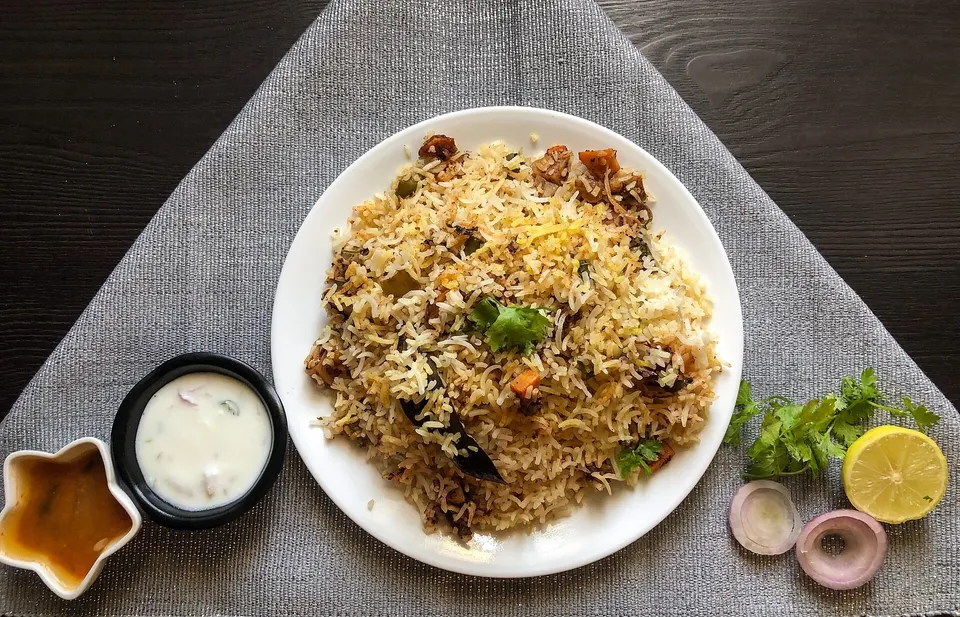
Biryani is most often made with basmati, a long-grain rice. Uzbekistan counts devzira and lazer among the rices suited to palov.
When the rice meets the liquid
For paella, the rice is added to the broth, traditionally poured in the shape of a cross so that it spreads evenly across the pan. After that it is not stirred. Stirring releases starch, which thickens, and the grains of a paella are meant to stay loose.
Palov is built from plant oil, meat, onion, carrot, rice, spices and water, the same key ingredients in every region of Uzbekistan. In oshi palav, the rice cooks in the steam of the boiling vegetable broth.
Biryani and polow begin with rice that is already partly cooked. For the biryani of Hyderabad, rice and meat are cooked separately, layered in a large pot, sealed in with dough and left over a low flame for a long time. The method is called dum. For polow, the rice is boiled until the grains swell but stay firm, drained, layered with the other ingredients over ghee and water, and steamed under a lid for about an hour.
Kamameshi begins with raw rice. The rice, the other ingredients, such as shrimp, chicken, mushrooms or bamboo shoots, and a seasoning of soy sauce, sake and mirin go into the pot and cook together. This is takikomi gohan, rice cooked together with its ingredients, made one portion at a time.
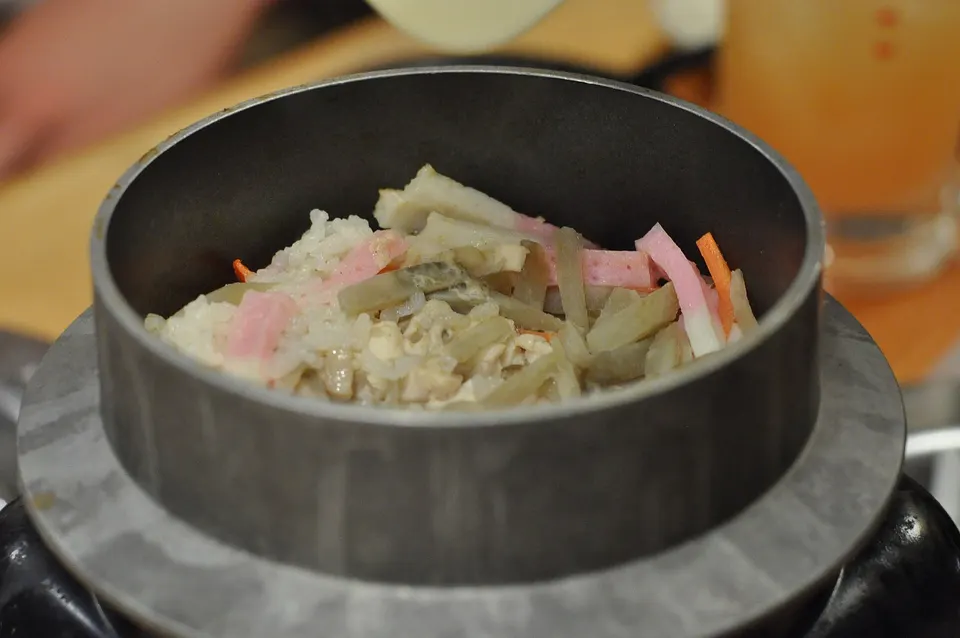
In Japan's everyday method for rice, the water is measured in before heating and none is left over at the end.
The crust on the bottom
Socarrat, Valencian for "scorched," is the scorched rice left on the bottom of the paella. Iran's tahdīg is made deliberately: yogurt, saffron and egg are mixed with a little of the rice and spread over the ghee in the bottom of the pot before the remaining rice goes in. Japanese has a word too, okoge, for the rice scorched onto the bottom of a pot. The standard Japanese method turns the heat down once the water is nearly gone, to keep the rice from scorching.
A pan for a crowd, a pot for one
Paella is traditionally eaten straight from the pan, which keeps the rice warm. Each diner has a place in the pan, and a diner who prefers a plate is served from the center, so that the other portions are not disturbed. In 2021 the Valencian government declared "Valencian paella, the art of uniting and sharing" an intangible asset of cultural interest.
In Uzbekistan, the saying goes that guests may leave the host's house only after palov has been offered. Tajikistan's oshi palav, called the "king of meals," exists in up to 200 varieties. Both traditions were inscribed on UNESCO's Representative List of the Intangible Cultural Heritage of Humanity in 2016.
Kamameshi is cooked one portion at a time. The pot comes to the table, and the eater scoops the rice from the pot into a rice bowl.
Side by side
| Dish | Where | Pot | Rice | How the rice cooks | How it is eaten |
|---|---|---|---|---|---|
| Paella | Valencia region, Spain | Shallow metal pan with two handles | Bomba and other Valencian varieties | Added to the broth, not stirred | From the pan, shared |
| Palov, oshi palav | Uzbekistan, Tajikistan | In Tajikistan, a big pot | In Uzbekistan, devzira, lazer and others | In oshi palav, in the steam of the broth | In Uzbekistan, offered to guests |
| Polow | Iran | Pot with a cloth-wrapped lid | — | Boiled, drained, layered, steamed | — |
| Biryani | Hyderabad, India | Large pot sealed with dough | Basmati | Cooked separately from the meat, layered, slow-cooked | — |
| Kamameshi | Japan | Small flanged pot for one | Japanese-type rice | Raw, together with ingredients and seasoning | From the pot into a rice bowl |
The kamameshi sold at a station
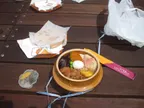
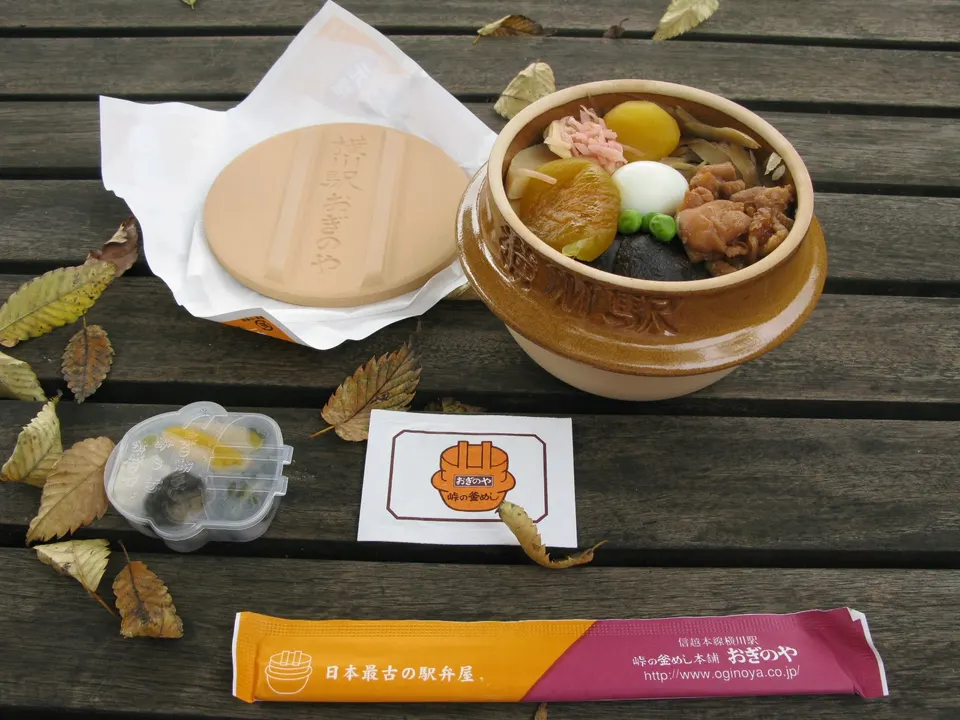
In Japan, kamameshi is also the name of an ekiben, a station boxed meal, packed in a pot-shaped container. The well-known example is Tōge no Kamameshi of Yokokawa Station, which Oginoya put on sale on February 1, 1958. Its rice is Koshihikari cooked with Rishiri kombu and dashi, and nine toppings are arranged over the rice: chicken, burdock, shiitake, bamboo shoot, quail egg, chestnut, apricot, green peas and red pickled ginger. Rice and toppings are cooked at Oginoya's factory and then packed into an earthenware pot of Mashiko ware sized for one gō of rice. Sales reached 100 million pots in 1995 and have since passed 170 million.
References
- Boletín Oficial del Estado, "Decreto 176/2021, de 29 de octubre, del Consell, de declaración de bien de interés cultural, con categoría de bien inmaterial, de la paella valenciana"
- Real Academia Española, Diccionario de la lengua española, "paella"
- Official Journal of the European Union C/2024/3986, PDO "Arroz de Valencia" single document
- ICEX, Foods & Wines from Spain, "Socarrat"
- UNESCO Intangible Cultural Heritage, "Palov culture and tradition"
- UNESCO Intangible Cultural Heritage, "Oshi Palav, a traditional meal and its social and cultural contexts in Tajikistan"
- Encyclopaedia Iranica, "BERENJ 'rice' iii. In Cooking"
- Incredible India (Ministry of Tourism, Government of India), "The best local foods in Hyderabad"
- Encyclopædia Britannica, "Biryani"
- Kotobank, "Kamameshi"
- Kotobank, "Kama"
- Kotobank, "Rice (kome)"
- Ministry of Agriculture, Forestry and Fisheries, "Cooking properties of rice"
- Oginoya, "Tōge no Kamameshi"
Image credits (resized for display):
- Ferbr1 / Wikimedia Commons, CC BY-SA 3.0
- Rudolph.A.furtado / Wikimedia Commons, CC0, 2019
- Mahi Tatavarty / Wikimedia Commons, CC BY-SA 4.0, 2021
- Ocdp / Wikimedia Commons, CC0, 2015
- pcs34560 / Wikimedia Commons, Public domain, 2010