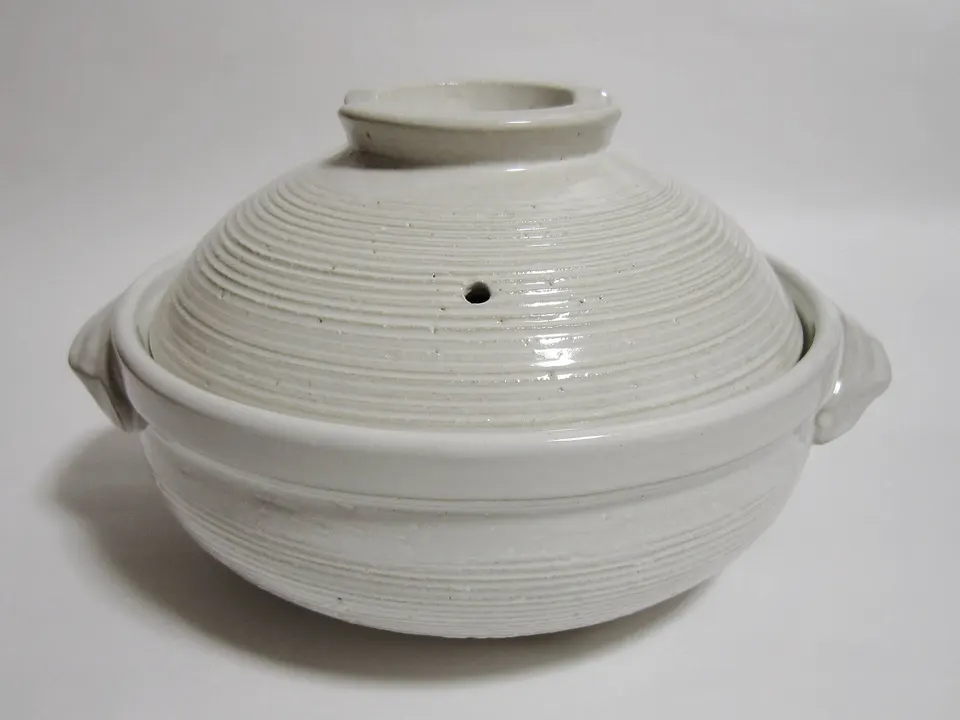
A donabe is a nabe, a cooking pot, made of clay: shallow, thick-walled and lidded, with a handle on each side, used for simmering and for dishes cooked at the table. A kama is deeper and narrower at the mouth, has a flange around its body, and was made, mostly in iron, to cook rice or boil water on a kamado, a stove built of earth, stone or brick. "Donabe" names a material, and "kama" names a shape and a job, which is why a kama made of clay also exists.
Two words for a pot
A nabe is a vessel for boiling, frying and steaming food, usually round and shallower than a kama, with a lid and handles or a bail. A kama is a vessel for cooking rice and boiling water, and the flange around its body is called a tsuba.
In a dictionary of the Heian period (794–1185), the ordinary nabe was a clay pot, and an iron pot was set apart as kana-nabe, "metal nabe." As metal pots spread, the plain word came to mean the metal kind, and the clay pot became the one with a prefix: do-nabe, "earth nabe."
Side by side
| Donabe | Hagama | Kamameshi pot | Pot of Tōge no Kamameshi | |
|---|---|---|---|---|
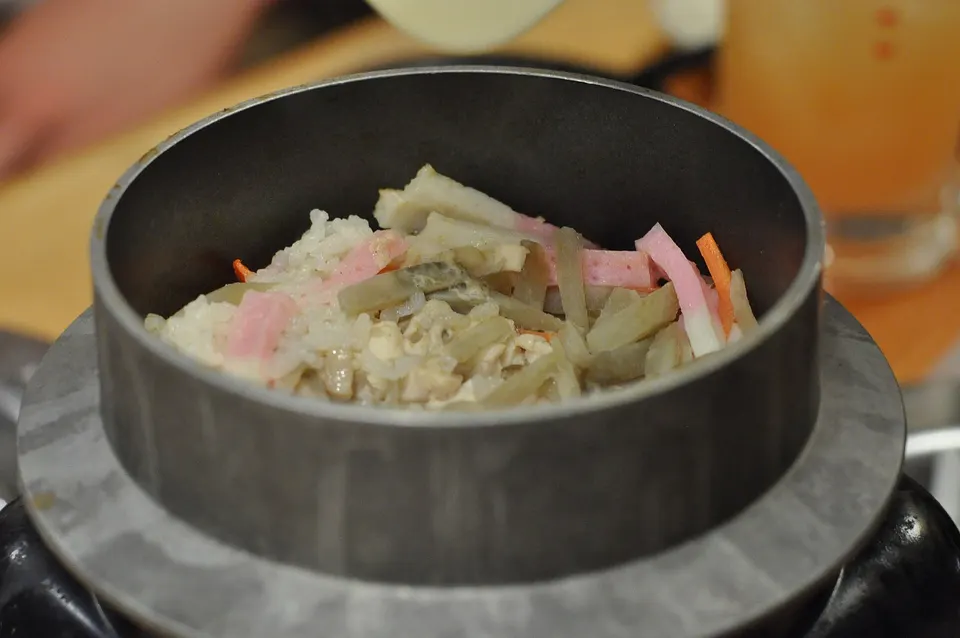
| Made of | Pottery | Mostly iron, sometimes aluminum | Iron, in the restaurant pot pictured below | Mashiko ware, which is pottery |
| Shape | Shallow and thick-walled, with a lid and two handles | Round-bottomed and deep, with a narrow mouth and a flange around the middle | A hagama small enough for about one gō of rice | Flanged like a hagama, with a flat lid; holds one gō of rice |
| Used for | Simmering, rice porridge, hot pot at the table | Cooking rice on a kamado | Cooking one serving of rice with other ingredients, and serving it | Holding a packed meal of rice and toppings that were cooked beforehand |
One gō is about 180 milliliters, about 150 grams of uncooked rice.
The donabe
The word donabe once meant an unglazed clay pot. Today it usually means a shallow, thick-walled ceramic pot with a lid and two handles. A donabe is used directly over a flame, and recent ones are also made for induction cooktops.
The thick wall conducts heat slowly. The heat reaches the food gently, and once the pot is warm it stores a great deal of heat and stays warm for a long time. That suits dishes that simmer slowly, such as rice porridge, and dishes eaten while they cook at the table, such as yudōfu, tofu simmered in water. For nabeyaki udon, udon noodles simmered in a donabe, the pot is both the cooking vessel and the bowl.
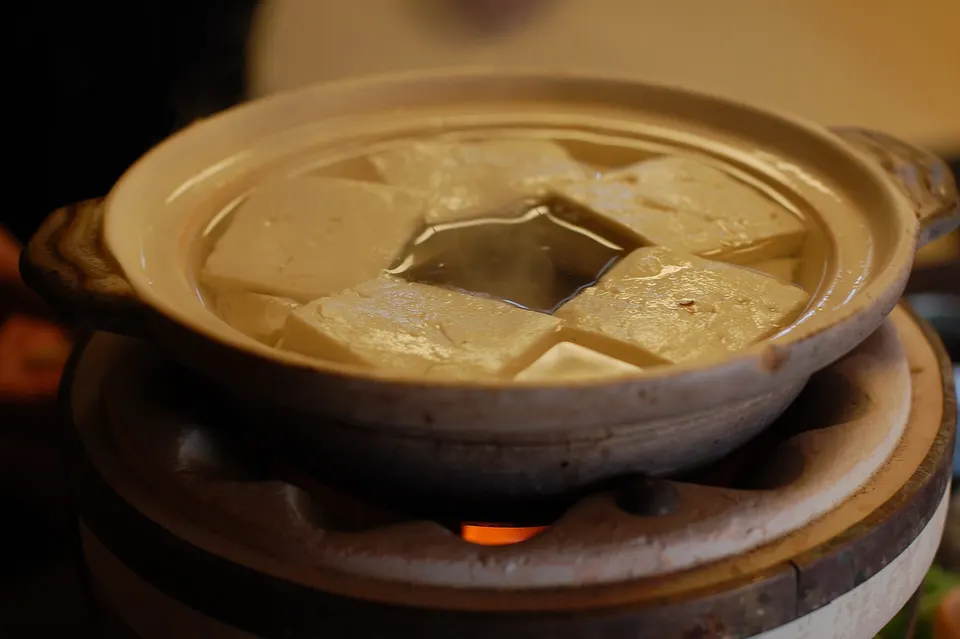
A donabe is pottery, heavier than other pots and easier to break. Rice is cooked in donabe as well: the makers of Banko ware produce a donabe for rice, the gohan-nabe. The steps of cooking rice are in how rice is cooked in Japan.
Yokkaichi and Iga
Banko ware is made in and around Yokkaichi, in Mie Prefecture, and teapots and donabe are its representative products. It began in the years 1736–41 with Nunami Rōzan, a merchant of Kuwana.
When gas stoves spread through Japanese homes, donabe made for the kamado often cracked in the higher heat. Around 1959 the makers of Banko ware succeeded in mixing petalite, a mineral that contains lithium, into the clay and producing a donabe that hardly expands when heated. By the 1970s Banko ware accounted for most of the donabe made in Japan.
Iga ware comes from the city of Iga, also in Mie Prefecture. The clay of Iga stands up well to fire, and donabe are among the everyday wares made from it. The other kiln towns are described in Japan's pottery regions.
The kama
The flange of a kama is also called a ha, and the kama for cooking rice is called a hagama after it. A hagama has a round bottom, and the flange rests on the rim of the kamado. When the fuel was firewood, the flange made the heating more efficient and reduced the soot and smoke. A hagama is usually iron and sometimes aluminum, and its lid is often thick, heavy wood.
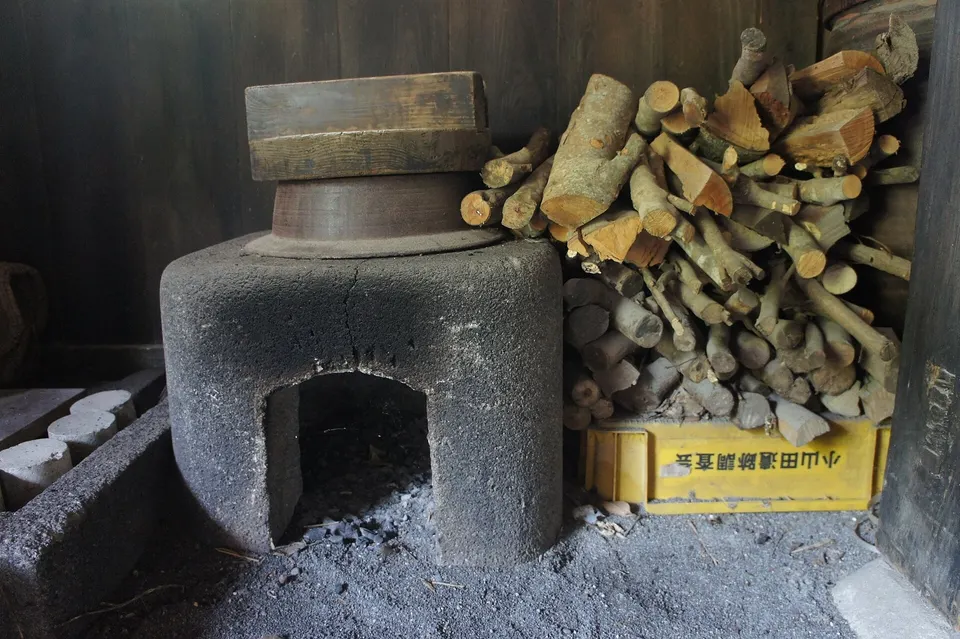
A rice kama is sized by the rice it cooks: a one-shō hagama cooks about 1.8 liters of rice, which is ten gō. Since the automatic rice cooker spread, the hagama has almost gone out of use.
A kama made of fired clay is a dogama. The chagama of the tea ceremony is a kettle for boiling water, nearly always cast iron.
The kamameshi pot
Hagama are also made small enough for about one gō of rice, and these are the pots of kamameshi: rice cooked with seafood, chicken or vegetables in a small kama for one person and brought to the table in that kama. Kamameshi dates from the years after the Great Kantō Earthquake of 1923, and it is sometimes counted as a kind of hot-pot dish.
The pot of Tōge no Kamameshi
Kamameshi is also the name of a station bento: rice cooked with other ingredients and packed into a ceramic container shaped like a kama. The station kamameshi that Japanese encyclopedias name is Tōge no Kamameshi, which Oginoya put on sale at Yokokawa Station on February 1, 1958. More than 170 million have been sold.
The pot of Tōge no Kamameshi is a dogama of Mashiko ware, pottery from the town of Mashiko in Tochigi Prefecture. It is pottery, as a donabe is, and it has the shape of a kama: a flange runs around the body, as on a hagama. Above the flange the pot carries a brown glaze with the name おぎのや, Oginoya, cut into it, and below the flange the clay is bare.
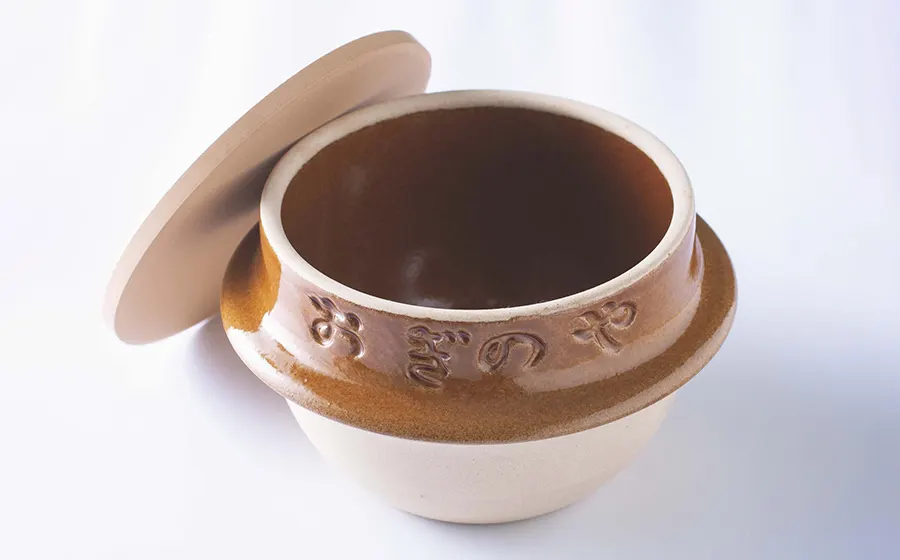
Oginoya cooks the rice and the toppings in its plants and then packs them into the pot. Oginoya chose a ceramic container because passengers tired from long train journeys wanted a warm bento. A Tōge no Kamameshi that has gone cold can be warmed in its pot in a household microwave, at 600 watts for about three minutes. The steps are in the pot of Tōge no Kamameshi.
References
- Kotobank, "Nabe"
- Kotobank, "Kama"
- Kotobank, "Donabe"
- Kotobank, "Hagama"
- Kotobank, "Dogama"
- Kotobank, "Nabe ryōri" (hot-pot dishes)
- Kotobank, "Banko ware"
- Kotobank, "Iga ware"
- Kotobank, "Kamameshi"
- Banko Ceramic Industry Cooperative, "About Banko ware"
- Banko Ceramic Industry Cooperative, "Banko donabe"
- Oginoya, "Tōge no Kamameshi"
- Oginoya, "Tōge no Kamameshi" (English page)
- Oginoya, "Frequently asked questions"
- Oginoya, "The story behind Tōge no Kamameshi"
Image credits (resized for display):