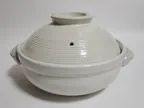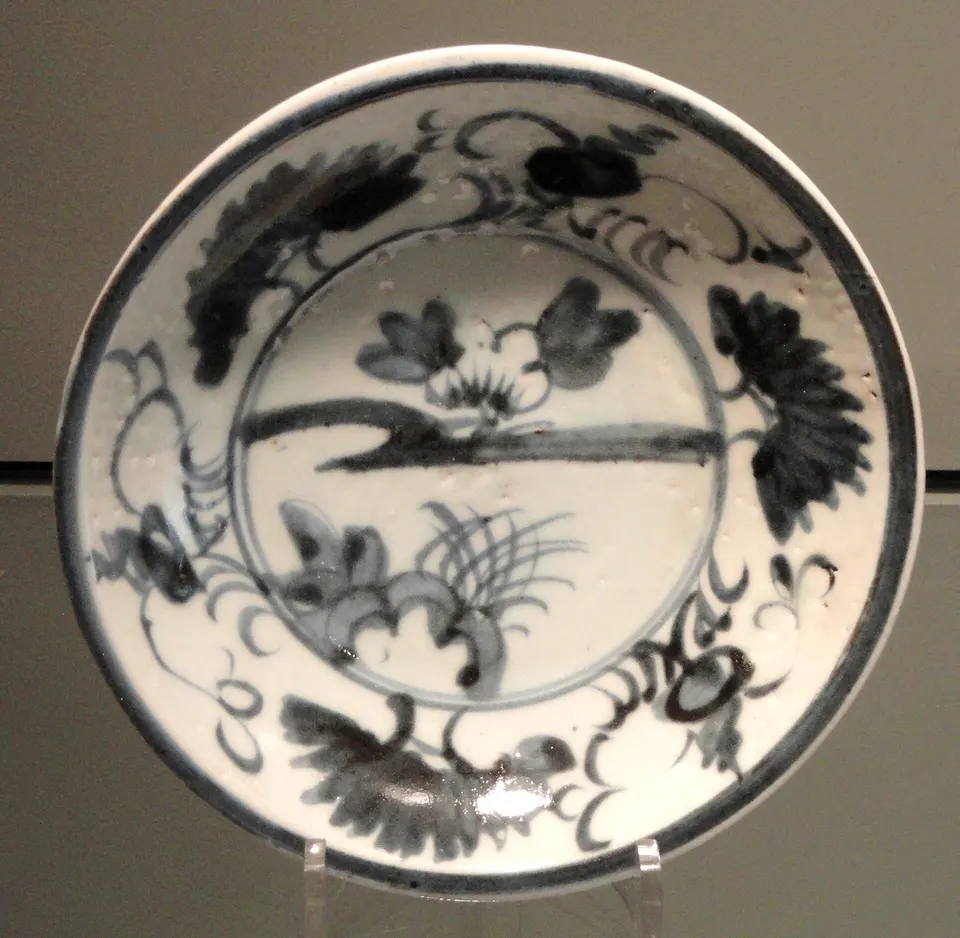
Pottery is clay fired at a moderate temperature: its body absorbs water and does not let light through. Porcelain is made from materials such as porcelain stone and feldspar, fired hotter until the body turns glassy. It is white, takes up no water, lets light through, and rings like metal when tapped.
Side by side
| Pottery (tōki) | Porcelain (jiki) | |
|---|---|---|
| Made from | Clay | Fine clay, quartz, feldspar, porcelain stone |
| Fired at | 800–900°C with low-fired glazes, about 1,200°C with high-fired glazes | 1,300–1,450°C |
| Body | Porous | White and glassy |
| Water | Absorbs some | Absorbs none |
| Light | Almost none passes | Passes through |
| When tapped | A dull sound | A metallic ring |
In Japanese the two together are called tōjiki, or simply yakimono, "fired things."
Earth and fire
Pottery starts from a clay that is easy to shape and stands up to heat. The shaped vessel is covered in glaze and fired. Because the fired body is porous and takes up a little water, it is the glaze that keeps liquid from soaking in. The colors of pottery glazes come from metal oxides, among them copper, iron and manganese. Stoneware is usually counted as pottery in Japan.
Porcelain is fired until its body fuses. The result is white, glassy and harder than pottery, with greater mechanical strength.
Telling them by light and sound
Two tests need no tools. Hold the piece up to a light: porcelain lets some light through, and pottery lets through almost none. Then tap it: porcelain gives a metallic note, and pottery a duller one.
From China to Arita and Europe
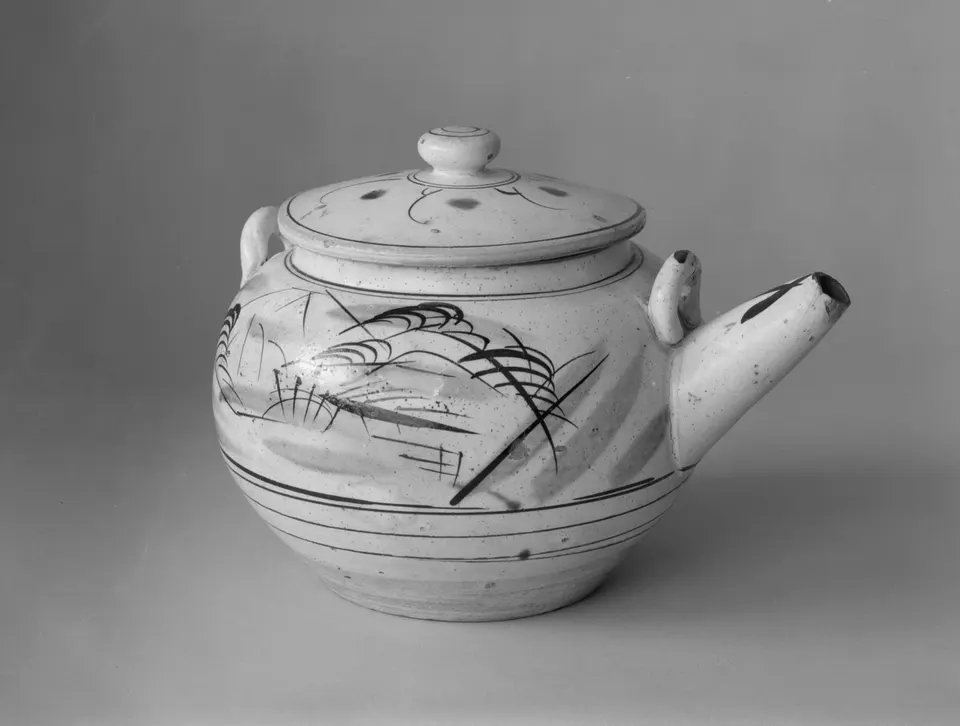
Pottery is the older of the two. Glazed pottery appeared in Mesopotamia and Egypt around 3000 BC and in China between 1400 and 1300 BC. In Japan it appeared in the Nara period, the eighth century.
Porcelain was first made in China. It was made in Korea in the eleventh and twelfth centuries, and in Japan from the seventeenth century, beginning with Arita ware early in the Edo period. Europe followed in the first years of the 1700s, when Johann Friedrich Böttger succeeded in making white porcelain in Germany. The main porcelain centers of Japan include Arita, Seto, Tajimi, Kiyomizu and Kutani.
The kamameshi pot is pottery
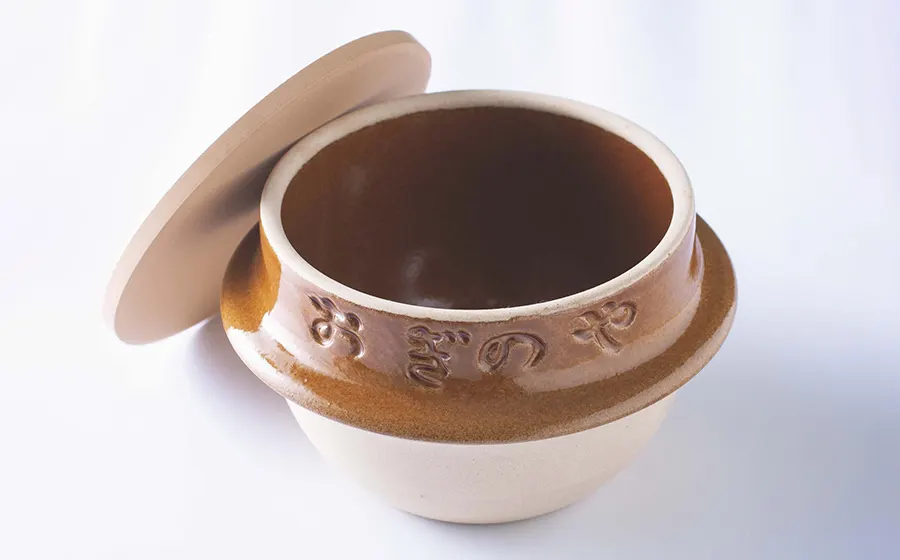
Mashiko ware, from Tochigi Prefecture, is pottery, and so is the pot of Tōge no Kamameshi, which is Mashiko ware. The two things pottery is made of, a clay body and a glaze, can both be seen on it. The upper part carries a brown glaze, and brown is the color Mashiko's potters traditionally got from iron. The lower part is bare clay.
References
- Kotobank: “Tōki” (pottery; Japanese dictionaries and encyclopedias)
- Kotobank: “Jiki” (porcelain; Japanese dictionaries and encyclopedias)
- Kotobank: “Mashiko ware” (Japanese dictionaries and encyclopedias)
- Oginoya: Tōge no Kamameshi in the ceramic pot
Image credits (resized for display):
- Daderot / Wikimedia Commons, CC0, 2012
- Brooklyn Museum / Wikimedia Commons, No restrictions
- Oginoya