Mashiko ware is pottery made in the town of Mashiko, in Tochigi Prefecture north of Tokyo. It began around 1853 as a source of everyday vessels such as water jars, grinding bowls and teapots, and after the potter Hamada Shōji settled there in 1924 it became known as folk-craft pottery.
A potter from Kasama
Mashiko started late for a Japanese pottery town, at the very end of the Edo period. Ōtsuka Keizaburō, who had learned the craft at Kasama in neighboring Ibaraki Prefecture, is said to have opened a kiln in Mashiko around 1853. Another account has a local man, Kikuchi Seizō, firing pots earlier, but Keizaburō is generally regarded as the founder.
In 1855 the district magistrate Mita Shōhei began to encourage the industry, and the kilns worked under the patronage of the Kurobane domain until the Meiji era, when they passed into private hands. Mashiko had good clay, and it was close to the great market of Tokyo.
Kitchen ware and three glazes
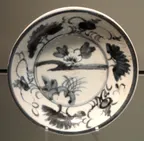
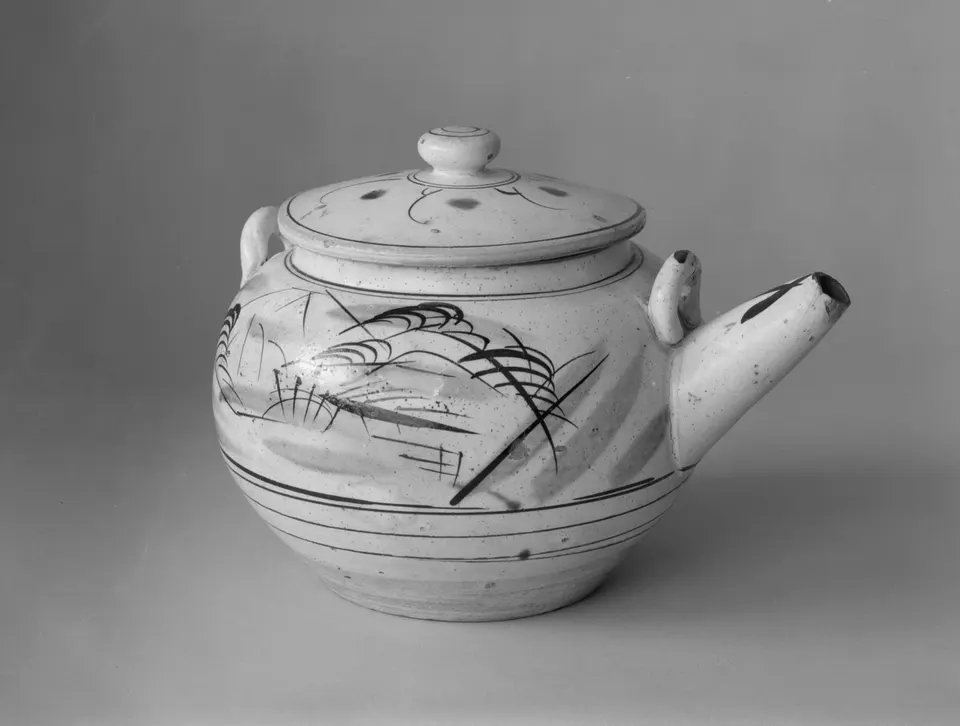
What Mashiko made was the equipment of daily life: large jars for water, ridged bowls for grinding, teapots. The original glazes were three. A cloudy white came from straw ash, a green from copper and a brown from iron. Potters poured different glazes over different parts of one vessel, and they also made painted ware, in cobalt blue, in iron, and with lines of trailed slip.
After Hamada Shōji
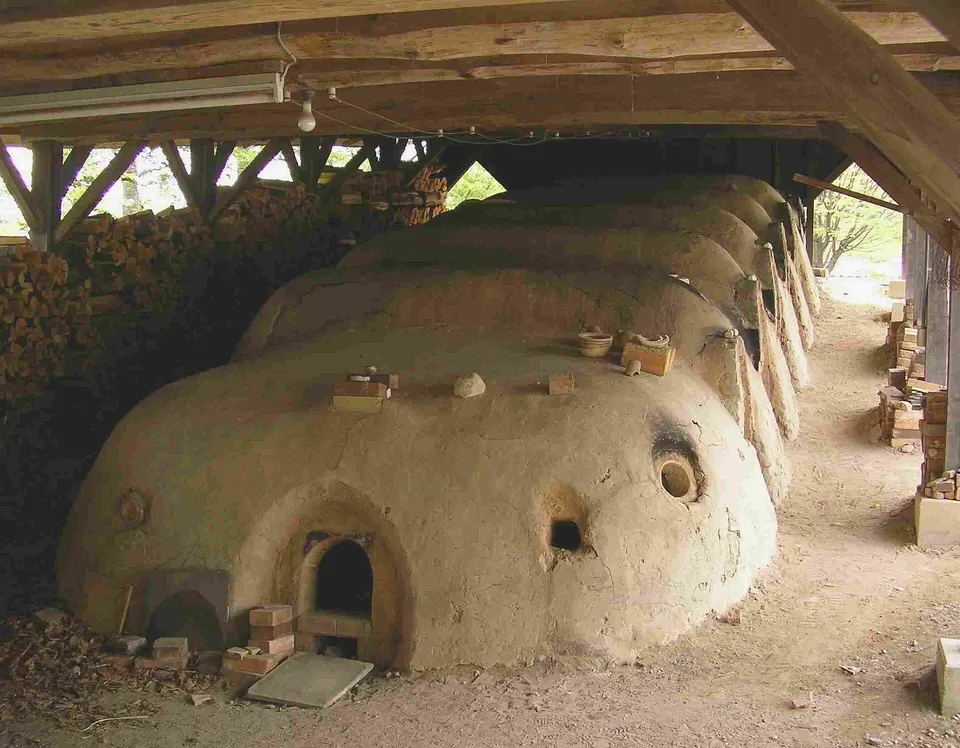
The name of Mashiko rose after 1924, when Hamada Shōji settled in the town and began to work there. Hamada had gone to England in 1920 with the potter Bernard Leach and built a kiln at St Ives. On his return he built his kiln in Mashiko. With Yanagi Muneyoshi and others he carried forward the mingei movement, which looked for beauty in useful things, and he played a central part in it. His presence influenced the local potters. He was named a Living National Treasure in 1955 and received the Order of Culture in 1968.
Mashiko now produces tableware, decorative plates and vases of a strongly individual character. Many potters, from the young to the long established, keep kilns in the town, and their styles vary widely.
The pot of Tōge no Kamameshi
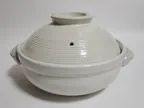
The pot of Tōge no Kamameshi is Mashiko ware: an earthenware pot with a band of brown glaze. Tōge no Kamameshi went on sale in 1958, and more than 170 million have been sold since.
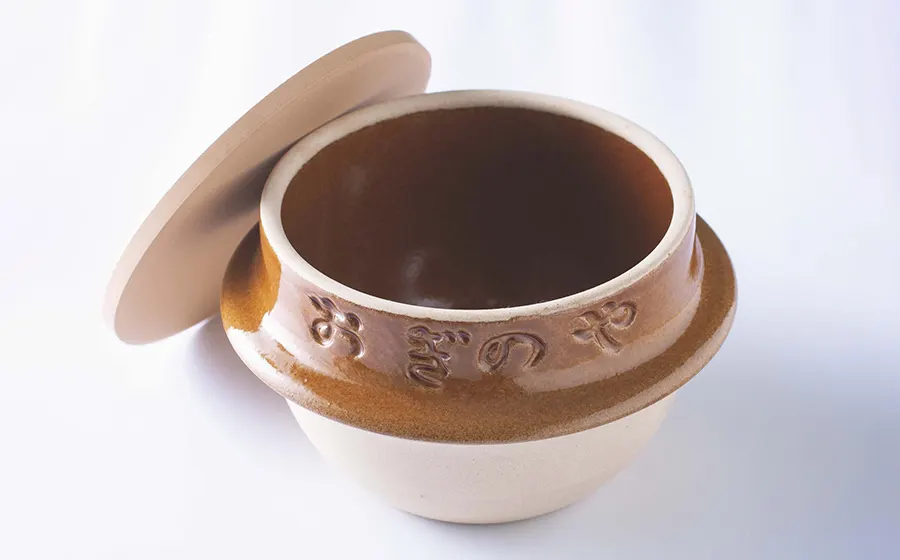
Mashiko ware is pottery, not porcelain. The difference is explained in pottery and porcelain.
References
- Kotobank: “Mashiko ware” (Japanese dictionaries and encyclopedias)
- Mashiko Town: About Mashiko ware
- Kotobank: “Hamada Shōji” (Japanese encyclopedias)
- Oginoya: Tōge no Kamameshi in the ceramic pot
- Oginoya: Company timeline
Image credits (resized for display):
- NEXT-EXIT / Wikimedia Commons, CC BY-SA 3.0
- Brooklyn Museum / Wikimedia Commons, No restrictions
- Oginoya