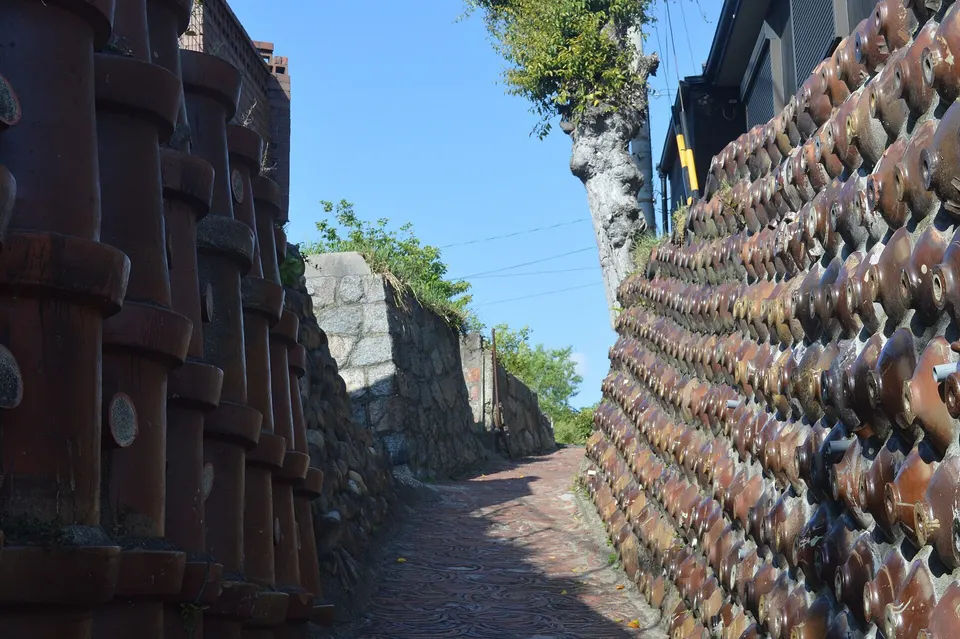
Japan's main pottery towns can be read in three groups: the Six Ancient Kilns, which have fired since the Middle Ages; the porcelain towns that followed Arita from the early 1600s; and pottery towns founded later than the six, among them Karatsu, Hagi and Mashiko. Their wares differ in the body, which is pottery or porcelain, and in the surface, which may be glazed, fired bare or painted.
The main regions at a glance
| Region | Prefecture | Body | What marks the ware |
|---|---|---|---|
| Seto | Aichi | Pottery and porcelain | Glazed ware since the Middle Ages; blue-and-white porcelain from 1807 |
| Tokoname | Aichi | Pottery | Large unglazed jars; red-clay teapots since the later Edo period (1603–1868) |
| Echizen | Fukui | Pottery | Iron-rich clay that fires red and hard, unglazed or ash-glazed |
| Shigaraki | Shiga | Pottery | Unglazed pale clay scorched red-brown, flecked with feldspar, with green natural glaze |
| Tamba | Hyōgo | Pottery | Natural glaze in the Middle Ages; ash and iron glazes from the early Edo period |
| Bizen | Okayama | Pottery | Unglazed brown ware with scarlet streaks, called hidasuki, left by straw |
| Mino | Gifu | Pottery and porcelain | Shino, Kizeto and Oribe wares, born in the Momoyama period, the late 16th century |
| Arita (Imari) | Saga | Porcelain | Sometsuke, painting in cobalt blue under the glaze; iro-e, colored enamels over the glaze |
| Hasami | Nagasaki | Porcelain | Sturdy everyday ware; thick white bowls painted with blue scrolling vines |
| Kutani | Ishikawa | Mainly porcelain | Painting in colored enamels over the glaze |
| Tobe | Ehime | Porcelain | White porcelain painted in cobalt blue |
| Karatsu | Saga | Pottery | Sandy, iron-bearing clay under ash glaze; designs painted in iron |
| Hagi | Yamaguchi | Pottery | Soft clay under a crackled white glaze, almost never painted; tea bowls |
| Kasama | Ibaraki | Pottery | Iron-rich red-brown clay, thrown on the wheel |
| Mashiko | Tochigi | Pottery | Glazes of straw-ash white, copper green and iron brown |
| Onta | Ōita | Pottery | Patterns chipped with a metal blade, a technique called tobikanna |
| Tsuboya | Okinawa | Pottery | Glazed ware called jōyachi and unglazed ware called arayachi |
The Six Ancient Kilns
The Six Ancient Kilns, Nihon Rokkoyō, are Echizen, Seto, Tokoname, Shigaraki, Tamba and Bizen: six kiln regions where production has continued from the Middle Ages to the present. The ceramics scholar Koyama Fujio gave them the name around 1948, and in the spring of 2017 the six were recognized together as Japan Heritage.
In the Middle Ages Seto was the only one of the six to glaze its pots. From the end of the 12th century it made ware modeled on Chinese ceramics. The other five fired yakishime, pottery fired hard without glaze, mostly as large jars, vats and grinding bowls. Ash that falls on such a pot during the firing melts into what is called natural glaze.
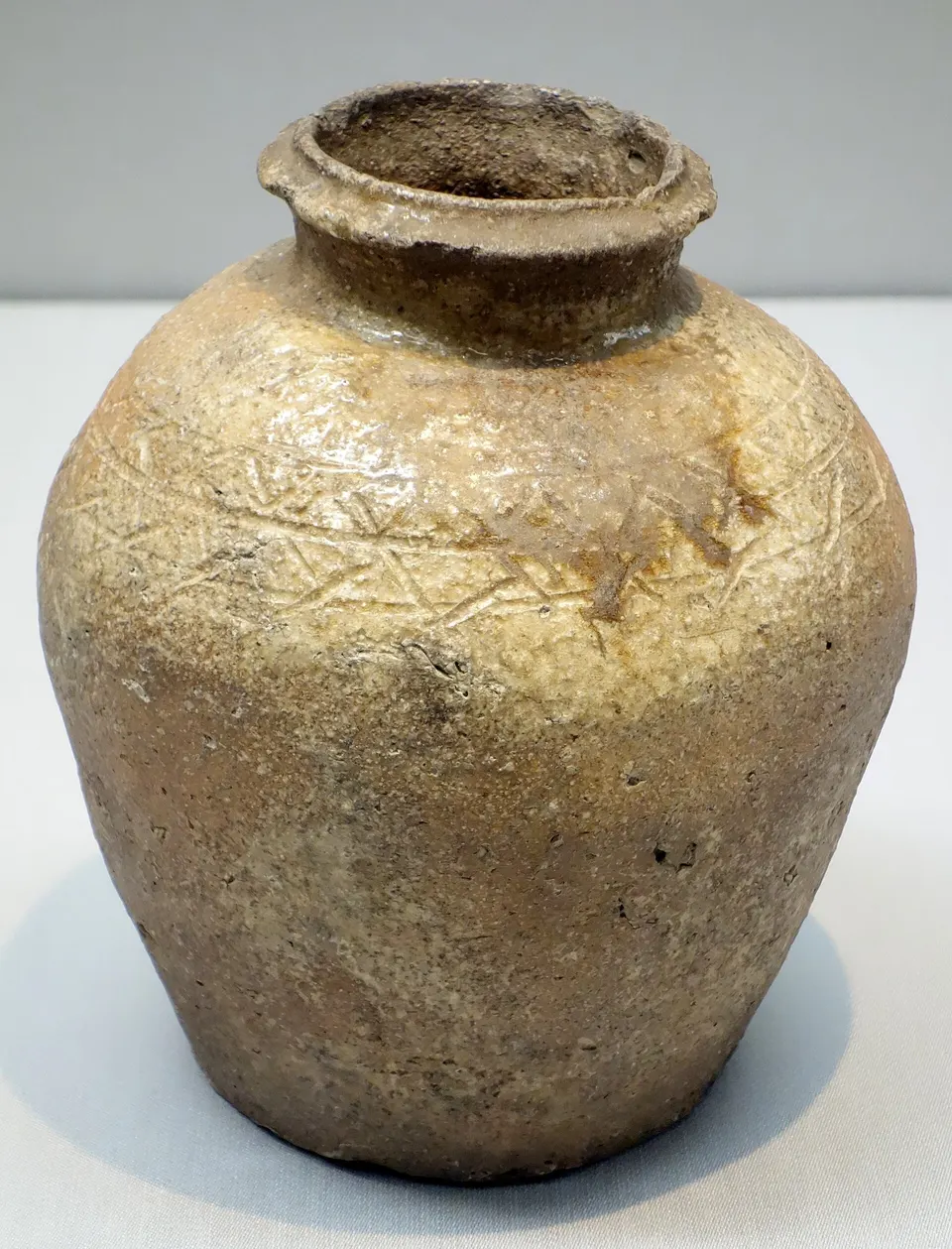
Tokoname was the largest producer of the six: more than 1,200 of its medieval kiln sites are known, and its wares traveled as far as Aomori in the north and Kagoshima in the south. Echizen began in the late 12th century and Tamba and Shigaraki in the 13th, all three under Tokoname's influence.
In the Meiji era (1868–1912) Tokoname made clay drainpipes as railways and sewers spread. Shigaraki made teapots from the 19th century, and the tea sold at railway stations is said to have begun in 1889 with Shigaraki teapots at Shizuoka Station.
Setomono and karatsumono
Seto's name became the everyday word for ceramics in eastern Japan: setomono, "Seto things." In western Japan people said karatsumono, after Karatsu, the port in Kyushu from which Karatsu ware was shipped. Arita's porcelain left from the port of Imari, and the name Imari ware appears in a document as early as 1639.
Porcelain begins at Arita
Japanese porcelain began at Arita, in Saga Prefecture, in the early 17th century. After the Japanese invasions of Korea in 1592–98, the Nabeshima lords of Saga brought Korean potters back with them. One of the potters, known in Japan as Ri Sampei, is said to have found porcelain stone at Izumiyama in Arita and to have fired porcelain there. Local records give the year as 1616, and excavation of the Tengudani kiln site from 1965 points to a start around 1605.
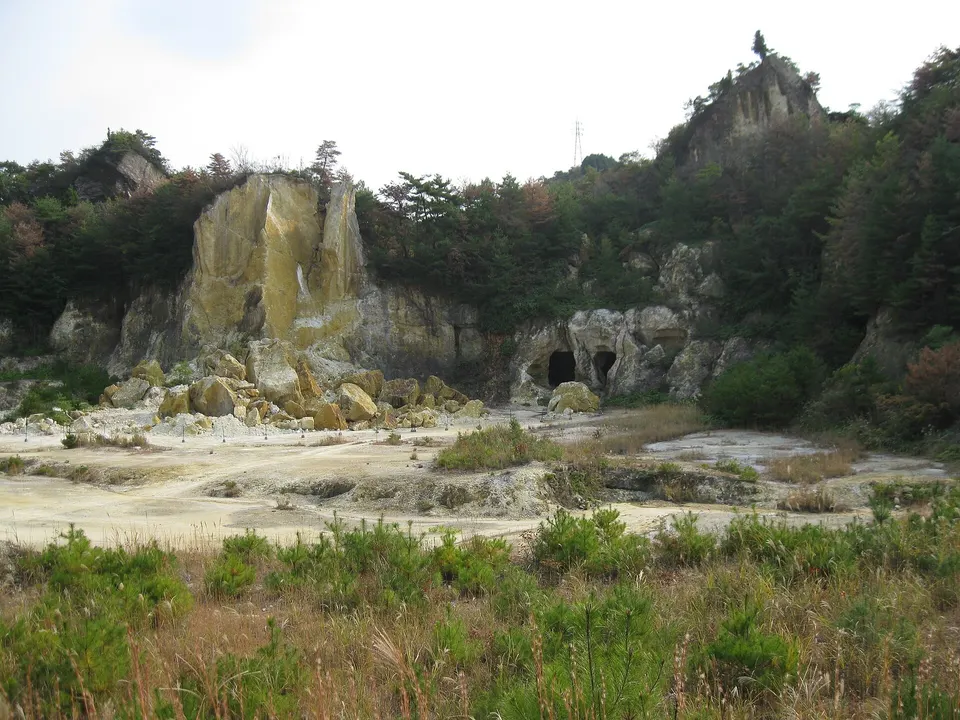
The first Arita porcelain was mostly sometsuke, after Chinese models. Iro-e followed in the 1640s, credited to the first Sakaida Kakiemon. In 1659 the Dutch East India Company ordered more than 57,000 pieces of blue-and-white porcelain, and Arita turned to export.
The technique spread from Arita. A retainer of the Daishōji domain is said to have learned porcelain making at Arita and then to have opened the kiln at Kutani, which accounts date anywhere from about 1640 to 1658. Tobe first succeeded in firing porcelain in 1777. Katō Tamikichi of Seto went to Hizen, the province of Arita, in 1804 to study, and in 1807 he began blue-and-white porcelain at Seto.
Pottery towns founded later
Karatsu had kilns by 1592, and potters who came from the Korean peninsula after the invasions of 1592–98 are said to have begun its production in earnest. Hagi began when the lord Mōri Terumoto had two Korean potters, brothers he had brought back, open a kiln.
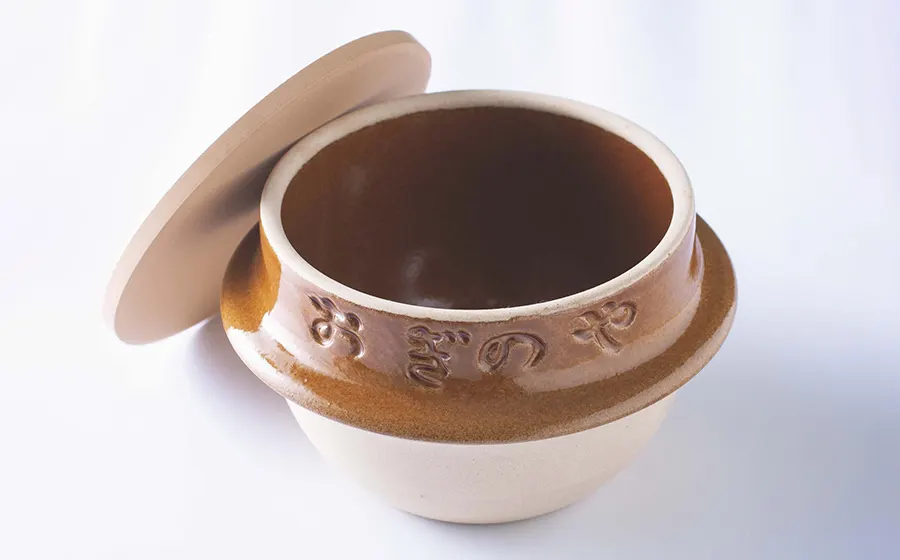
In the Kantō region, Kasama is said to have begun under the guidance of a Shigaraki potter, and Mashiko began around 1853, when Ōtsuka Keizaburō, who had learned the craft at Kasama, is said to have opened a kiln. Mashiko fired water jars, grinding bowls and teapots, and it became known for folk-craft pottery after the potter Hamada Shōji settled in the town in 1924. The pot of Tōge no Kamameshi, the station bento that Oginoya put on sale at Yokokawa Station on February 1, 1958, is Mashiko ware.
Traditional crafts by national designation
Under a law of 1974, the Minister of Economy, Trade and Industry designates traditional crafts, dentōteki kōgeihin: things for daily use, made mainly by hand with traditional techniques and materials, in a region where a number of makers work. There were 244 as of October 2025. Shigaraki ware and Kutani ware were designated in 1975, Mashiko ware in 1979 and Hagi ware in 2002.
Pottery fairs
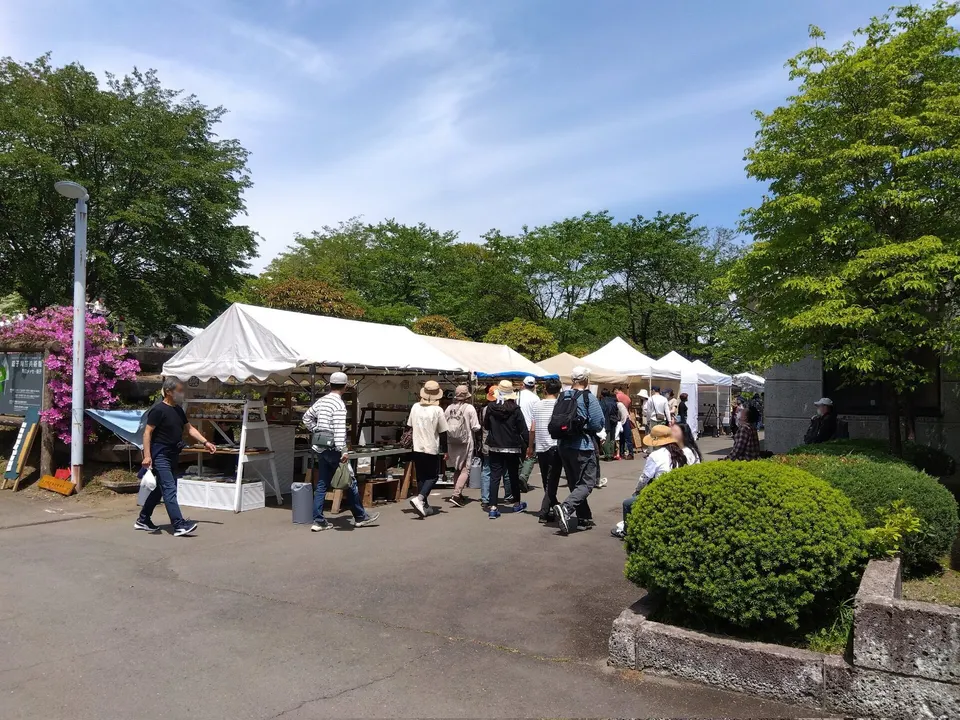
Pottery towns hold fairs called tōki-ichi. Arita's fair grew out of a clearance sale held alongside a ceramics competition that was first held in 1896. The Arita fair runs from April 29 to May 5 and draws about 1.2 million visitors. Mashiko's fair began in 1966 and is held twice a year, in the Golden Week holidays of late April and early May and around November 3. Kasama's fair, the Himatsuri, was begun in 1982 by 36 potteries and runs from April 29 to May 5.
References
- Agency for Cultural Affairs, Japan Heritage Portal Site, "Six Ancient Kilns"
- Six Ancient Kilns Japan Heritage Promotion Council, "About the Six Ancient Kilns"
- Arita Tourism Association, "What is Arita ware"
- Arita Ceramics Fair, "About the fair"
- Mashiko Town Tourism Association, "Mashiko Pottery Fair"
- Kasama Himatsuri, "About the Himatsuri"
- Ministry of Economy, Trade and Industry, "Traditional crafts"
- Kotobank, "Seto ware"
- Kotobank, "Arita ware"
- Kotobank, "Imari ware"
- Kotobank, "Tokoname ware"
- Kotobank, "Shigaraki ware"
- Kotobank, "Bizen ware"
Image credits (resized for display):
- Asturio Cantabrio / Wikimedia Commons, CC BY-SA 4.0, 2020
- Daderot / Wikimedia Commons, Public domain, 2013
- Bytemarks / Wikimedia Commons, CC BY 2.0, 2010
- Oginoya
- FukuroWaraw / Wikimedia Commons, CC BY-SA 4.0, 2023