One gō (合) is the unit Japan uses to measure rice: about 180 milliliters, which is about 150 grams of white rice and cooks into a little more than two bowls. Ten gō make one shō, ten shō make one to and ten to make one koku, a ladder of units that once set taxes and ranked lords and that now survives in the rice cooker's cup and the sake bottle.
One gō in the kitchen
The cup that comes with a Japanese rice cooker holds one gō, 180 milliliters, and is filled level. The inner pot has a water line for each number of gō, and the cookers themselves are described by how many gō they cook, as in a 5.5-gō model. What happens after measuring is in how rice is cooked in Japan.
One gō of milled white rice weighs about 150 grams. The figure shifts with the variety of rice, whose grains differ in size, and with the moisture in the grain. No-wash rice (musenmai) has had the bran removed from its surface, so slightly more of it fits in the cup: 160 grams per gō, and the pot has a separate water line for it.
Cooked rice weighs between 2.2 and 2.3 times as much as the raw rice, so one gō becomes about 340 grams. A bowl of rice is about 150 grams, cooked from about 65 grams of raw rice.
A Japanese measuring cup for cooking holds 200 milliliters, which is 170 grams of white rice. It cannot stand in for the rice cooker's cup.
Gō, shō, to, koku
| Unit | Reading | In gō | Metric | Where it turns up |
|---|---|---|---|---|
| 合 | gō | 1 | about 180 mL | The rice cooker's cup; a flask of warmed sake |
| 升 | shō | 10 | about 1.8 liters | The isshōbin, the one-shō sake bottle |
| 斗 | to | 100 | about 18 liters | The bale of rice, which is 4 to |
| 石 | koku | 1,000 | about 180 liters | Land values and stipends in the Edo period |
| 俵 | hyō (bale) | 400 | about 72 liters | Wholesale rice prices, quoted per 60 kilograms |
Below the gō is the shaku (勺), a tenth of a gō. Gō is also the word for a tenth of other things. The climbing route up Mount Fuji is divided into ten from the foot, and its stages are named second gō, fifth gō, eighth gō and so on.
The masu, a box for measuring
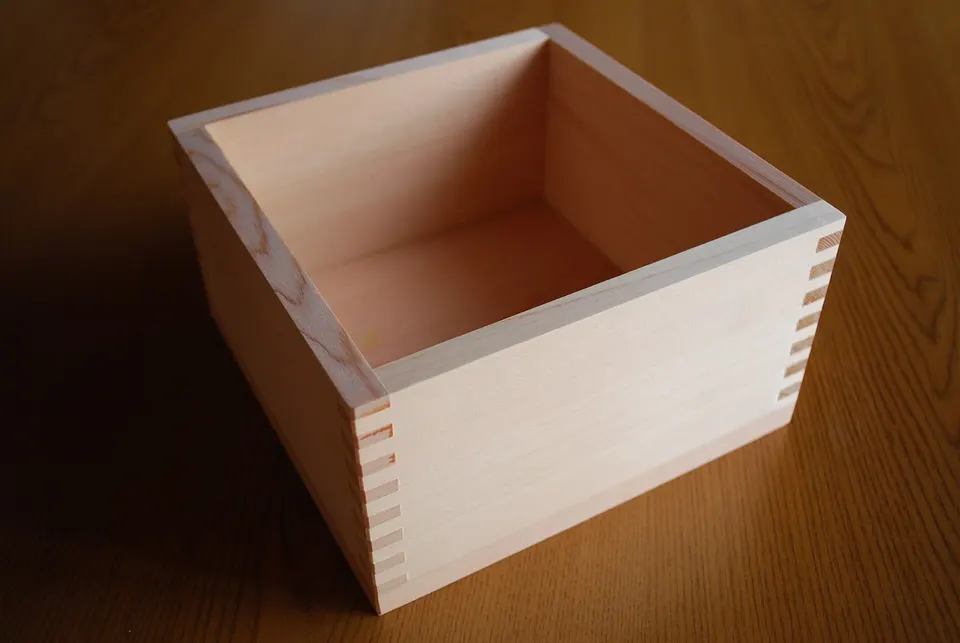
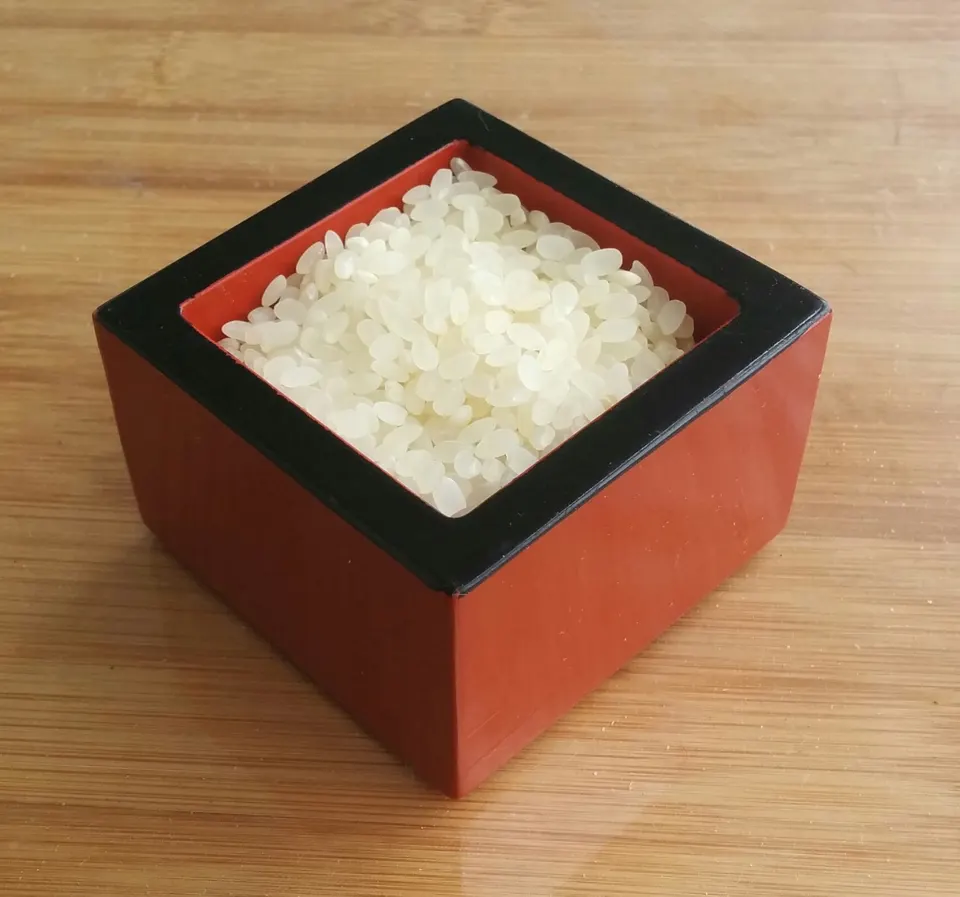
A masu is a measure that is filled to the brim and leveled. Until the Meiji era began in 1868, every masu in Japan was a square box.
The units came from China, and they grew. Grain was collected as tax and traded by the masu, and a larger masu brought in more: the shō of Han-dynasty China was about a tenth of the present one. In medieval Japan, estates and temples used masu of their own.
Toyotomi Hideyoshi began a land survey in 1582, and for calculating yields he standardized on the kyōmasu, the masu in use in Kyoto. In 1669 the Tokugawa shogunate made the kyōmasu the official masu for the whole country. Its one-shō box was 4.9 sun square and 2.7 sun deep, about 14.8 centimeters square and 8.2 centimeters deep, and the masu of Edo was brought to the same size. Only the masu guilds of Edo and Kyoto were allowed to make and sell masu, in fixed sizes that included one gō, five gō, one shō, five shō and one to. The shō of today is that box. Sake served in a masu is called masu-zake.
Koku: rice as the measure of wealth
From Hideyoshi's survey until the land tax reform of 1873, land in Japan was officially valued by its kokudaka, the amount of brown rice it was judged to produce, counted in koku. Dry fields and house plots were converted into rice too. Farmers owed their annual tax according to kokudaka, and the shogunate and the domains stated the size of every territory and stipend in the same unit. A daimyo of the Edo period (1603–1868) was a lord directly under the shogun who held 10,000 koku or more.
People in the Edo period are said to have eaten, on average, one koku of brown rice per person per year. Milled, that is about 135 kilograms.
The bale
Rice was stored and moved in tawara, bales woven of straw. The Engishiki, a code of regulations completed in 927, set the bale of rice for transport at 5 to. In the Edo period the size differed from domain to domain, mostly between 2 and 5 to, and on the shogunate's own lands a bale of tax rice held 3.7 to.
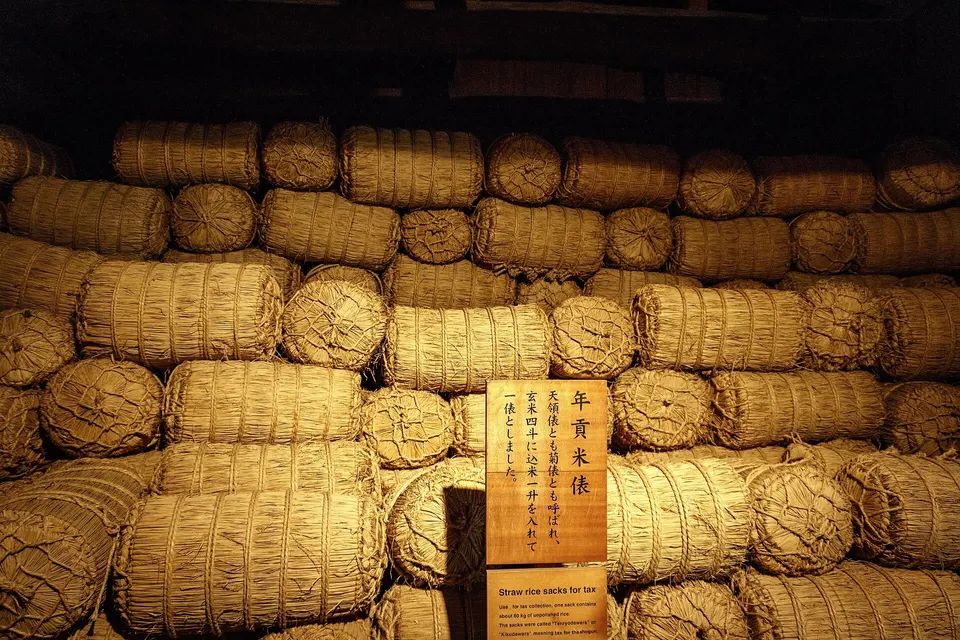
After 1868, prefectural regulations on the rice trade fixed the bale at 4 to, and that size spread to the whole country. A bale of 4 to is about 72 liters, and its standard weight is 60 kilograms. Paper bags have replaced the straw, and the Ministry of Agriculture, Forestry and Fisheries still publishes wholesale rice prices per 60 kilograms of brown rice.
The switch to metric
Japan joined the Metre Convention in 1885. The Weights and Measures Act of 1891 kept the shō of the 1669 kyōmasu and defined the shaku of length (尺, a different unit from the shaku of volume) as 10/33 of a meter, which made one shō about 1.8039 liters. The Measurement Act replaced that law in 1951, and from January 1, 1959, the old units could no longer be used in trade or certification.
The measures stayed on as the sizes of containers. An isshōbin holds one shō, about 1.8 liters. The yongōbin, the four-gō bottle used mostly for sake and shochu, holds about 720 milliliters. The flask in which sake is warmed usually holds one or two gō.
A pot for one gō
The Mashiko-ware pot of Tōge no Kamameshi, the station bento that Oginoya put on sale at Yokokawa Station in 1958, is sized to hold one gō of rice, about 150 grams before cooking.
References
- Kotobank, "Gō"
- Kotobank, "Shō"
- Kotobank, "Koku"
- Kotobank, "Masu"
- Kotobank, "Kyōmasu"
- Kotobank, "Kokudaka"
- Kotobank, "Tawara" (bale)
- Kotobank, "Shakkanhō" (traditional units)
- Kotobank, "Measurement Act"
- Ministry of Agriculture, Forestry and Fisheries, "Cooking properties of rice"
- Rice Stable Supply Support Organization, "How many grams is one gō of rice?"
- Rice Stable Supply Support Organization, "One bowl of rice"
- National Tax College, National Tax Agency, "Surcharges on bales of tax rice"
- Collaborative Reference Database, National Diet Library, "How many kilograms is one bale of rice?"
Image credits (resized for display):