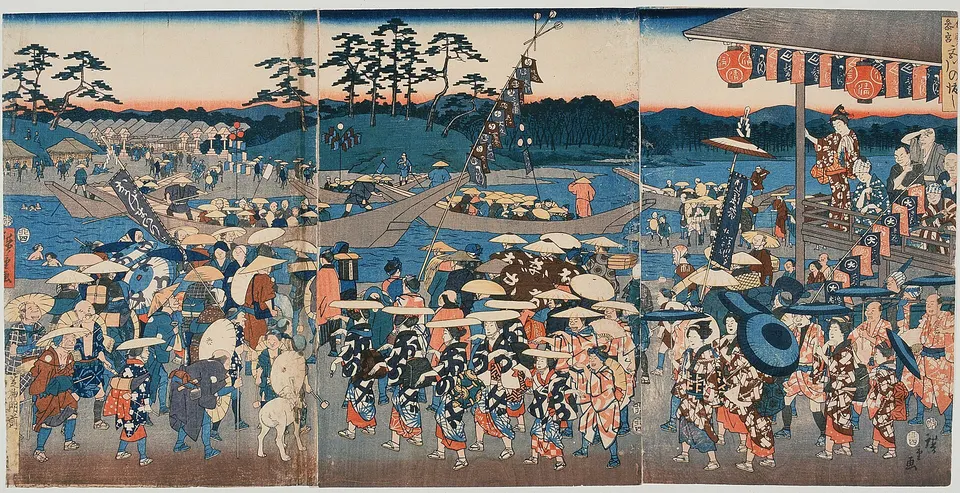
Omiyage are things bought on a trip and handed out at home: to family, and to the people who gave the traveler a parting gift before the journey. The custom spread with the pilgrimages of the Edo period (1603–1868), when villagers pooled their money to send one of their number to a distant shrine or temple, and the traveler brought something back for everyone who had paid in.
A gift for the people at home
Miyage, said politely as omiyage, has two senses: a thing acquired on a trip and brought home, and a gift carried when visiting someone's house. The first kind is a local product that the traveler buys and distributes to family and to those who gave senbetsu. Senbetsu is money or goods given as a farewell to someone setting out on a long journey. The customary return for senbetsu is an omiyage from the destination.
The English word souvenir comes from the French for "memory" and names something kept as a reminder of a trip. In 2018 the National Museum of Japanese History built an exhibition of about 1,300 objects around omiyage, and it used the word for the practice of buying a specialty of the place visited and giving it to friends, relatives and others close to the traveler.
Where the word comes from
The older word was tsuto, a bundle wrapped for carrying. Miyage appears in a record of 1468, and its origin is unsettled. The explanation long favored derives it from miyake, written 宮笥, a vessel received from a god: something offered to the god and then brought back down.
The characters now used for the word, 土産, mean "product of the land." They were attached to miyage from the end of the Muromachi period (1336–1573), when people began to seek out a place's noted product to give.
Pilgrims who traveled for the village
The custom grew to its present scale from the middle of the Edo period, once the highways had been put in order and the guides who led pilgrims had made trips to shrines and temples common among ordinary people.
Few could pay for such a journey alone. Villagers formed a kō, a confraternity such as an Ise-kō, paid into a common fund and sent a representative, chosen each year by lot or by turn. The representative carried the fund as the offering and the travel money, received as many prayer slips as the kō had members, and handed them out on returning. The representative was obliged to bring home the blessing of the gods and buddhas visited and share it, and the omiyage was that blessing made tangible: paper talismans and amulets, lucky dolls and toys, ezōshi (illustrated booklets), sacred medicines.
Ise Shrine received 300,000 to 400,000 pilgrims in an ordinary year of the Edo period, many of them representatives of village kō.
As travel widened to city sightseeing, hot-spring cures and tours of scenic places, sweets and other goods joined the talismans. Kyoto's yatsuhashi, a baked sweet of rice flour, cinnamon and sugar, and Nagoya's uirō, a steamed sweet of rice flour and sugar, are among the regional products whose output grew with the souvenir trade.
Railways and sweets that travel
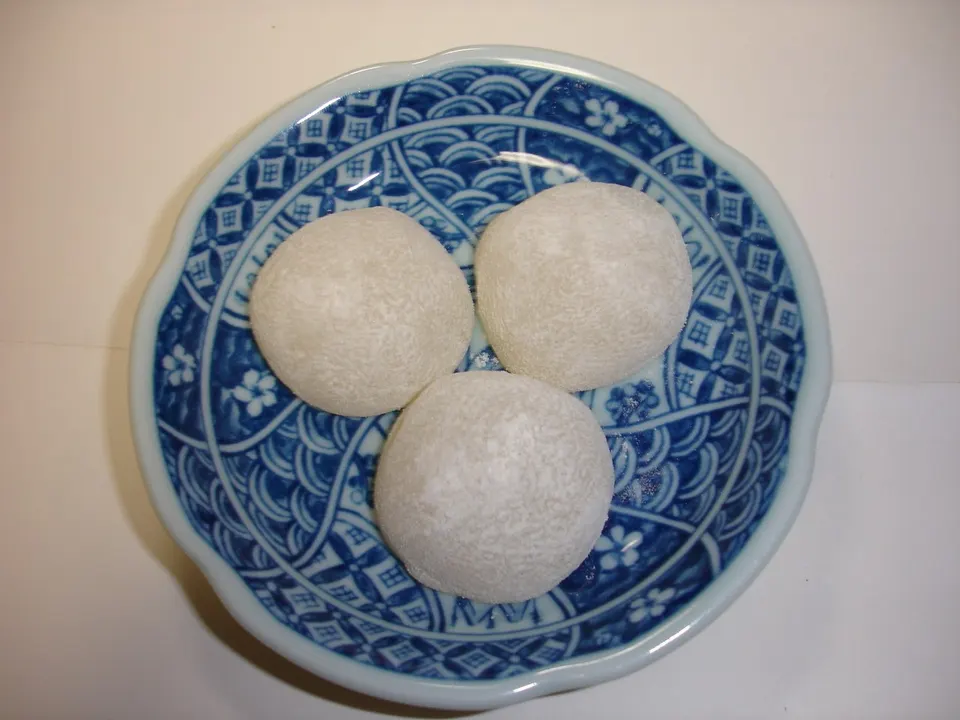
In Okayama, kibi dango, millet dumplings, were already a specialty at the gate of Kibitsu Shrine early in the Edo period. Steamed from millet flour, they spoiled quickly. Kōeidō, an Okayama ceramics dealer turned confectioner in 1856, remade them with glutinous rice, sugar and starch syrup so that they would keep on a journey.
In 1891 the San'yō Railway reached Okayama. Kōeidō's founder took the dumplings off the skewers on which most had been sold and packed them in boxes, each dumpling in its own square of a thin wooden lattice, to be sold by vendors at Okayama Station. During the Sino-Japanese War, which began in 1894, troops from all over Japan rode the San'yō line to Hiroshima and sailed from the port of Ujina. Kōeidō's founder went to Ujina and told them that the gift to take home in celebration of their triumphant return was the kibi dango sold at Okayama Station. From then on the sweet was known across the country as Okayama's specialty.
In Nagoya, Aoyagi Sōhonke, founded in 1879, began selling uirō through vendors inside Nagoya Station in 1931. Aoyagi dates uirō's standing as a Nagoya specialty to those sales. When the Tōkaidō Shinkansen opened in 1964, Aoyagi alone had permission to sell uirō on board. In 1968 it developed a film-sealed process that made uirō keep longer.
What visitors buy now
Visitors from abroad spent an estimated 9.4549 trillion yen in Japan in 2025, and 27.0 percent of that went on shopping. Sweets were bought by 72.7 percent of visitors, the highest share of any category of goods, followed by clothing at 47.9 percent. Folk crafts and traditional crafts were bought by 8.3 percent.
Confectioners are among the tenants of ekinaka, the shopping areas inside stations, and expressway service areas have shops.
Souvenirs that are not eaten
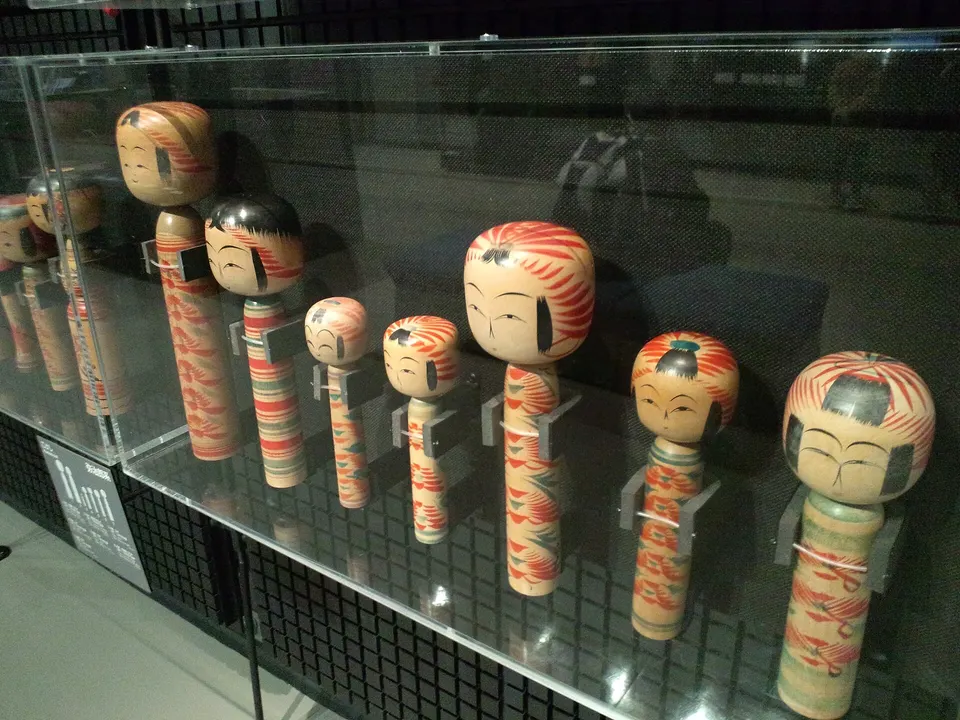
Kokeshi are wooden dolls of the Tōhoku region: a round head on a cylindrical body with no arms or legs, with a painted face. Woodturners who made household ware on the lathe began turning kokeshi some time after the middle of the Edo period, and the dolls were sold as souvenirs to guests taking cures at the region's many hot springs.
Hakone-zaiku is woodwork made as souvenirs around the hot springs of Hakone. A station stamp, pressed into a notebook as a record of the trip, costs nothing.
The lunch that leaves a pot
From about 1955, ekiben named for a local specialty appeared at stations all over Japan. The leading example, Tōge no Kamameshi, went on sale at Yokokawa Station on February 1, 1958, in an earthenware pot of Mashiko ware.
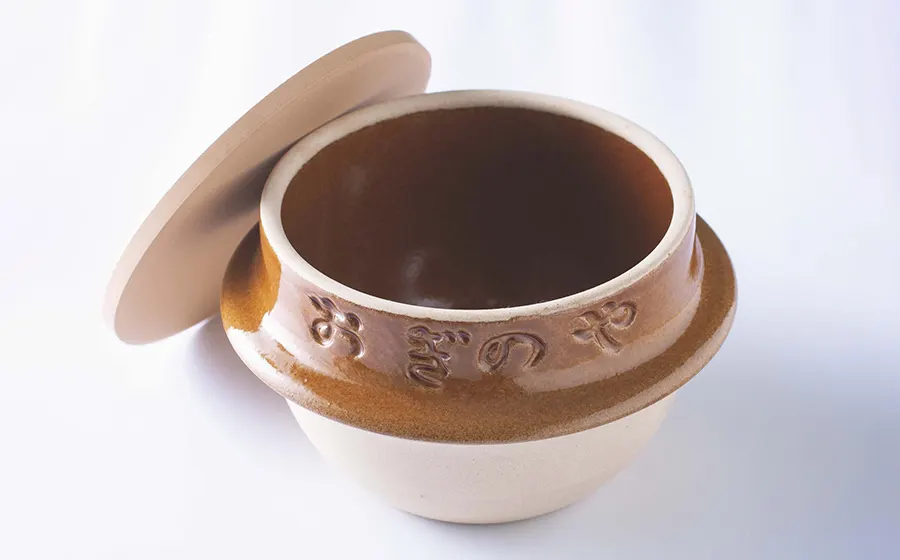
Oginoya publishes recipes that use the empty pot, and the pots it collects after use are washed twice with steam and used again. At Takasaki Station, Daruma Bento went on sale in 1960 in a red container shaped like a daruma doll, which serves as a coin bank once the meal is finished.
References
- Kotobank, "Miyage" (souvenirs and gifts)
- Kotobank, "Senbetsu" (parting gifts)
- Kotobank, "Ise pilgrimage"
- Kotobank, "Daisan" (pilgrimage by proxy)
- Kotobank, "Kibi dango"
- Kōeidō, "History of Kōeidō and kibi dango"
- Aoyagi Sōhonke, company history
- Japan Tourism Agency, "Inbound consumption trend survey, 2025 annual report" (PDF)
- National Museum of Japanese History, special exhibition "Nippon Omiyage Hakubutsushi" (2018)
- Kotobank, "Kokeshi"
- Kotobank, "Hakone-zaiku"
- Kotobank, "Uirō"
- Kotobank, "Yatsuhashi"
Image credits (resized for display):
- Utagawa Hiroshige / Wikimedia Commons, Public domain
- Setouchi / Wikimedia Commons, CC BY-SA 3.0, 2005
- Yanajin33 / Wikimedia Commons, CC BY-SA 4.0, 2014
- Oginoya