Ekiben, the bento sold at Japan's railway stations, have come wrapped in bamboo sheath, boxed in thin shaved wood or bentwood, and packed in ceramic pots, plastic and molded pulp. The first, in 1885, was wrapped in bamboo sheath, the wooden box had arrived by 1889, and since Tōge no Kamameshi went on sale in an earthenware pot in 1958, some ekiben have come in a vessel that stays with the traveler after the meal.
Bamboo sheath
The first ekiben, sold at Utsunomiya Station in July 1885, was two rice balls and pickled daikon radish wrapped in bamboo sheath. The sheath is the scale-like covering of a bamboo shoot, shed as the bamboo grows. It has antibacterial properties and is used to wrap foods such as rice balls and dumplings.
Before shaved wood, food in Japan was wrapped in the sheath of madake bamboo. In 1851 the madake of the Kantō region around today's Tokyo flowered and died, and sheath ran short. The following year Miyajima Kanzaemon of Tsukinowa, in today's Saitama Prefecture, perfected a substitute: wood shaved as thin as paper.
Boxes of shaved wood
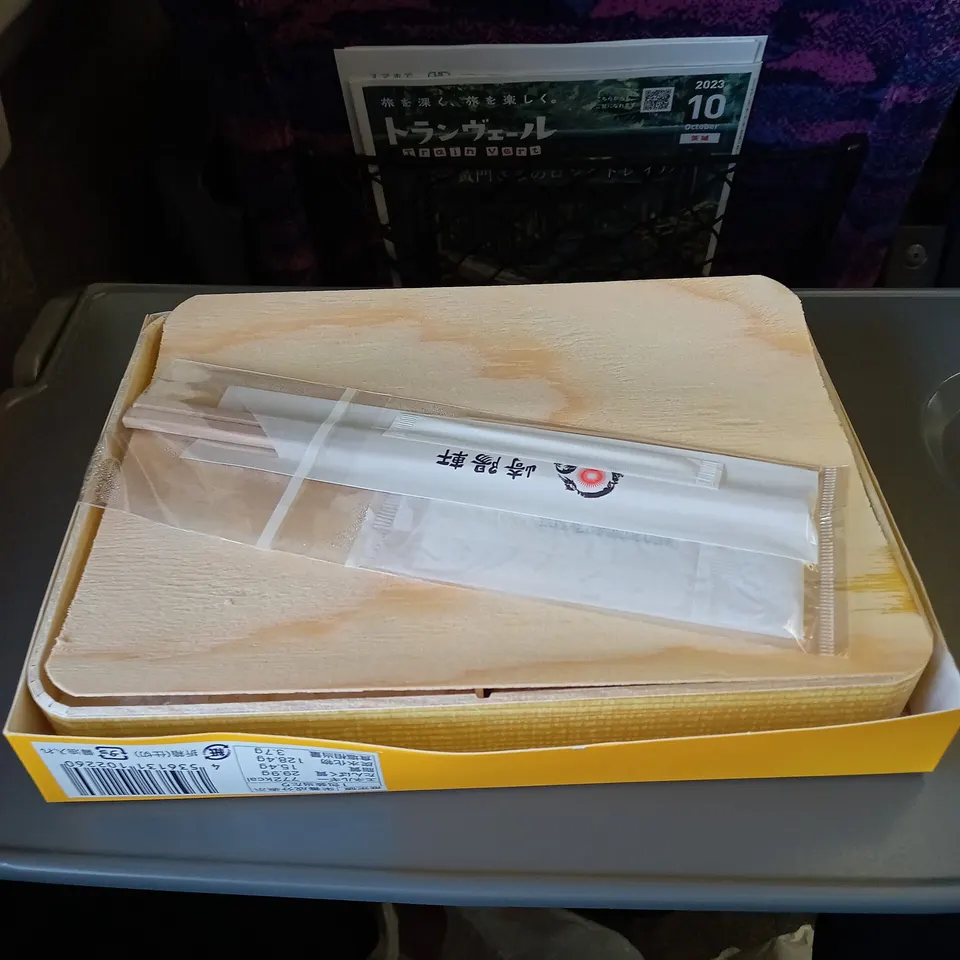
That shaved wood is kyōgi: cedar, cypress or pine planed into sheets, named for the sutras, kyō, once written on strips of it. Thin kyōgi wraps food. Thicker kyōgi is folded into oribako, shallow boxes that descend from the warigo, a partitioned lunch box of folded cypress that was thrown away after a day's use.
The first ekiben to hold a full meal was sold at Himeji when the San'yō Railway reached there from Kobe, and it came in a two-tier box of kyōgi, with rice in one tier and side dishes in the other. Reference works give the year as either 1888 or 1889. Maneki Shokuhin, the Himeji ekiben maker founded in 1888, dates its makunouchi ekiben in a kyōgi box to 1889 and calls it the first in Japan.
A single tier became the usual form in the Shōwa era, which began in 1926. The shūmai bento of Yokohama, created in 1954, comes in a box of kyōgi, which its maker, Kiyoken, counts among the things it does to make a meal that tastes good cold.
Bentwood boxes
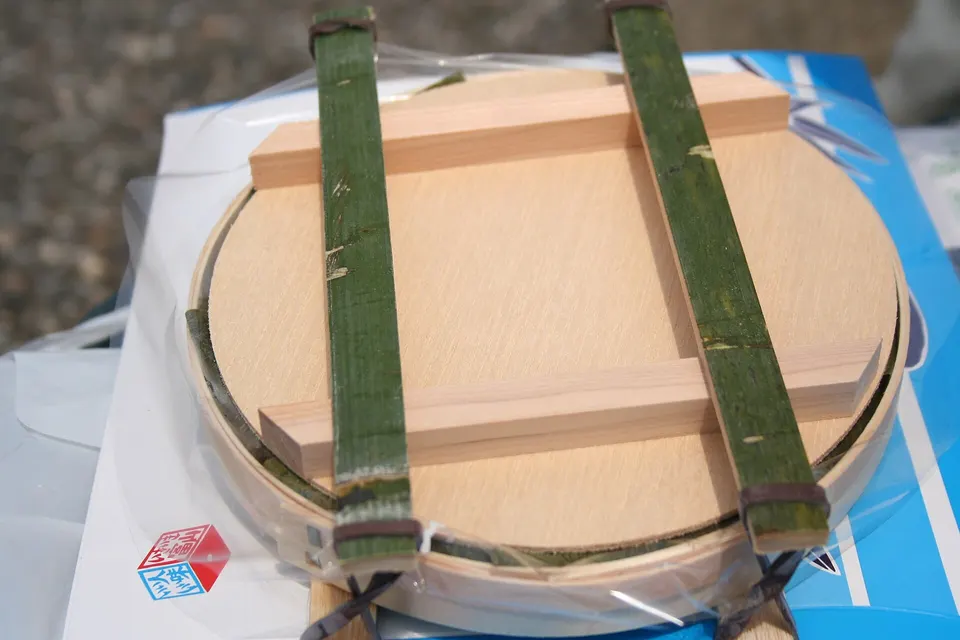
Magemono are containers made by bending a thin board of cypress or cedar into a circle or an oval, stitching the seam with cherry or birch bark and fitting a base. They are light and let air through, which suits them to keeping food, and farmers and fishermen carried their lunches in them under names such as wappa and menpa.
Masu no Sushi, the trout sushi sold as an ekiben at Toyama Station, is pressed into a wappa lined with bamboo grass. In 1962, when most ekiben were wrapped in paper and tied with string, its maker, Minamoto, put the wappa in a box. A year later Minamoto replaced the wisteria vine that bound the wappa with rubber bands and made the base and lid of plywood, because water-soaked wood was heavy and workers tying vines with bare hands were easily hurt.
Ceramic
The tea sold alongside ekiben came in small clay teapots called kisha dobin, "train teapots," lettered with the name of the station and of the bento seller. Mashiko, a pottery town in Tochigi Prefecture, was one of the places that fired them, and the waste heap of one Mashiko kiln has yielded large numbers from the middle years of the Taishō era (1912–1926).
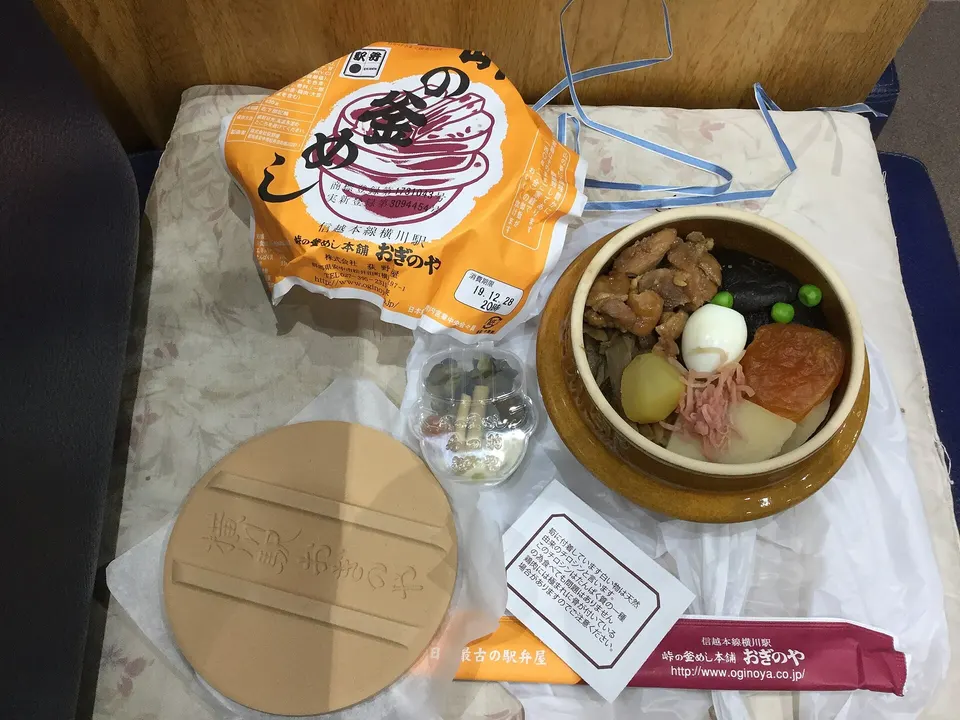
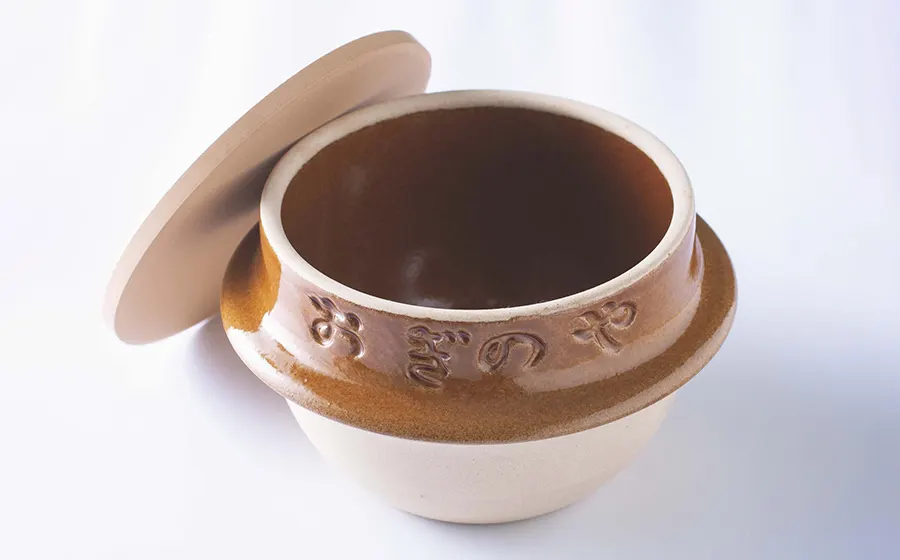
The pot of Tōge no Kamameshi is Mashiko ware too. When Oginoya put it on sale at Yokokawa Station on February 1, 1958, an ekiben was expected to be a cold makunouchi, and passengers tired from long journeys had asked for a warm one. A ceramic pot is sterilized at high heat before it is filled, so it holds its warmth and the meal reaches the customer warm. Tōge no Kamameshi is regarded as the leading example of the ekiben with names like "such-and-such rice" and "such-and-such sushi" that appeared all over Japan from about 1955, and more than 170 million have been sold.
Pots that stay with the traveler
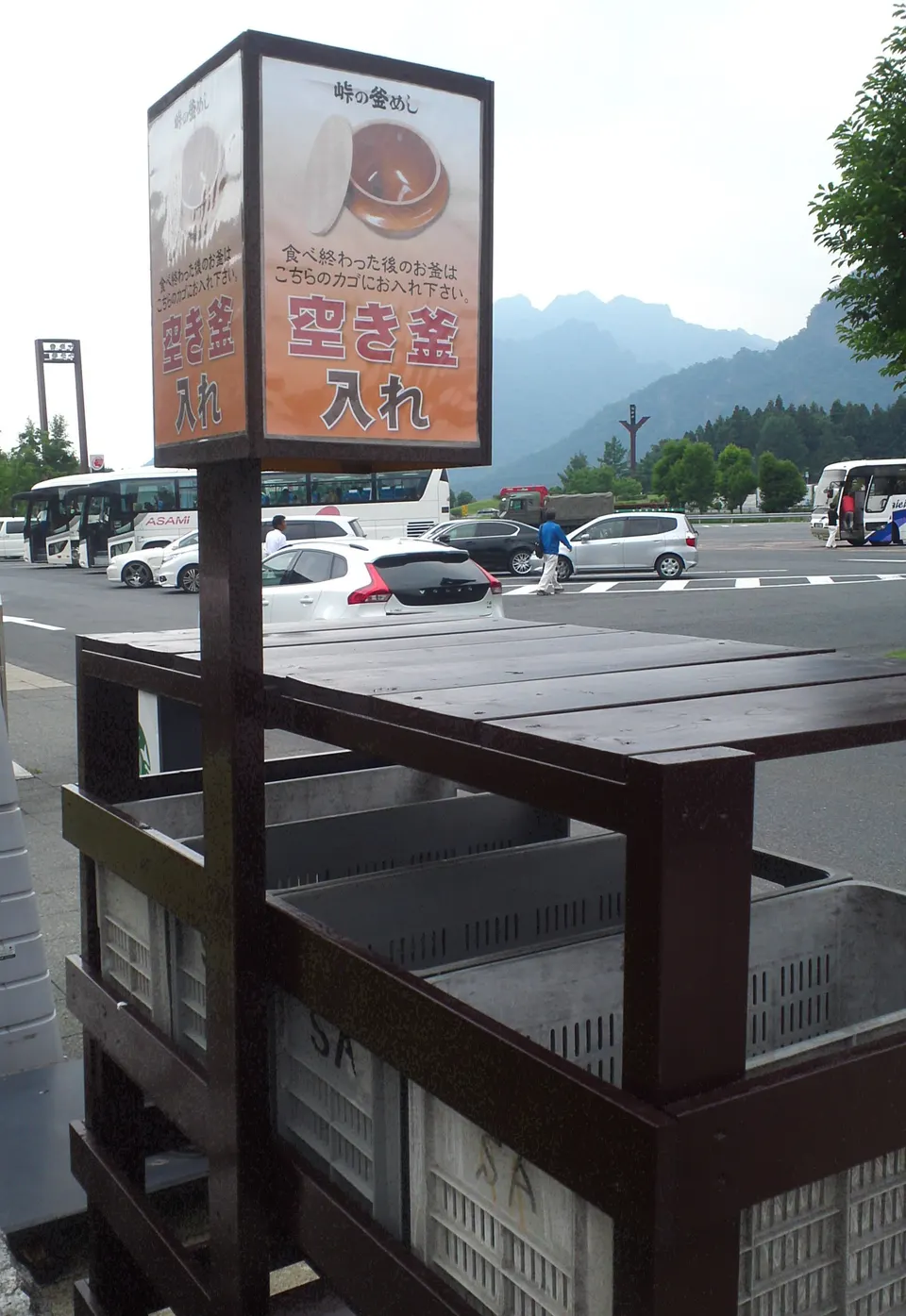
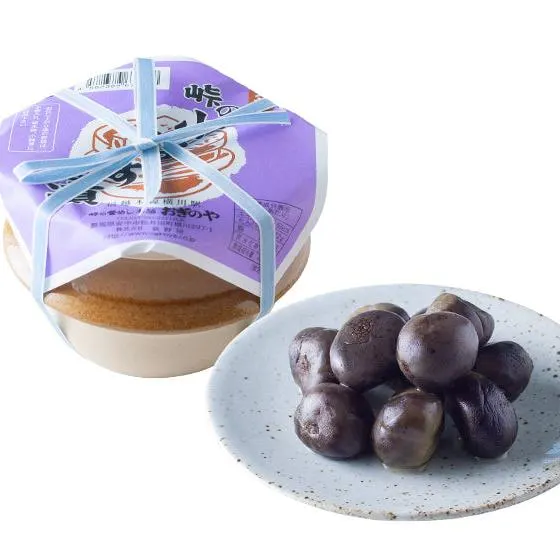
Oginoya publishes recipes that use the empty pot, and it sells a bamboo lid with a gasket, made to fit the pot. Pots that customers have used inside Oginoya's own shops are collected, checked for damage, washed twice with steam and used again. Oginoya also sells "mini kama," small Mashiko ware pots filled with pickled baby eggplant or apple candy, and suggests keeping small things in the pot afterward.
Hipparidako Meshi, an octopus rice ekiben sold since 1998 at Nishi-Akashi Station, comes in a ceramic pot modeled on the pots used to catch octopus. The pot has no lid, and buyers kept asking for one. In January 2021 its maker, Awajiya, put a ceramic lid on sale by itself.
Plastic and molded pulp
The container of Daruma Bento, sold at Takasaki Station since 1960, is shaped like a daruma doll, and the first ones were ceramic. Today's container is red plastic, adopted because it is easier to carry and more hygienic. The mouth of the face molded on its lid is a slot, so the empty container serves as a coin bank.
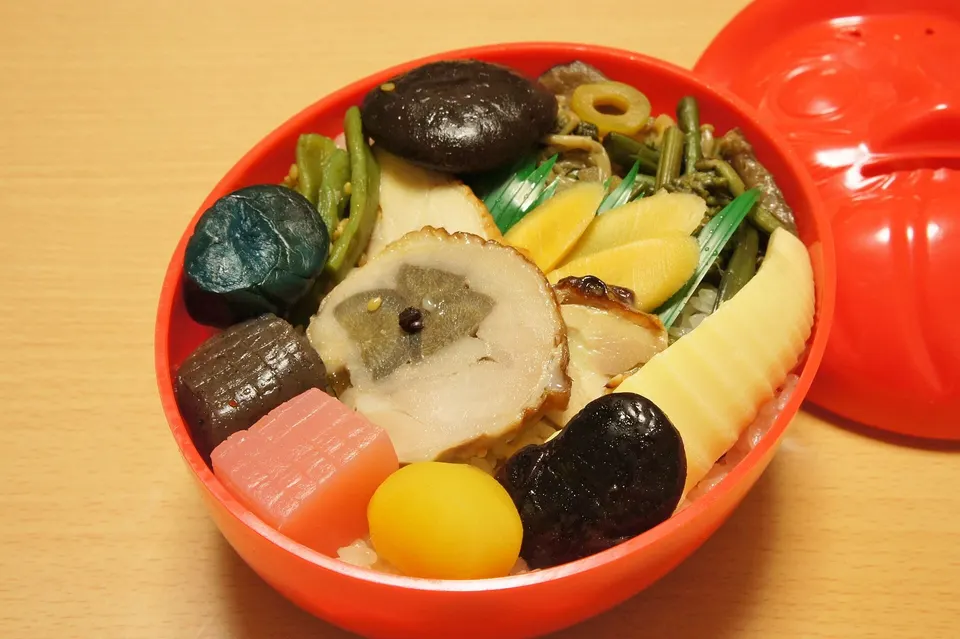
Among other ekiben remembered for their containers, Moo Taro Bento, from Mie, has a cow-shaped container that plays music when the lid is lifted, and a beef tongue bento from Miyagi heats itself with a heating element in its base once a string is pulled.
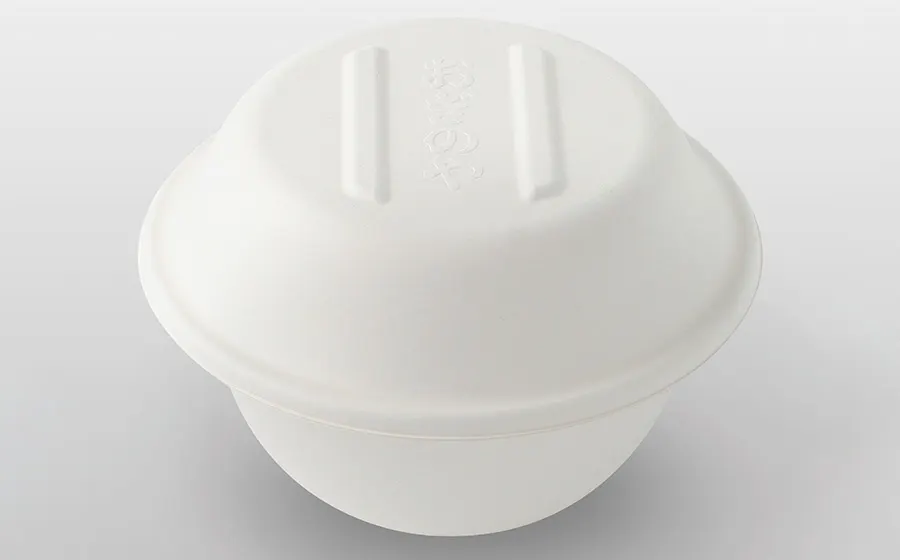
The pot of Tōge no Kamameshi is heavy, and customers said so. Since 2012 Oginoya has also sold the same meal in a container of molded pulp that keeps the rounded form of the ceramic pot. It is made from materials normally treated as industrial waste, such as sugarcane residue and the husks of bamboo shoots, and it won a Good Design Award in 2013. Those husks are bamboo sheath, the material that wrapped the rice balls at Utsunomiya in 1885.
References
- Kotobank: “Ekiben” (Japanese dictionaries and encyclopedias)
- Kotobank: “Kyōgi”
- Kotobank: “Oribako”
- Kotobank: “Warigo”
- Kotobank: “Magemono”
- Kotobank: “Take no kawa” (bamboo sheath)
- Kotobank: “Bentōbako”
- Government of Japan, Highlighting Japan (August 2022): The Characteristics and Many Uses of Japanese Bamboo
- Maneki Shokuhin: Company profile and history
- Masu no Sushi Honpo Minamoto: History of Minamoto
- Fukushima Prefecture Culture Promotion Foundation: research column no. 84, On train teapots (2020)
- Takaben: Daruma Bento
- Japan National Tourism Organization: Experience Japan's Local Ekiben Culture
- Oginoya: About the containers
- Oginoya: Efforts to achieve the SDGs
- Oginoya: Safety and quality control
- Oginoya: Tōge no Kamameshi in the molded-pulp container
- Oginoya online shop: Tōge no Mini Kama
Image credits (resized for display):