

Articles
Page 3 of 5
-
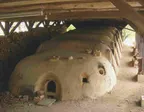
What is Mashiko ware? The pottery behind the kamameshi pot
Mashiko ware is pottery from Mashiko in Tochigi Prefecture, made since about 1853. Its kitchen jars and teapots, its three glazes, Hamada Shōji, and the kamameshi pot. -
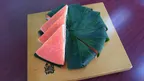
Masu no Sushi: Toyama's pressed trout sushi in a round wooden box
Masu-zushi is Toyama's pressed trout sushi, wrapped in bamboo grass in a round wooden box. How it is made, how it became a Toyama Station ekiben, and how to cut it. -
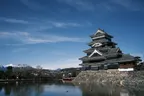
Matsumoto Castle: the black keep below the Japan Alps
Matsumoto Castle in Nagano has a National Treasure keep of five linked buildings. Who built it, why its walls are black, and how the town saved it. -
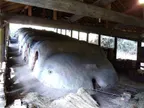
What is mingei? Hamada Shōji and Japan's folk craft movement
Mingei means folk craft: everyday things made by unnamed craftspeople. How the word was coined in 1925, what it valued, and how the potter Hamada Shōji worked by it in Mashiko. -
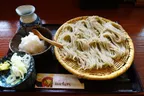
What to eat in Nagano: soba, oyaki and the food of Shinshu
Nagano, the old Shinshu, is mountain country with no coast. Why its food is soba, oyaki dumplings, nozawana pickles, gohei mochi, apples and wasabi. -
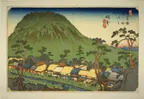
The Nakasendō and the Usui Barrier: the old road over the pass
The Nakasendō ran inland from Edo to Kyoto through 69 stations. It climbed about 685 meters to the Usui Pass, past a barrier that checked for guns and women. -
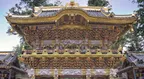
Nikkō Tōshōgū: the gilded shrine of Tokugawa Ieyasu
Nikkō Tōshōgū in Tochigi enshrines Tokugawa Ieyasu as a god. Why his grandson rebuilt it in gold leaf and carvings in 1636, the Yōmeimon gate, the three monkeys and the sleeping cat. -
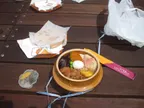
The nine toppings of Tōge no Kamameshi
Chicken, burdock, shiitake, bamboo shoot, a quail egg, chestnut, apricot, green peas and red ginger: how each topping of Tōge no Kamameshi is prepared. -
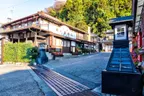
Oginoya: the station vendor behind Tōge no Kamameshi
Oginoya has sold meals to rail travelers at Yokokawa Station since 1885. This is how a small mountain station produced Tōge no Kamameshi, one of Japan's best-known ekiben. -
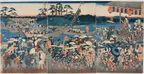
Omiyage: why travelers in Japan bring something home
Omiyage are things bought on a trip and handed out at home. Where the word comes from, how Edo-period pilgrimages shaped the custom, and how railways made local sweets travel. -
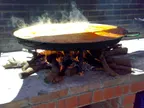
Paella, palov, biryani and kamameshi: rice cooked with everything in one pot
Kamameshi is Japan's one-pot rice. How its pot, its rice and its method compare with paella, Central Asian palov, Iran's polow and biryani. -
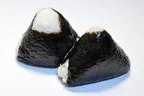
What is onigiri? Japan's rice ball, also called omusubi
Onigiri is cooked rice pressed by hand into a triangle or ball, salted, filled and often wrapped in nori. Its shapes, its 2,000-year history, and the name omusubi. -
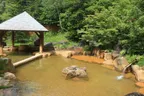
How to bathe in an onsen: Japan's hot-spring rules, from washing first to tattoos
At a Japanese onsen you undress completely, wash before getting in and keep your towel out of the water. What makes water an onsen, the board in the changing room, mixed bathing and tattoos. -
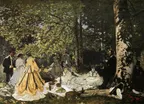
Picnic and bento: what the meal on the grass and the Japanese boxed meal have in common
A picnic and a bento are both meals prepared ahead and carried along. Where the word picnic comes from, what goes into the hamper, into the tiered boxes of hanami and into the bento for a train journey, and what sets them apart. -
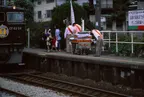
Tachiuri: the platform vendors who sold ekiben through train windows
Tachiuri walked Japan's station platforms with a box of bento hung from their shoulders and sold through train windows. Who they were, and why they vanished. -
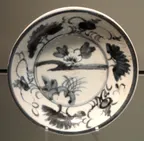
Pottery and porcelain: how to tell Japan's two kinds of ceramics apart
Pottery is fired clay that absorbs water and blocks light. Porcelain is white, glassy and rings when tapped. How Japan's two kinds of ceramics differ, and where each began. -
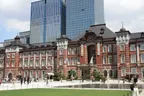
Railway heritage in Japan: what has been kept, and who protects it
Brick bridges on a closed mountain line, stations of 1914 still in use, a Kyoto roundhouse and Locomotive No. 1: what Japan has kept of its railways, and how. -
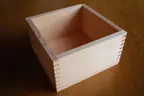
What is one gō? How Japan measures rice
One gō is about 180 mL, or about 150 grams of rice. How gō, shō, to and koku fit together, where the masu box came from, and what the old measures still size today. -
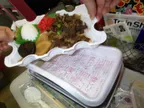
Self-heating ekiben: how a station bento warms itself at the pull of a string
Under the tray of a self-heating ekiben are quicklime and a bag of water. How pulling the string heats the meal, who began it, and how to use one. -
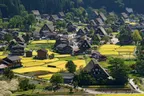
Shirakawa-go's gasshō houses: why the thatched roofs are so steep
The gasshō-zukuri farmhouses of Shirakawa-go have thatched roofs pitched at nearly 60 degrees. What the attic was for, how the roof is tied together, and how the village has kept its houses.