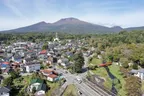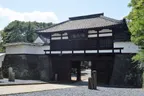
The food of Nagano Prefecture is the food of Shinshu, another name for the old province of Shinano: soba noodles, oyaki dumplings stuffed with vegetables, pickled nozawana greens and, in the south, grilled rice cakes called gohei mochi. Nagano has no coast, and about 80 percent of its farmland lies between 500 and 1,500 meters above sea level. Its dishes are built on buckwheat and wheat flour, on vegetables pickled for the winter and on seafood that arrived packed in salt.
Why Shinshu means soba
Buckwheat was the crop of Nagano's cold highlands, where rice and wheat are hard to grow. The plant likes cool weather, and at around 700 meters above sea level the morning fog shields it from frost. In the 2025 crop Nagano harvested 2,490 tons of buckwheat, fourth among Japan's prefectures; Hokkaido harvested 16,800 tons, 44 percent of the national total of 38,200 tons.
Until the Heian period (794–1185) buckwheat was eaten as whole grain or as sobagaki, a kneaded dough of buckwheat flour. Cutting the dough into noodles, sobakiri, dates from around the 16th century. The Kiso road, the part of the Nakasendō highway that runs through Nagano's Kiso valley, is one of the places named as the birthplace of sobakiri. A book of 1706 says that sobakiri came out of Motoyama, a post station on the Kiso road, and was prized throughout the provinces.
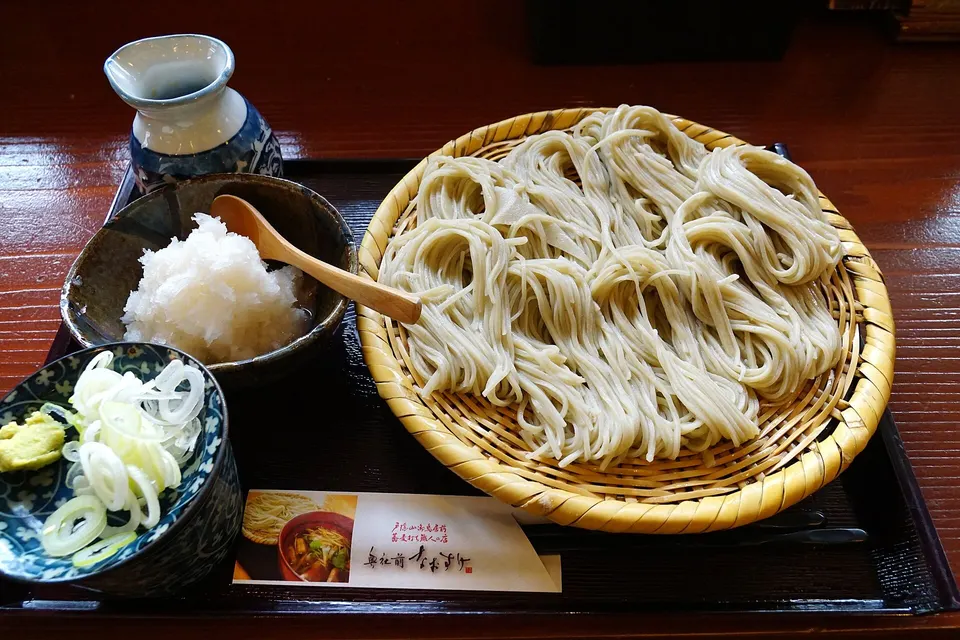
Togakushi soba, from the Togakushi district of the city of Nagano, is set out in small bundles on a bamboo tray, an arrangement called bocchi-mori. The year's new soba appears from the middle of October.
Oyaki, the dumpling that stood in for rice
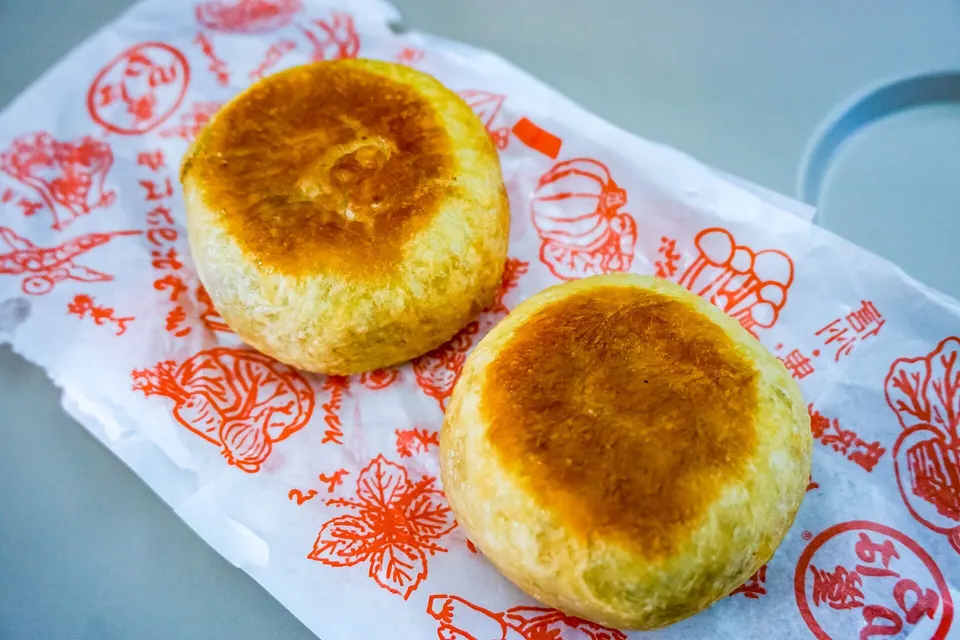
Oyaki are made by kneading wheat flour, buckwheat flour or a mix of the two with water, rolling the dough thin and wrapping it around a filling. The filling is eggplant, mushrooms, pumpkin or dried strips of daikon seasoned with miso or soy sauce, or nozawana pickles, or sweet bean paste.
Oyaki are said to come from the Nishiyama district, in the mountains of northern Nagano. The slopes there are steep and cold and poorly suited to rice, so farmers grew wheat and buckwheat and ate the flour in place of rice.
In Nishiyama the oyaki were seared in an iron pan called a hōroku and then buried in the ashes of the irori, the sunken hearth of the house, to cook through. As oyaki spread to the towns, cooks began to steam them, to bake them, or to do both in turn.
Pickles, salt and a long winter
In winter nothing green can be picked from Nagano's fields, so households put up large quantities of pickles in late autumn. Nozawana-zuke is the salted leaves and stalks of nozawana, a variety of turnip from the village of Nozawa Onsen. Frost makes the leaves sweeter and more tender, so the harvest waits for the cold of November. The pickle can be eaten after two or three weeks and is said to be at its best after a month.
In the Kiso valley, deep in the mountains and far from the sea, salt was precious. Sunki, the pickle of Kiso, is the leaves of red turnips fermented with a starter and no salt at all. Sunki was registered under Japan's geographical indication system in May 2017.
Seafood was processed where it was landed and carried into Nagano along the "salt roads" from the coast. Shio-ika, boiled squid packed in salt, has been made since the middle of the Edo period (1603–1868) and is eaten with cucumber in vinegar once the salt has been soaked out.
Nagano's own miso, Shinshu miso, is a light-colored, salty rice miso that made up more than half of the miso shipped in Japan in 2020.
Gohei mochi and the south
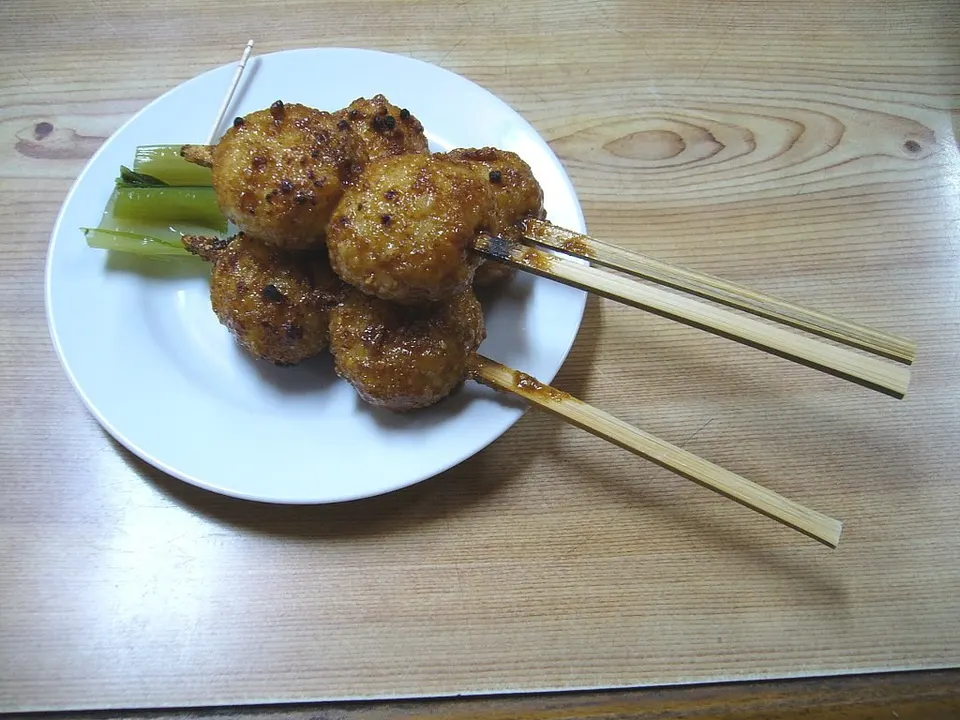
Gohei mochi belongs to the Kiso and Ina districts. Ordinary non-glutinous rice is cooked firm, half-pounded, pressed onto a skewer, coated with a sauce based on miso or soy sauce and grilled. Some gohei mochi are flat and shaped like a straw sandal, and some are a row of small dumplings. In Nagano the typical sauce is miso mixed with ground walnuts.
Rice was precious, so gohei mochi was made for festivals, celebrations and guests. The city of Shiojiri marks the boundary: northern Nagano is oyaki country, and gohei mochi is eaten in Kiso and the south.
The Ina valley has long eaten insects: rice grasshoppers called inago, wasp larvae called hachinoko, and silkworm pupae. Insects were once a source of animal protein, which was scarce. The grasshoppers are caught in the paddies at the rice harvest and simmered in soy sauce and sugar.
Apples, wasabi and kanten
Apple growing in Nagano began in 1874, when the national government handed out saplings. When the world depression at the start of the Shōwa era (1926–1989) hit silkworm raising, until then a major industry, apples were promoted as the crop to replace it. In 2024 Nagano harvested 106,400 tons of apples, second among the prefectures and about 17 percent of Japan's 609,200 tons. Fuji is the main variety, and Akibae, Shinano Sweet and Shinano Gold were bred in Nagano.
More than 90 percent of Nagano's wasabi comes from Azumino, at the foot of the Northern Alps. River water sinks into the alluvial fans there and comes up again at their lower edge as springs that stay at about 13 degrees Celsius all year, and the wasabi fields were laid out at those springs. Nagano, Shizuoka and Iwate are Japan's main wasabi-producing prefectures.
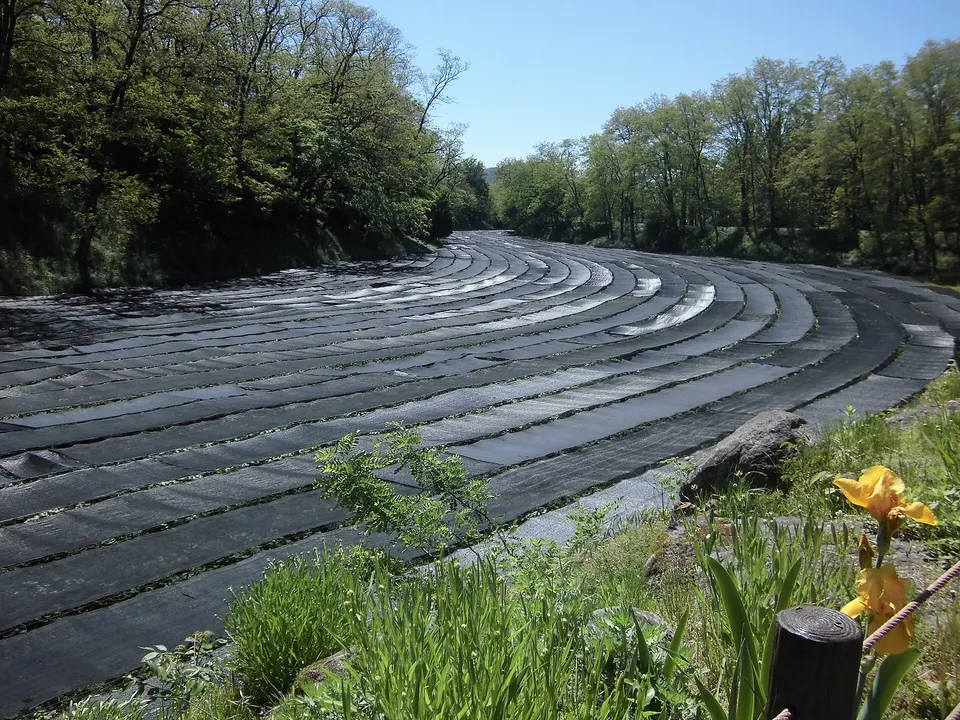
Kanten, or agar, is seaweed boiled and set into a jelly, which is left outdoors in winter to freeze by night, thaw by day and dry. The method reached Suwa in the Tenpō era (1830–1844), and the cold, settled weather there allows a longer season for making kanten than in other districts.
Oginoya in Nagano
Oginoya, the maker of the ekiben Tōge no Kamameshi, comes from Yokokawa Station in Gunma Prefecture, at the foot of the Usui Pass; Karuizawa, the station beyond the pass, is in Nagano. Oginoya opened shops in Karuizawa in 1980, near the Suwa interchange in 1983, in front of the Saku interchange in 1994 and near the Nagano interchange in January 1997, and the Suwa plant is one of the two plants where Tōge no Kamameshi is made. The rice in Tōge no Kamameshi is Koshihikari, mainly from Azumino. Oginoya also makes Kohan no Kamameshi, "lakeside kamameshi," with Nagano beef, yam and asparagus. In the 1980s Oginoya took over the soba shop at Karuizawa Station, one of the stations named as the birthplace of station soba.
References
- Ministry of Agriculture, Forestry and Fisheries, "Our Regional Cuisines: Nagano Prefecture"
- Nagano Prefecture, "Farm products of Shinshu"
- Nagano Prefecture, "Soba in Nagano Prefecture"
- Ministry of Agriculture, Forestry and Fisheries, "Overview of agriculture, forestry and fisheries in Nagano Prefecture, 2026 edition" (PDF)
- Ministry of Agriculture, Forestry and Fisheries, Crop Statistics, 2025 buckwheat harvest by prefecture (e-Stat)
- Forestry Agency, "Production trends of special forest products"
- City of Azumino, "Opening the wasabi fields"
- Kotobank, "Togakushi soba"
- Kotobank, "Oyaki"
- Kotobank, "Kanten"
- Oginoya, chronology
Image credits (resized for display):