Gunma Prefecture eats wheat: wide noodles simmered with vegetables as okkirikomi, the udon of Mizusawa, Kiryū and Tatebayashi, and yakimanjū, steamed buns grilled on a skewer under a sweet miso sauce. Its fields also grow more than nine-tenths of Japan's konnyaku potatoes and the thick Shimonita negi that goes into sukiyaki, and the ekiben of its Yokokawa Station is Tōge no Kamameshi, rice and nine toppings in a clay pot.
Rice, then wheat
Gunma's farmers have long taken two crops a year from the same land, sowing wheat in autumn once the rice is harvested. A record of 1895 puts the rate of double cropping at 49.9 percent in Gunma, against 12.4 percent in Tochigi and 11 percent or less in the rest of the Kantō region. The paddies drain well, and the wheat thrives in the karakkaze, the cold, dry wind that comes down from the mountains in winter. In 2021 Gunma harvested 21,000 tons of wheat, the seventh-largest harvest among Japan's prefectures and the largest in eastern Japan outside Hokkaido.
Stone mills spread in the Edo period (1603–1868), and wheat foods reached ordinary tables. To save rice, farm households often ate flour dumplings in soup or flour cakes at midday, and okkirikomi in the evening.
Okkirikomi
Okkirikomi, also said okirikomi, is wide wheat noodles simmered in a large pot with whatever vegetables and mushrooms the household has, often carrot, negi, daikon, shiitake, potato and taro. The dough is made without salt, and the noodles go into the pot without being boiled first. By one explanation, the name comes from putting the cut noodles straight into the broth.
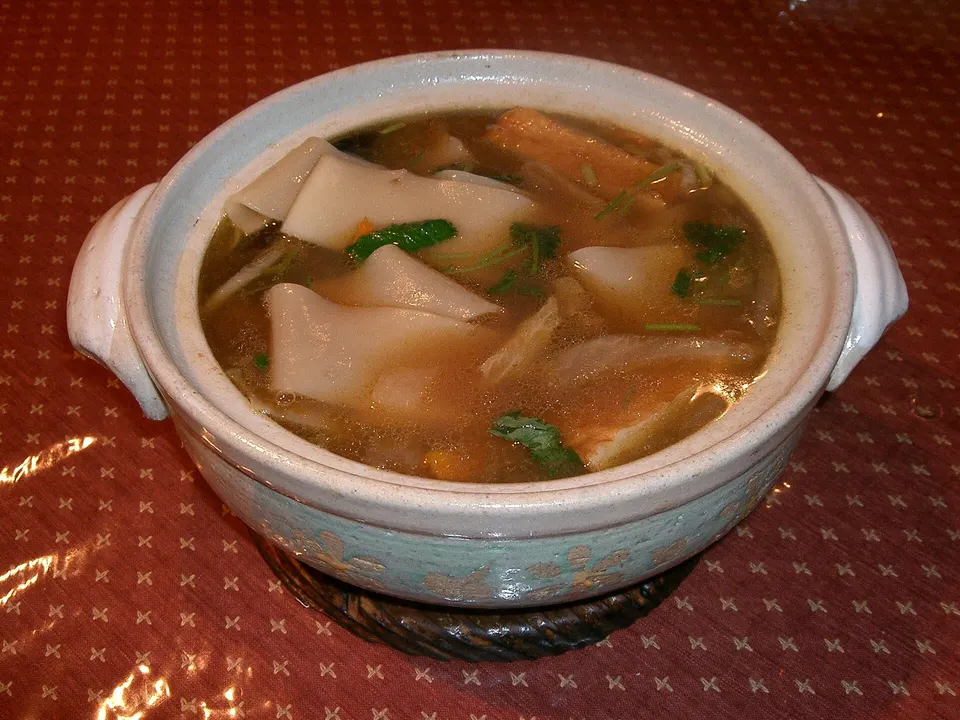
Okkirikomi is thought to have become a daily staple around the middle of the Edo period. For women busy with farm work and silkworms, a meal that needed so little preparation was a help. The seasoning was each household's own miso. As soy sauce spread from the Taishō era (1912–1926) into the first years of the Shōwa era (1926–1989), the flat eastern part of the prefecture changed to a soy-sauce flavor.
Three towns, three kinds of udon
The udon of Mizusawa, Kiryū and Tatebayashi are called Gunma's three great udon.
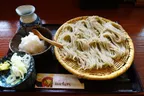
Mizusawa udon is said to have begun at the teahouses on the approach to Mizusawa-dera, a temple in the Ikaho district of Shibukawa, which served udon to pilgrims. One of the shops there dates its founding to 1582. Mizusawa udon is made from wheat flour, salt and the water of Mizusawa alone, and is usually served on a zaru, a bamboo tray. With Inaniwa udon from Akita and Sanuki udon from Kagawa, it is spoken of as one of Japan's three great udon.
In Kiryū, udon is said to have spread because workers in the weaving mills could eat it quickly between tasks. Kiryū's himokawa is a very wide noodle, more than 10 centimeters across at some shops. Tatebayashi's udon was presented to the shoguns as a specialty of the Tatebayashi domain from about the middle of the Edo period.
Yakimanjū
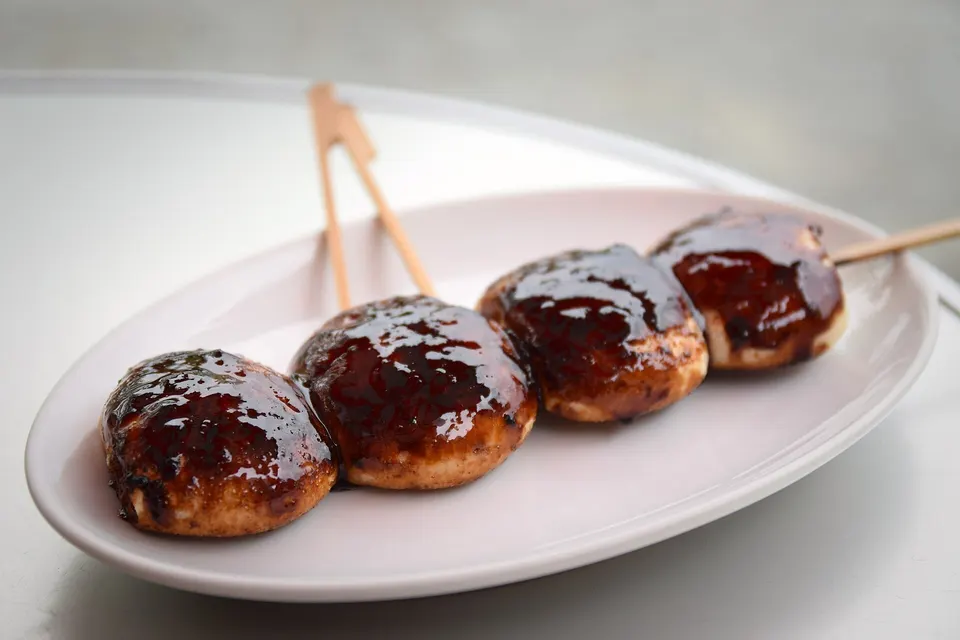
Yakimanjū is four steamed buns on a bamboo skewer, brushed with a sweet miso sauce and grilled. The buns have no filling. Their dough is wheat flour fermented with kōji, the method used for sake buns.
Its origin is traced to the misozuke manjū made at the end of the Edo period by Harashima Ruizō of Maebashi. The miso of that time was not especially sweet. The taste came close to the present one, it is said, in the Meiji era (1868–1912), when black sugar syrup began to be imported.
Stalls sell yakimanjū at cherry-blossom viewing and at summer festivals. In the north of the prefecture, around Numata, there are also yakimanjū filled with sweet bean paste.
Konnyaku
Konnyaku is a food made from the corm of the konnyaku plant. The corm takes two to three years to fatten. It is dried and milled into flour, the flour is stirred into water, and a coagulant such as calcium hydroxide sets the mixture. The finished konnyaku is almost entirely water.
In 2025 Japan harvested 38,500 tons of konnyaku potatoes, and 37,000 tons of them, 96.1 percent, came from Gunma.
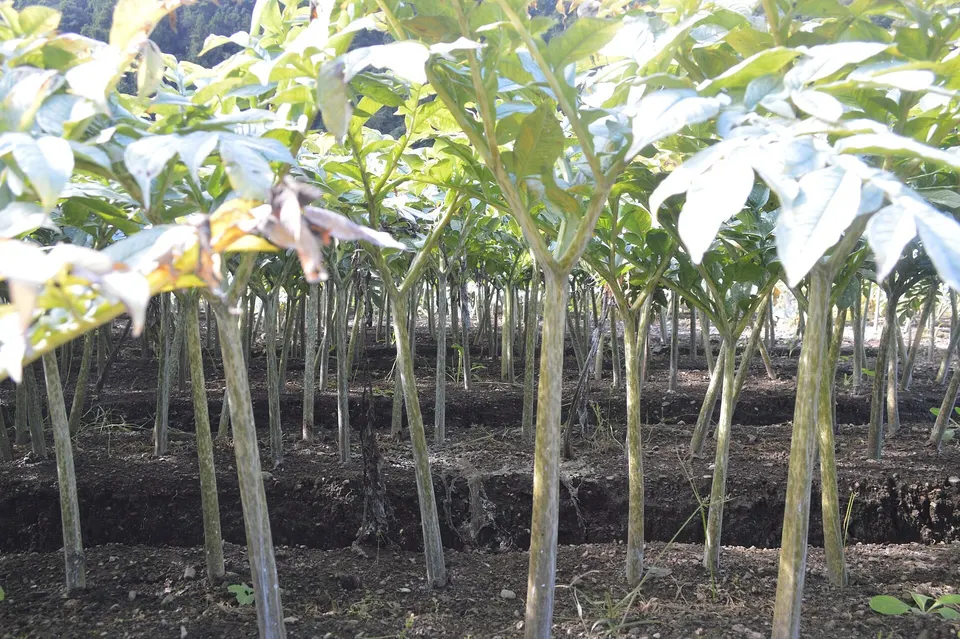
The town whose name is tied to konnyaku is Shimonita. In the Meiji era its millers adapted the waterwheels used for pounding barley to grind dried konnyaku chips into flour, on rivers narrow and fast enough to turn the wheels well. About half of Gunma's konnyaku potatoes are collected in the town.
In Gunma homes konnyaku becomes konnyaku miso oden, a winter dish of boiled konnyaku on a skewer spread with miso sauce.
Shimonita negi and sukiyaki
Shimonita's other product is its negi. Shimonita negi is a single-stalked Japanese long onion whose white part is only 15 to 20 centimeters long and, at its thickest, 4 to 5 centimeters across. Simmered or grilled, it softens quickly and turns sweet.
A letter dated 1805 survives, addressed to a village headman and thought to be from a daimyo or a shogunal retainer in Edo: send 200 negi at once, whatever the cost of transport. From it comes the nickname tonosama negi, "the lord's negi." When the agricultural stations of Gunma and Nagano tried to grow Shimonita negi, it grew poorly in Nagano, and in Maebashi it grew so vigorously that the leaves stiffened.
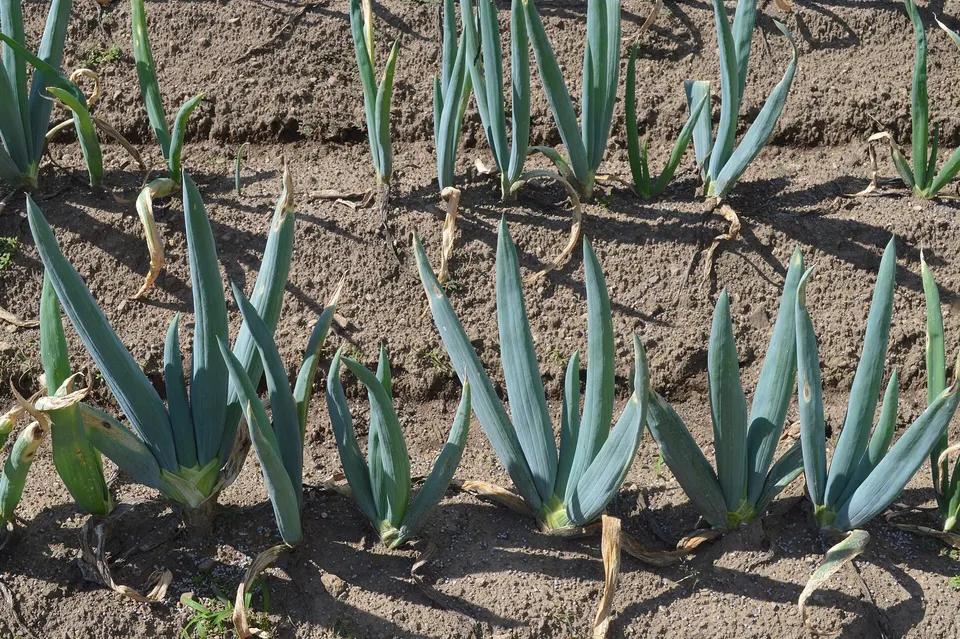
Sukiyaki is eaten all over Japan, and Gunma can fill the pot entirely from its own farms: Jōshū beef, Shimonita negi, shirataki noodles made from konnyaku, shiitake, Chinese cabbage and shungiku greens. In 2014 the prefecture declared itself the sukiyaki ōen-ken, the prefecture that cheers for sukiyaki.
The ekiben of Yokokawa and Takasaki
The second and third stations in Japan to sell ekiben, station bento, were both in Gunma: Yokokawa in October 1885 and Takasaki in March 1886.
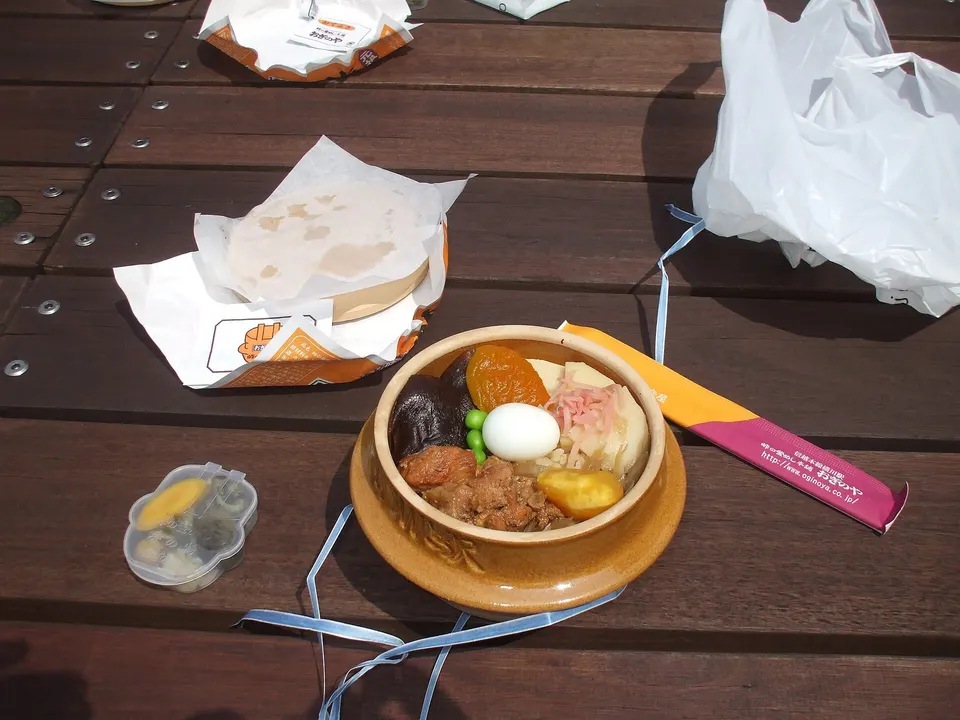
At Yokokawa, a station in the city of Annaka at the foot of the Usui Pass, Oginoya put Tōge no Kamameshi on sale on February 1, 1958. Rice cooked in dashi is packed into an earthenware pot of Mashiko ware and covered with nine toppings, from chicken and bamboo shoot to chestnut and apricot. Sales reached 100 million pots in 1995 and have since passed 170 million.
Takasaki's Daruma Bento followed in 1960, in a red container shaped like the daruma dolls made in the city. Black konnyaku and red konnyaku are among its toppings.
References
- Ministry of Agriculture, Forestry and Fisheries, "Our Regional Cuisines: Gunma Prefecture"
- Ministry of Agriculture, Forestry and Fisheries, "The Situation of Konnyaku" (July 2026, PDF)
- Gunma Prefecture, "Gunma, Land of Wheat," prefectural newsletter, September 2022 (PDF)
- Gunma Prefecture, "About the Gunma Sukiyaki Action"
- Town of Shimonita, "About Konnyaku"
- Town of Shimonita, "About Shimonita Negi"
- Kotobank, "Yakimanjū"
- Kotobank, "Mizusawa udon"
- Oginoya, "Tōge no Kamameshi"
Image credits (resized for display):