Tomioka Silk Mill is the silk-reeling factory that Japan's Meiji government opened in 1872 at Tomioka in Gunma Prefecture, with French machines and French instructors, to show the country how to make raw silk by machine. It worked for 115 years, its buildings of 1872 still stand almost complete, and in 2014 it was inscribed on the World Heritage List, with three related sites in Gunma, as the center of the innovation that made Japan the world's leading exporter of raw silk.
A model factory for Japan's largest export
Japan began trading with foreign countries in 1859, and raw silk quickly became its largest export. As demand soared, poor silk was produced in quantity. Britain and France pressed for better quality and asked to build silk mills in Japan with foreign capital, and in 1870 the government decided to build a model mill with its own money. The mill would use Western reeling technology and foreign instructors, and the women it trained, recruited from all over Japan, would go home and teach machine reeling.
To lead the project the government hired Paul Brunat (1840–1908), a Frenchman working as a raw-silk inspector in Yokohama. Shibusawa Eiichi of the Ministry of Finance oversaw the plan, and Odaka Atsutada became the mill's first director.
Why Tomioka
Brunat and Odaka surveyed the silk-raising districts near Tokyo and chose Tomioka. Silkworm raising flourished around the town, so good cocoons were at hand. A wide site lay beside the Kabura River, and water could be drawn from an existing canal. The townspeople agreed to the factory, and Yokohama was not far away.
Brick walls on a timber frame
Building began in 1871, and reeling started on October 4, 1872, ten days before Japan's first railway opened between Shimbashi and Yokohama.
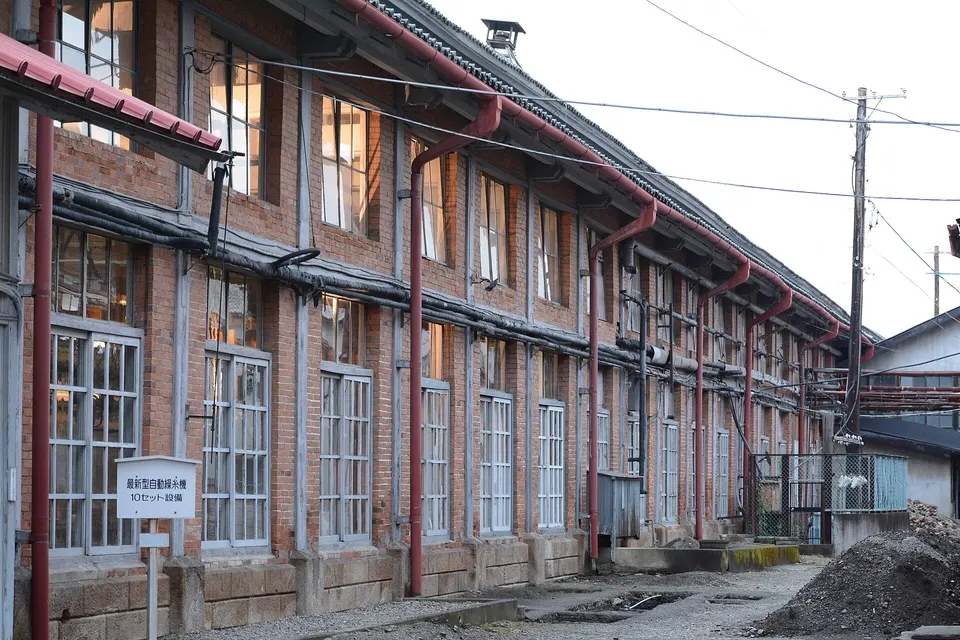
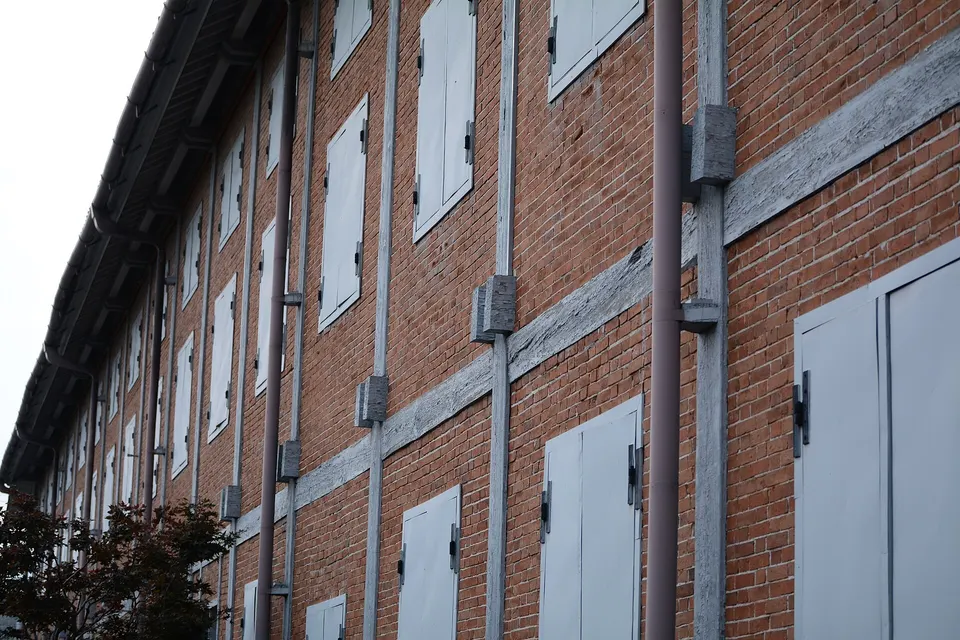
The main buildings have a timber frame with walls of brick. Japanese roof-tile makers fired the bricks under French instruction, and the bricks are laid in French bond (Furansu-zumi), with long and short faces alternating within each course. The roofs are of Japanese tile, and the window glass and the reeling machines were imported from France.
The reeling plant, where thread was drawn from the cocoons, is 140 meters long. Its roof rests on king-post trusses, which leave the floor free of pillars, and iron-framed glass windows light it. With French reeling machines of 300 basins, it was the largest silk-reeling factory in the world at the time. The East and West Cocoon Warehouses, each 104 meters long and two stories high, have many windows so that the cocoons could dry.
The women at the basins
Recruiting began in March 1872 in five prefectures, and few women came forward. People had taken the wine the French drank for human blood. Odaka brought his own eldest daughter, aged 13, into the mill. By 1893 women had come from 36 of today's 47 prefectures.
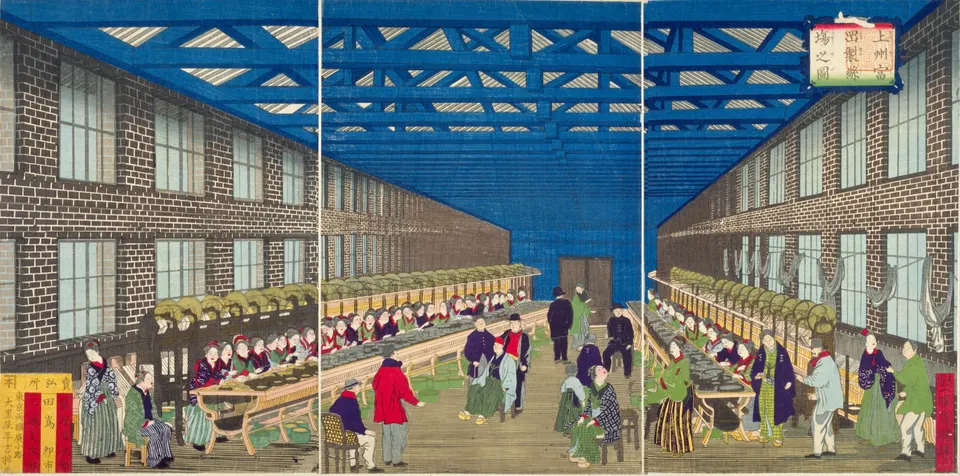
At the start the working day was 7 hours 45 minutes. Sunday was a day off, and with festival, New Year and summer holidays the working year came to about 290 days. Pay went by performance, in four grades at first and eight from April 1874. The women lived in dormitories, and the mill bore the cost of their lodging, their meals and, from about February 1873, treatment by a French doctor stationed at the mill.
Yokota Ei (1857–1929), a samurai's daughter from Matsushiro, now part of the city of Nagano, entered the mill in 1873 at the age of 15. She became a first-grade reeler and went home the next year to teach machine reeling at a new mill in Matsushiro. Under her married name, Wada Ei, she wrote the memoir known as Tomioka Nikki, the Tomioka Diary, between 1907 and 1913.
Mitsui, Hara, Katakura
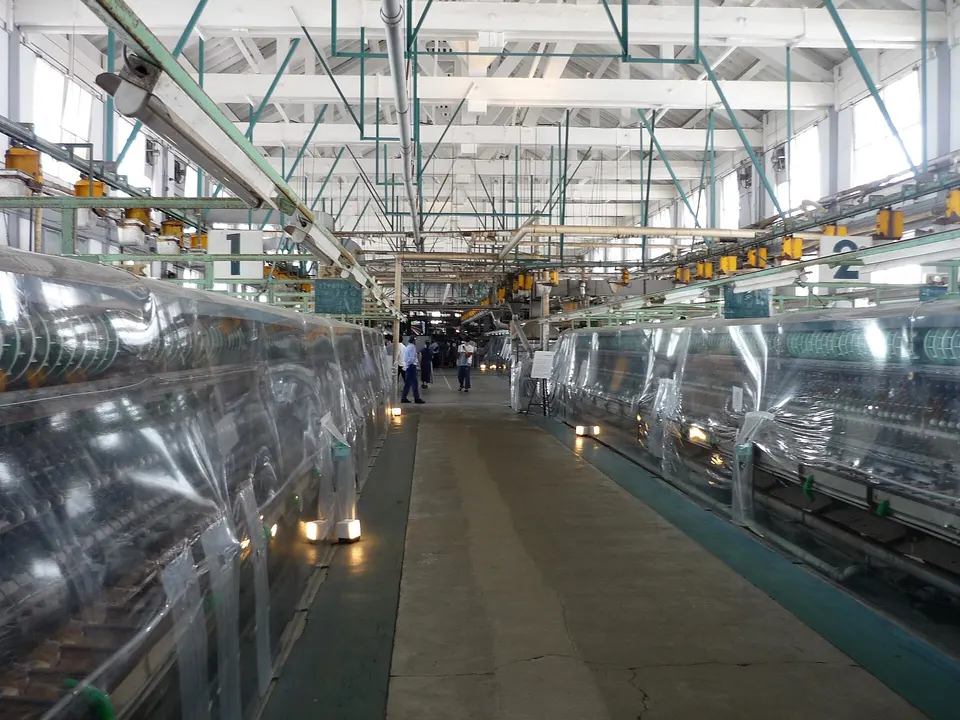
The French instructors left in 1876, and Japanese staff ran the mill from then on. Its silk was highly regarded abroad, but the mill did not always make a profit, and in 1893 the government sold it by tender to the Mitsui family. In 1902 it passed to Hara Gōmei, a raw-silk trading house in Yokohama, and in 1939 it was merged into Katakura, then Japan's largest silk-reeling company. Automatic reeling machines were installed after the Second World War, and production stopped in March 1987.
In 1897 the Kōzuke Railway opened between Takasaki and Shimonita to carry the district's cocoons, raw silk and silkworm eggs. The line, now the Jōshin Electric Railway, serves Jōshū-Tomioka Station. From Takasaki, the Shin-etsu Main Line has run since 1885 to Yokokawa, at the foot of the Usui Pass. The brick bridges and tunnels of the railway that once crossed the Usui Pass are an Important Cultural Property.
Katakura kept nearly all the buildings after 1987 and donated them to the city of Tomioka in 2005, the year the grounds became a National Historic Site. The main buildings were designated Important Cultural Properties in 2006. In December 2014 the reeling plant and the two cocoon warehouses became National Treasures, the first in Gunma Prefecture. The West Cocoon Warehouse opened to the public in 2020 after six years of preservation work.
Four sites, one World Heritage listing
Tomioka Silk Mill and Related Sites was inscribed on the World Heritage List in June 2014. The four sites correspond to stages in the production of raw silk. The Tajima Yahei Sericulture Farm in Isesaki is a house and silkworm-rearing room with a raised vent on its roof, built in 1863 by Tajima Yahei, who perfected a rearing method that relied on ventilation. Takayama-sha, a sericulture school founded in Fujioka in 1884, taught a rearing method that became the national standard. The Arafune Cold Storage in Shimonita, built between 1905 and about 1914, kept silkworm eggs in the cold air that blows from gaps in the rock, which let farmers raise silkworms several times a year instead of once.
UNESCO gives two grounds for the listing: the early and entirely successful transfer of French industrial sericultural techniques to Japan, and an outstanding example of an integrated ensemble for the mass production of raw silk.
References
- Tomioka Silk Mill (Tomioka City official site), "About Tomioka Silk Mill"
- Tomioka Silk Mill (Tomioka City official site), "Highlights of Tomioka Silk Mill"
- UNESCO World Heritage Centre, "Tomioka Silk Mill and Related Sites"
- Gunma Prefecture, "Tomioka Silk Mill and Related Sites"
- Gunma Prefecture, "Former Kōzuke Railway facilities" (PDF)
- Agency for Cultural Affairs, Cultural Heritage Online, "Former Tomioka Silk Mill: Reeling Plant"
- Tomioka City, "Former Tomioka Silk Mill: Plan for Maintenance and Utilization" (PDF, 2012)
- Kotobank, "Tomioka Silk Mill"
- Kotobank, "Wada Ei"
Image credits (resized for display):
- C1815 / Wikimedia Commons, CC0, 2014
- C1815 / Wikimedia Commons, CC0, 2014
- Utagawa Kuniteru II (一曜斎国輝) / Wikimedia Commons, Public domain
- Suikotei / Wikimedia Commons, CC BY-SA 4.0, 2018