A ryokan is a Japanese-style inn, where guests take off their shoes at the entrance, sleep on futon laid out on a tatami floor and usually have dinner and breakfast as part of the stay. What sets a ryokan apart from a hotel is a building and rooms in the Japanese rather than the Western style, and a stay centered on the guest room instead of spread across a lobby, a restaurant and a bar.
Ryokan and hotels
From 1948, when the law on lodging businesses was enacted, Japanese law told the two apart: a hotel's structure and facilities were Western, a ryokan's Japanese. A license has nothing to do with a lodging's name, and many ryokan in tourist areas call themselves hotels. An amendment that took effect on June 15, 2018, merged hotels and ryokan into one category.
The room
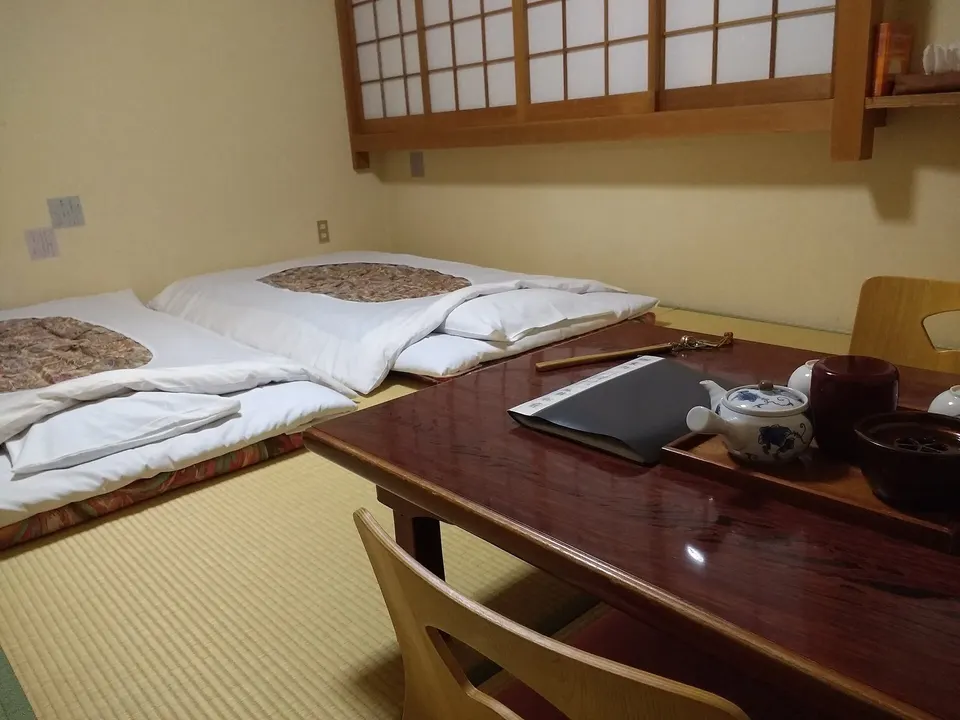
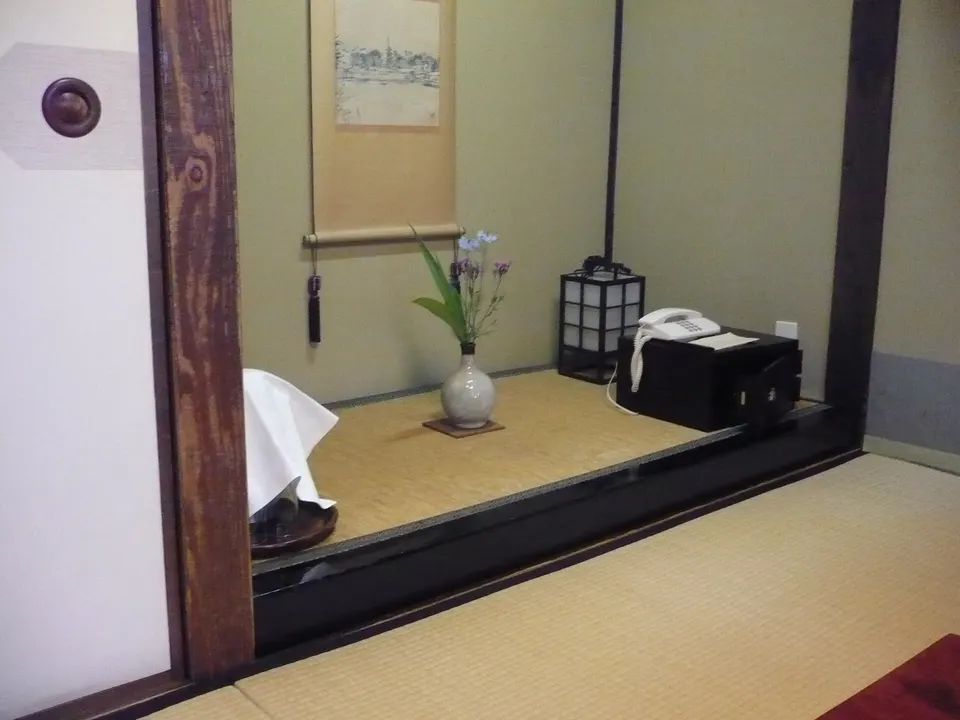
A ryokan room is floored with tatami and furnished with a low table and zaisu, legless chairs for sitting on the floor. It may also have a tokonoma, an alcove raised a step above the tatami at the honored end of the room, where a hanging scroll, flowers or an ornament is displayed. The tokonoma took shape along with the shoin style of building, and from the Muromachi period (1336–1573) it was built into the residences of the warrior class.
Traditionally, guests sleep not in beds but on futon laid directly on the tatami. A futon can be put away and, in a humid climate, carried outside to dry in the sun, two of the reasons given for its becoming the standard bedding in Japan. In recent years more ryokan have added rooms with beds. Almost every room has its own unit with a shower and a bathtub.
Shoes, slippers and the yukata
Shoes come off just inside the entrance, where guests change into the slippers provided and leave their shoes in the shoe cupboard. The slippers come off before stepping onto tatami, and the toilet usually has a pair of its own. The custom of taking off shoes indoors grew from a history of sitting and sleeping on tatami.
Guests usually find a yukata in the room, an unlined cotton kimono worn after the bath. The name is short for yukatabira, a linen robe that people of rank once wore in the steam bath. The yukata became what ordinary people wore after bathing in the Edo period (1603–1868), as cotton cloth and public bathhouses spread.
Dinner and breakfast
A ryokan usually charges per person, commonly with dinner on the evening of arrival and breakfast the next morning included, an arrangement called ippaku nishoku, "one night, two meals." More ryokan now also offer breakfast-only stays and sudomari, a stay with no meals.
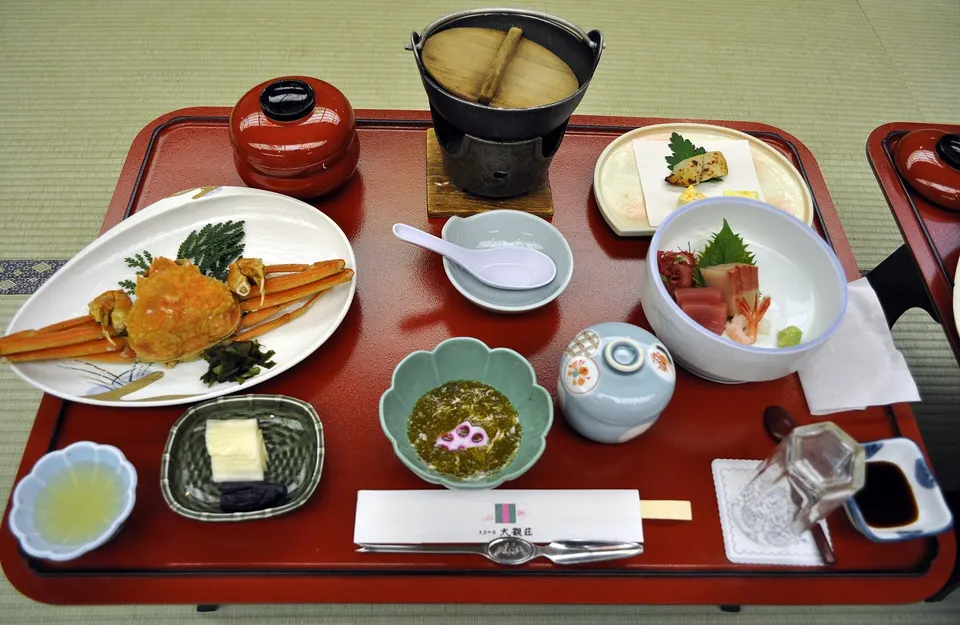
Dinner is typically kaiseki, a formal meal of many small courses made with local ingredients in season, and breakfast is a traditional Japanese one. Depending on the ryokan, meals are served in the guest room or in a dining hall, and at check-in the staff usually ask what time guests would like each meal, within set hours. The attendant assigned to a room, traditionally a woman called a nakai, sees the guests in and out and serves their meals in the room.
The bath
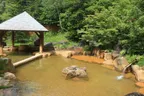
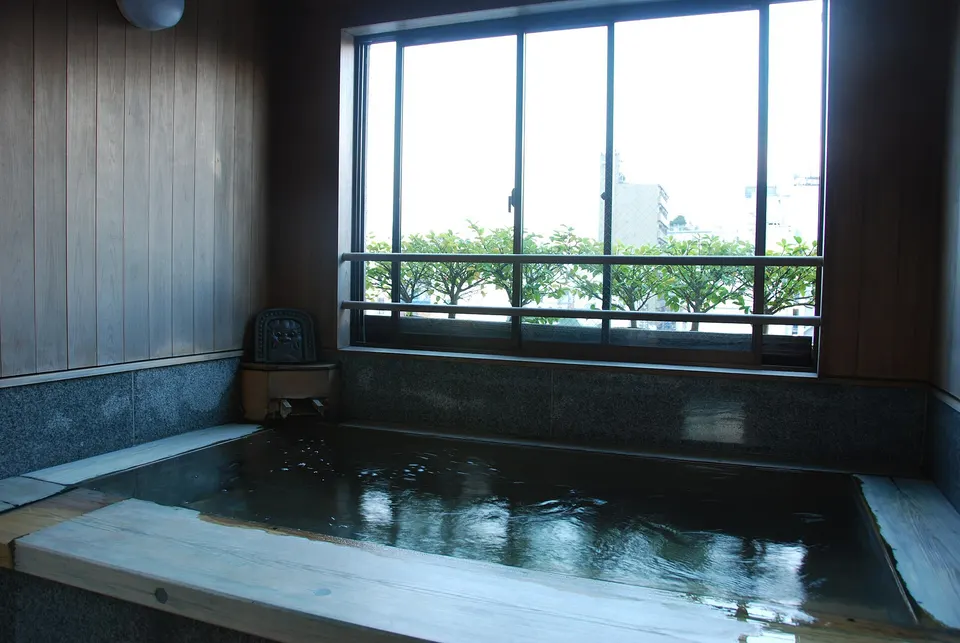
For most Japanese, a slow soak in the communal bath is an essential part of a ryokan stay. An onsen ryokan, a hot-spring inn, stands in a well-known hot-spring town and has a large communal bath. In Kusatsu Onsen, water from the Yubatake spring is piped to more than 80 places in the town, inns and communal bathhouses among them.
The communal bath usually needs no booking, and at many ryokan it is open late at night and early in the morning, except while it is being cleaned. Some ryokan also have private baths, either in the guest room or reserved for a set time.
From hatago to ryokan
The post towns of the Edo period had three kinds of lodging. Honjin were for daimyo and others of high rank. Hatago were for ordinary travelers and, from the mid-seventeenth century, served their guests meals. Kichin-yado, the cheapest, served no meals: guests cooked for themselves and paid for the firewood, the kichin. Sakamoto, the post town at the foot of the Usui Pass on the Nakasendō, had two honjin and 53 hatago.
When the honjin were abolished in 1870, ordinary inns were allowed the gate, formal entrance and room with a raised floor that only honjin had been permitted. Where hatago had put guests together in large rooms, new inns divided their rooms with walls into private rooms, some with a tokonoma. As railways spread, these inns went up around stations as ekimae ryokan, station-front inns. The ekiben, the station bento, is said to have begun in July 1885, when the railway from Ueno reached Utsunomiya and Shirokiya, an inn in the town, sold food at Utsunomiya Station.
After the Second World War, as group pleasure trips became popular, tourist ryokan sprang up in hot-spring and sightseeing towns. The Tokyo Olympics of 1964 brought a wave of large hotels, and from the mid-1960s many station-front ryokan were reborn as business hotels. Ryokan in tourist areas grew more Western as well, with beds in some rooms, Western bathrooms and meals in a dining room. From the mid-1970s, ryokan in the purely Japanese style came to be highly valued again.
How many ryokan there are
At the end of 1995 Japan had about 72,600 ryokan against 7,174 hotels, though a ryokan had 14 guest rooms on average and a hotel 75. Hotels kept increasing and ryokan decreasing: at the end of March 2018, the last count before hotels and ryokan were merged into one category, there were 38,622 ryokan and 10,402 hotels. At the end of March 2025 the merged category counted 52,946 ryokan and hotels together.
The Japan Tourism Agency still counts ryokan separately in its accommodation survey, as lodging built mainly in the Japanese style. In 2025 guests spent about 79 million nights at ryokan, out of 661 million at all of Japan's lodgings, and about 10 million of the ryokan nights were spent by guests from abroad.
References
- Kotobank, "Ryokan"
- Kotobank, "Yukata"
- Kotobank, "Tokonoma"
- Kotobank, "Nakai"
- Kotobank, "Ekiben"
- Ministry of Health, Labour and Welfare, "Overview of the Hotel Business Act (Ryokan-gyō hō)"
- Ministry of Health, Labour and Welfare, "Report on Public Health Administration and Services, fiscal 2018: summary"
- Ministry of Health, Labour and Welfare, "Report on Public Health Administration and Services, fiscal 2024: summary"
- Japan Tourism Agency, "Overnight Travel Statistics Survey"
- Japan Tourism Agency, Overnight Travel Statistics Survey, 2025 annual figures (Excel)
- Japan Tourism Agency, "Questions for Ryokan? Look here!"
- Japan National Tourism Organization, "Japanese Ryokan Guide"
- Japan National Tourism Organization, "Understanding and Mastering Japanese Manners and Etiquette"
- Agency for Cultural Affairs, database of nationally designated cultural properties, "Yubatake"
Image credits (resized for display):