A depachika is the food floor in the basement of a Japanese department store, where prepared dishes, bento, sweets, fresh food and alcohol are sold, much of it at counters run under the names of well-known shops. A department store first put its food department in the basement in 1922, subway stations were joined to those basement floors from 1930, and in April 2000 a food floor in Shibuya was rebuilt; the company that runs it credits that floor with setting off the "depachika boom."
The word joins depāto, department store, and chika, basement.
What is on the floor
A department store in Japan is a large store that carries goods for every part of daily life and sells them face to face. Its depachika runs from delicatessen-style dishes to fine sweets: high-quality foods from Japan and abroad, wines and spirits, sake, French baguettes, fresh ingredients and ready-made bento. The bento at Matsuya in Ginza have ranged from kaiseki-style boxes and eel to tempura, sushi, hors d'oeuvres and sandwiches.
The Japan Department Stores Association counts food in four groups: fresh food, confectionery, sōzai (prepared dishes) and other food. In September 2026 the 169 stores of the 68 companies it surveys had sales of about 443.4 billion yen, and food made up 22.8 percent of that, with confectionery at 6.8 percent and sōzai at 5.9 percent. In December 2025, when year-end shopping centered on food, the share was 31.8 percent, with confectionery alone at 10.7 percent.
Sōzai and the meal in between
Sōzai are everyday side dishes. The word has been in use since the middle of the Edo period (1603–1868), when a shop called a saiya already sold them, heaped in bowls at the front of the shop: simmered dishes and simmered beans.
Buying food ready-made and eating it at home or at work is called nakashoku. Eating out is gaishoku, cooking at home from raw ingredients is uchishoku, and nakashoku takes its name from standing halfway between the two. It covers sōzai, sushi, onigiri, sandwiches and bento bought at a depachika or a convenience store, or delivered. The share of household food spending taken up by prepared food and the like was 28.4 percent in 1975 and 44.0 percent in 2013.
Into the basement, and onto the subway
Japan's first department store was Mitsukoshi Gofukuten, founded in 1904, and Japanese department stores come from two lines: kimono shops, and stores that grew up at the terminals of private railways. When Takashimaya opened a new store at Nagahori in Osaka on October 1, 1922, it became the first of the kimono-shop department stores to make its basement a sales floor and put a food department there.
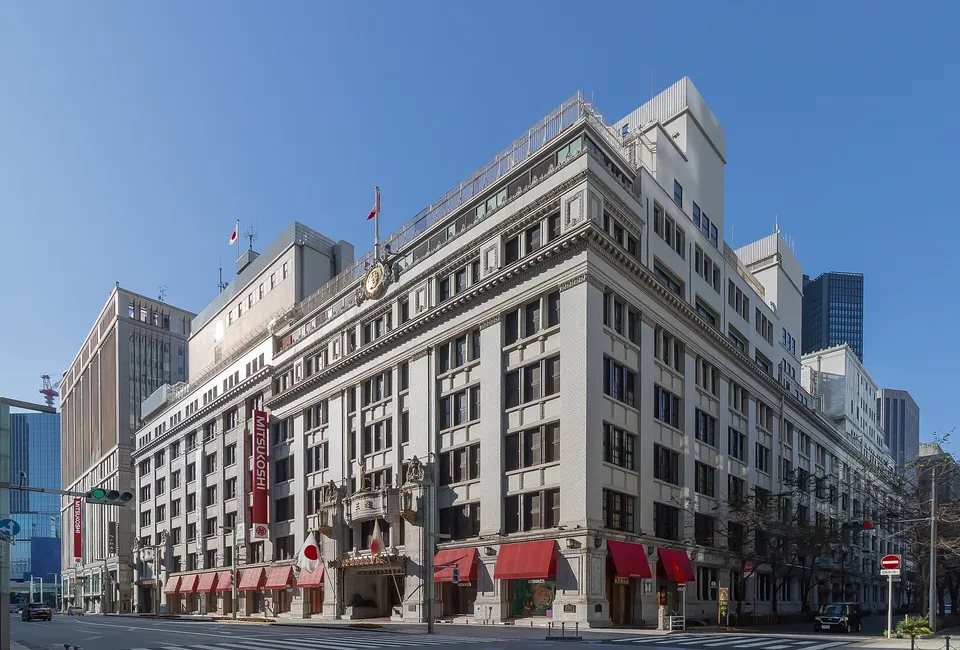
In the Shōwa era, which began in 1926, railway companies started department stores of their own, and the subway reached the basement. In 1930 Ueno-Hirokōji Station was joined directly to the basement sales floor of Matsuzakaya's Ueno store, and in April 1932 Mitsukoshi-mae Station, "in front of Mitsukoshi," opened with a connection to the basement sales floor of the Mitsukoshi main store in Nihonbashi, the building in the photograph above. In 1934 the Tokyo Yokohama Electric Railway opened a department store of its own at Shibuya Station, which became a separate company, Toyoko Department Store, in 1948. Depachika are typically connected to train stations.
Famous shops on one floor
A meitengai, a "street of famous shops," is a sales area in a department store or a similar building where well-known shops are gathered. On December 1, 1936, Matsuzakaya set up 東西名物街, a "street of famous products of east and west," on the first basement floor of its Nagoya store. It brought together shops from Kyoto, Osaka and Tokyo, among them Toraya, the salted-kelp maker Matsumaeya and the Western confectioner Colombin. Matsuzakaya's company history calls the 1936 floor the forerunner of the meitengai.
On October 27, 1951, Toyoko Norengai opened with 15 shops on the ground floor of Toyoko Department Store in Shibuya. A noren is the cloth, dyed with a shop's name, that hangs at its entrance. Toyoko Norengai gathered old-established and popular shops from Ginza and elsewhere, Eitaro and Colombin among them, and its pitch to people living along the Tokyu lines and to passengers passing through the terminal was that famous goods and famous sweets could be bought in Shibuya without a trip into the city center. Tokyu describes Toyoko Norengai as Japan's first meitengai. Its success led to meitengai at department stores and station buildings elsewhere, and a writer in 1955 remarked that most department stores had something of the kind.
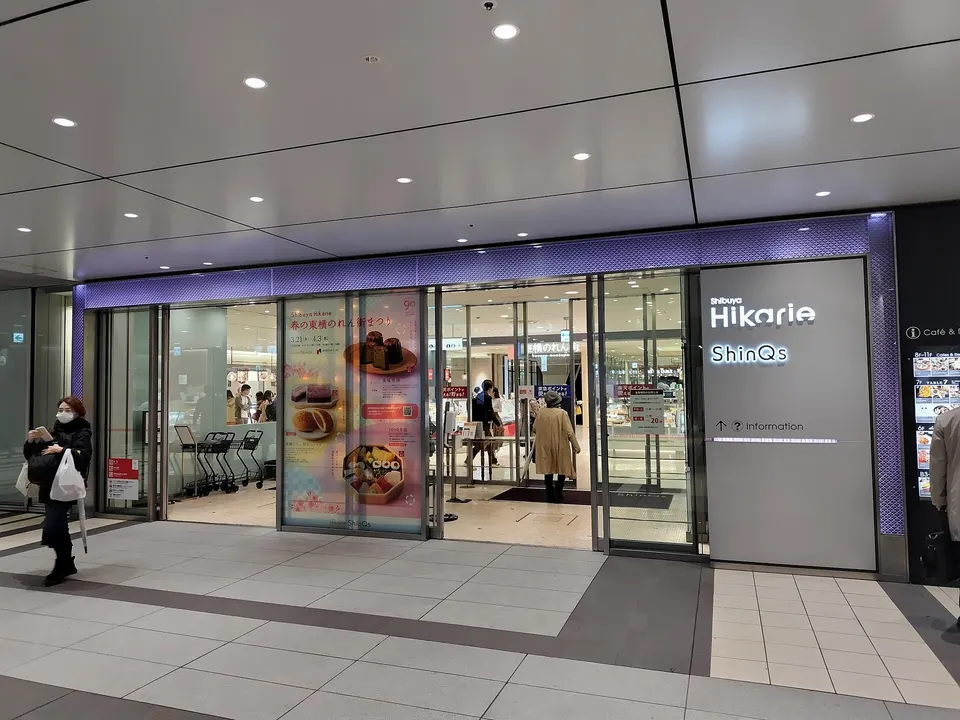
Toyoko Norengai moved to the basement of Shibuya Mark City in 2013 and to the basement of Shibuya Hikarie in 2020. A temiyage is the small gift that a visitor brings when calling on someone, and Tokyu Department Store presents the goods sold in Toyoko Norengai as fit to give to someone important.
2000: the depachika boom
In April 2000 Tokyu Department Store rebuilt the food floor on the first basement level of its Toyoko store and reopened it as Tokyu Food Show. Kitchens inside the sales floor and lively sales events drew attention, and Tokyu credits Tokyu Food Show with setting off the "depachika boom."
Ginza, the station and the event hall
Department stores gathered in Ginza along with high-end specialty shops, cafés and restaurants. Matsuzakaya opened its Ginza store in 1924, and Mitsukoshi opened its Ginza store in April 1930.
A department store stands outside the ticket gates of a station, so a depachika can be entered without a ticket. The ekinaka, the shopping area inside the gates, took its present form in 2005.
Department stores also sell food in their event halls. A bussanten shows and sells the specialty foods and crafts of one region, and in 1951 Takashimaya held a Hokkaido fair organized by Hokkaido itself, the first of its kind at a department store. An ekiben fair gathers station bento from all over Japan in a department store's event hall. The first National Ekiben Fair was held at Takashimaya in Osaka in February 1958, the same month that Tōge no Kamameshi went on sale at Yokokawa Station.
References
- Japan National Tourism Organization, "Your Guide to Japanese Department Store Food Floors"
- Kotobank, "Hyakkaten" (department store)
- Kotobank, "Nakashoku"
- Kotobank, "Sōzai"
- Kotobank, "Meitengai"
- Kotobank, "Temiyage"
- Kotobank, "Ginza"
- Japan Department Stores Association, "Department store sales, December 2025" (PDF)
- Japan Department Stores Association, "Department store sales, September 2026" (PDF)
- Nagoya City Library, research report no. 70, on the origin of depachika (PDF)
- Tokyu, 100-year history, chapter 2 (column on Toyoko Norengai)
- Tokyu Department Store, "Tokyu Food Show 25th anniversary"
- Tokyu Department Store, "Toyoko Norengai"
- Tokyu Department Store, company history
- Isetan Mitsukoshi Holdings, "History of Mitsukoshi"
- J. Front Retailing, "History of Matsuzakaya"
- Takashimaya Archives, "History of Takashimaya"
Image credits (resized for display):