


Page 5 of 5
-
What is dashi? The stock behind Japanese cooking
Dashi is the stock of Japanese cooking, drawn from kombu, katsuobushi, niboshi or dried shiitake. How it is made, what umami is, and why east and west differ. -

What is ekiben? Japan's railway bento and Tōge no Kamameshi
Ekiben are boxed meals sold at Japan's railway stations. Learn where they are said to have begun in 1885, why every region has its own, and how Tōge no Kamameshi fits in. -
What is kamameshi? The Japanese rice dish and Tōge no Kamameshi
Kamameshi is rice cooked with seafood, chicken or vegetables in a small pot for one. Learn how it began, and how Tōge no Kamameshi became the station meal in a pot. -
Miso: the types and what makes them different
Miso is soybeans fermented with salt and kōji. How rice, barley and soybean miso differ, why some are red and some white, and where each kind is made. -
What is the Shinkansen? Japan's high-speed railway, its lines, trains and seats
The Shinkansen is Japan's high-speed railway, built apart from the older lines on wider track. When it began, where it runs, and what the train names and seat classes mean. -
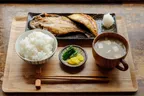
What is washoku? Japan's traditional food culture
Washoku is Japanese-style eating: rice, soup, pickles and side dishes, tied to the seasons and the calendar. What UNESCO inscribed in 2013, and what ichijū sansai, kaiseki and osechi mean. -
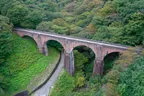
Yokokawa and the Usui Pass: the railway that climbed 66.7 per mil
From Yokokawa Station, trains once climbed the Usui Pass on a grade of 66.7 per mil. How they did it, and why the stop at Yokokawa made Tōge no Kamameshi famous. -
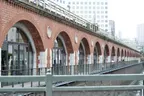
Under the tracks in Tokyo: the brick arches of Yūrakuchō and Kanda
Why restaurants and shops fill the space under the railway at Yūrakuchō and Kanda: a brick viaduct modeled on Berlin's and completed in 1910, and a station closed in 1943. -
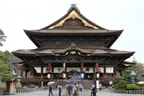
Zenkōji: the temple in Nagano that welcomes everyone
Zenkōji in Nagano belongs to no sect and has long taken in anyone. Its hidden Amida image, the Gokaichō held once in seven years, and its 1707 main hall.